Globe Artichokes
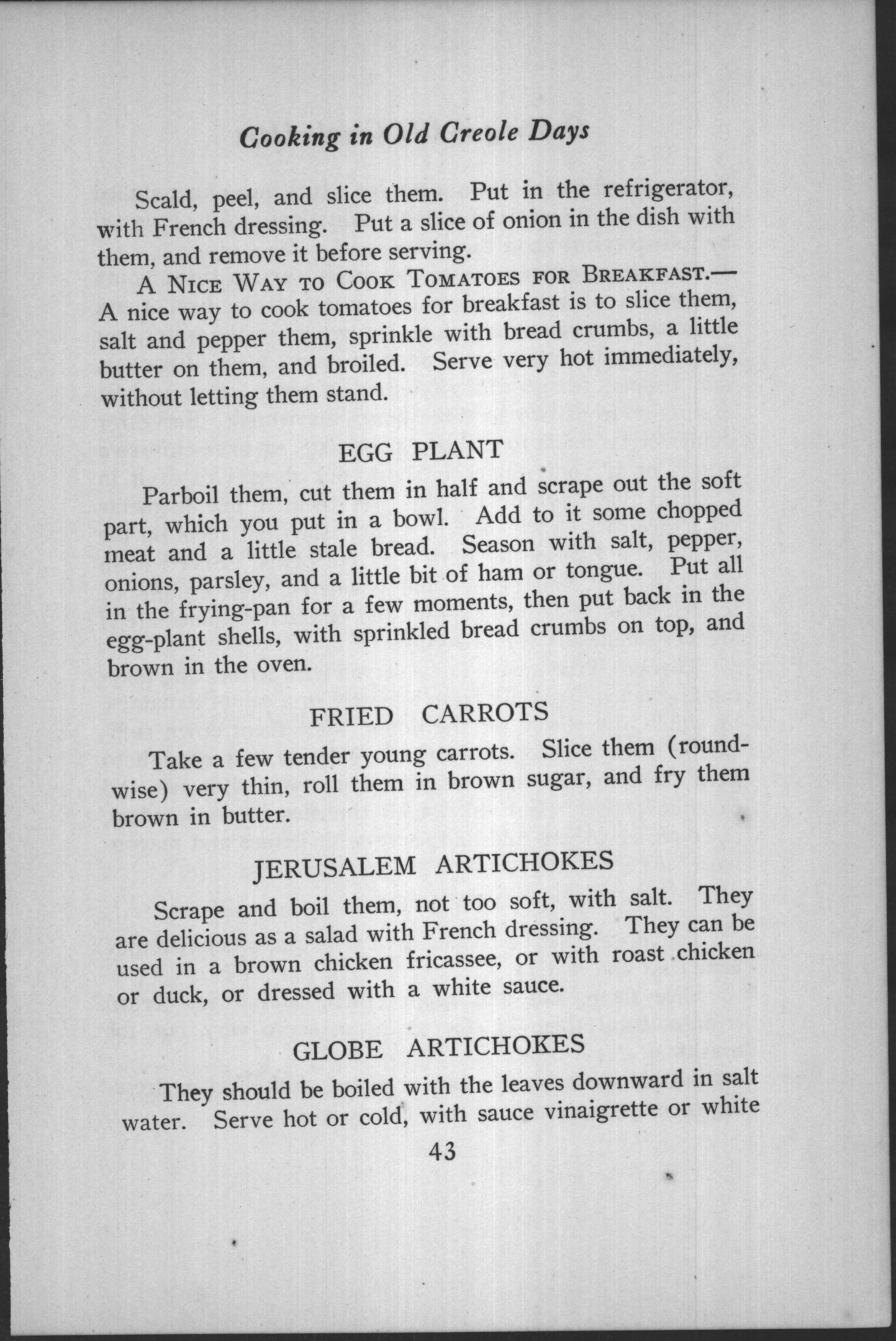
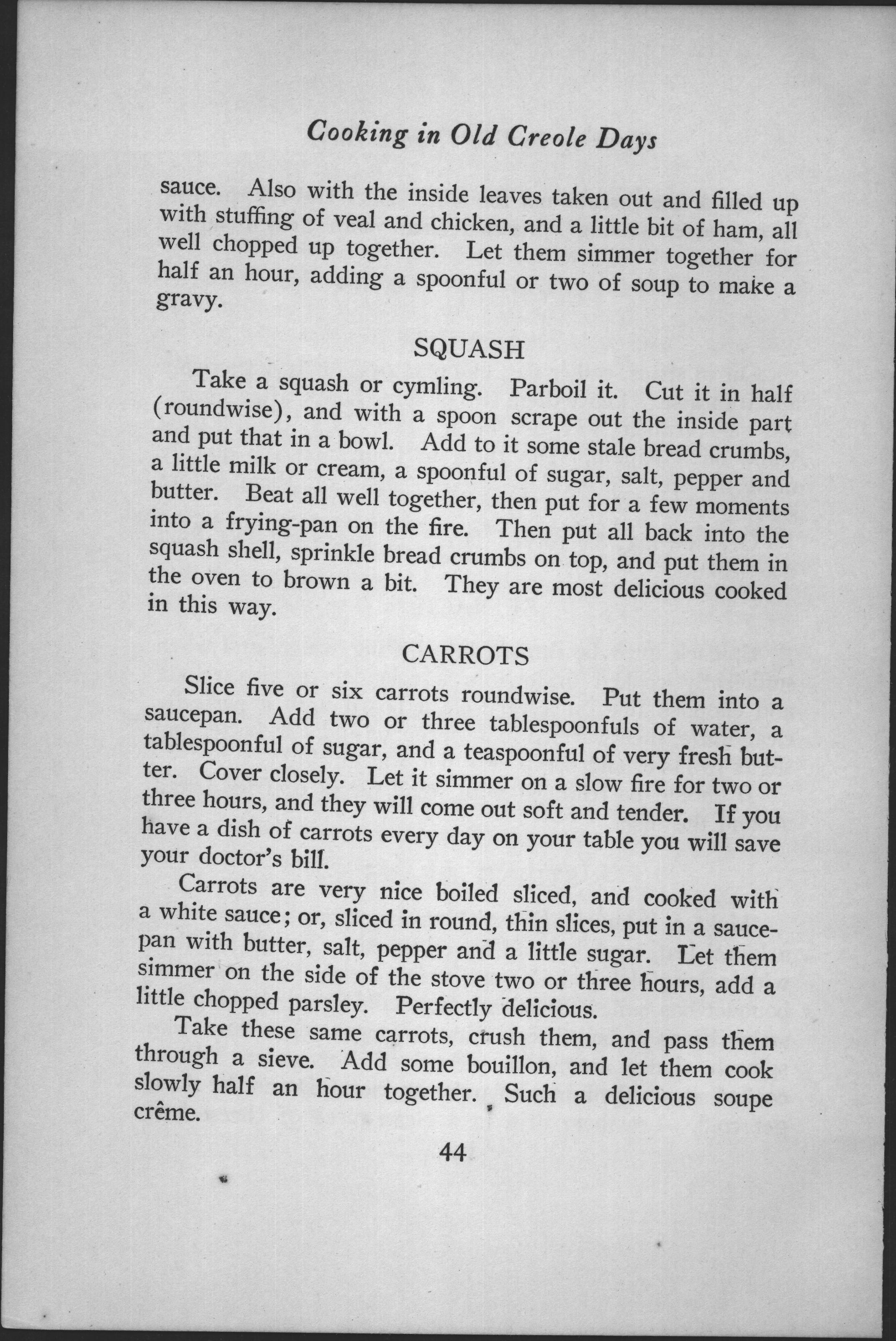
They should be boiled with the leaves downward in salt water. Serve hot or cold, with sauce vinaigrette or white sauce. Also with the inside leaves taken out and filled up with stuffing of veal and chicken, and a little bit of ham, all well chopped up together. Let them simmer together for half an hour, adding a spoonful or two of soup to make a gravy.
The Creole way with the globe artichoke — boiled plainly, then dressed cold with vinaigrette, cloaked in white sauce, or hollowed and stuffed with a veal-and-chicken forcemeat.
- Trim before boilingCut the stem flush, snip the thorny leaf tips, and boil in salted water 30–45 minutes, until an outer leaf pulls away easily.
- “White sauce” = béchamelA roux of 1 Tbsp butter and 1 Tbsp flour cooked briefly, then whisked with about a cup of warm milk until it coats a spoon.
- Remove the choke to stuffFor the stuffed version, pull out the inner leaves and scrape away the hairy choke at the center — it is inedible — then pack in the chopped veal, chicken, and ham.
- “A spoonful of soup” = stockThe “soup” added for gravy simply means broth; a few spoonfuls of chicken stock loosen the pan into a light sauce.
- How to eat itPull off a leaf, drag the tender base through your teeth, and save the meaty heart at the bottom for last — the reward under the choke.
The globe artichoke is a cultivated thistle, a cousin of the cardoon, tamed around the Mediterranean and perfected by Italian gardeners in the Renaissance, who bred the fat, tender-hearted heads we know. By tradition it followed Catherine de’ Medici to France, where it became a courtly delicacy rumored to be an aphrodisiac. In New Orleans, waves of Sicilian immigrants made the stuffed artichoke a local institution — which is why a Creole cookbook treats it as everyday fare rather than an exotic import.
From page 43 of the 1904 edition.
Original pages from the book