Squash
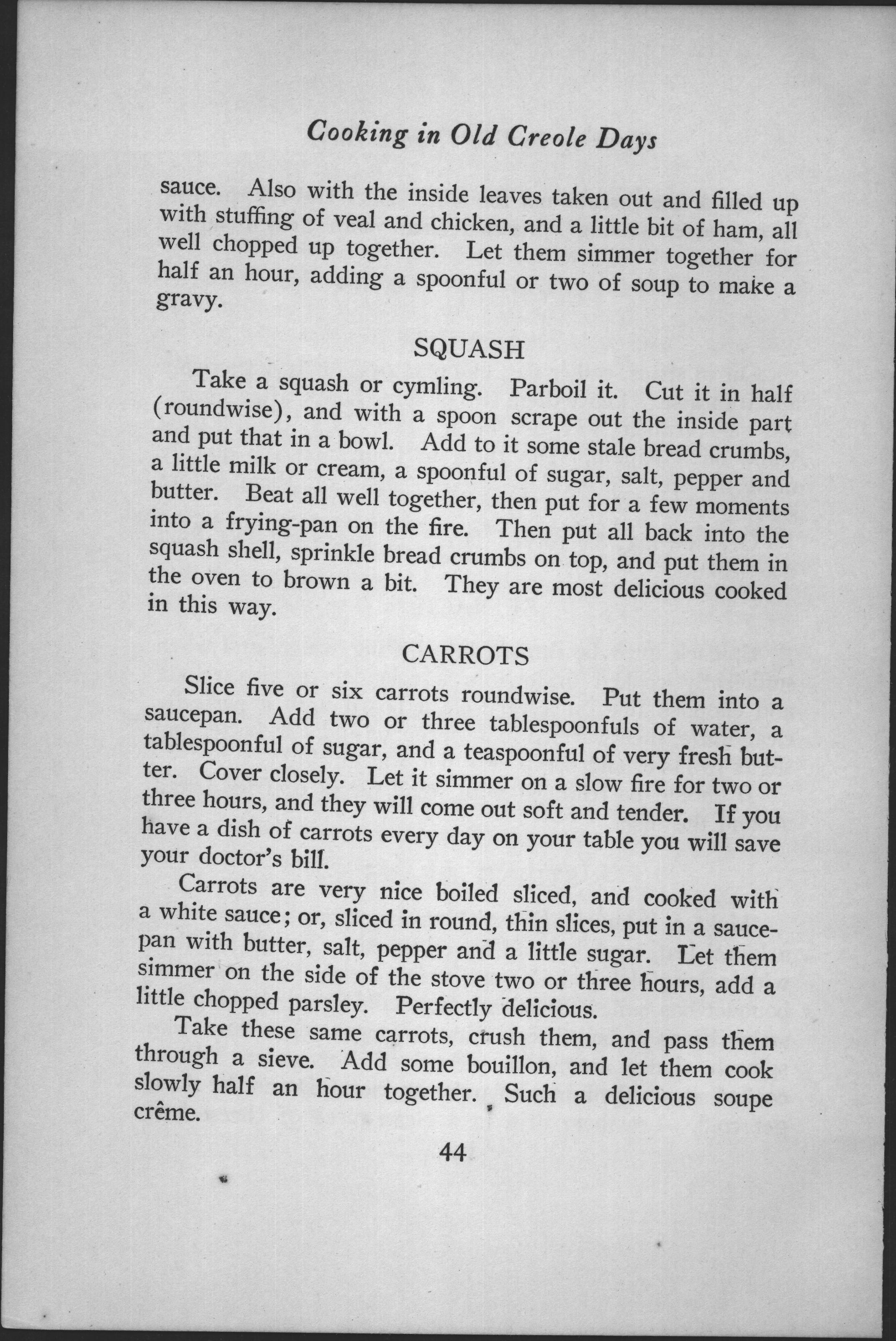
Take a squash or cymling. Parboil it. Cut it in half (roundwise), and with a spoon scrape out the inside part and put that in a bowl. Add to it some stale bread crumbs, a little milk or cream, a spoonful of sugar, salt, pepper and butter. Beat all well together, then put for a few moments into a frying-pan on the fire. Then put all back into the squash shell, sprinkle bread crumbs on top, and put them in the oven to brown a bit. They are most delicious cooked in this way.
A twice-baked summer squash — parboiled, scooped, enriched, and browned back in its own shell.
- “Cymling” = pattypan squashThe cymling (or simlin) is the little scalloped-edge summer squash; any tender summer squash — pattypan, yellow crookneck, even zucchini — works the same way.
- Parboil firstA few minutes in boiling water softens the flesh so it scoops cleanly and finishes tender in the oven.
- “Roundwise” = across the middleCut crosswise through the equator so each half makes a shallow bowl to refill.
- Stale crumbs bind itThe dried bread crumbs and a little milk or cream thicken the scooped flesh into a moist stuffing; about ½ cup crumbs is plenty.
- Oven to brownA moderately hot oven, 375–400°F (190–200°C), gives the crumb topping color in 15–20 minutes.
Squash is one of the great American vegetables — part of the “Three Sisters” that Indigenous farmers grew with corn and beans, domesticated in the Americas thousands of years before Europeans arrived. The English word comes from the Narragansett askutasquash. “Cymling,” the old Southern name for the scalloped variety, is thought to be a worn-down form of simnel, a rich medieval cake — the squash’s fluted, ruffled edge reminded colonial cooks of the pastry. It is a distinctly early-American vegetable wearing a very old English nickname.
From page 44 of the 1904 edition.
Original page from the book