Jerusalem Artichokes
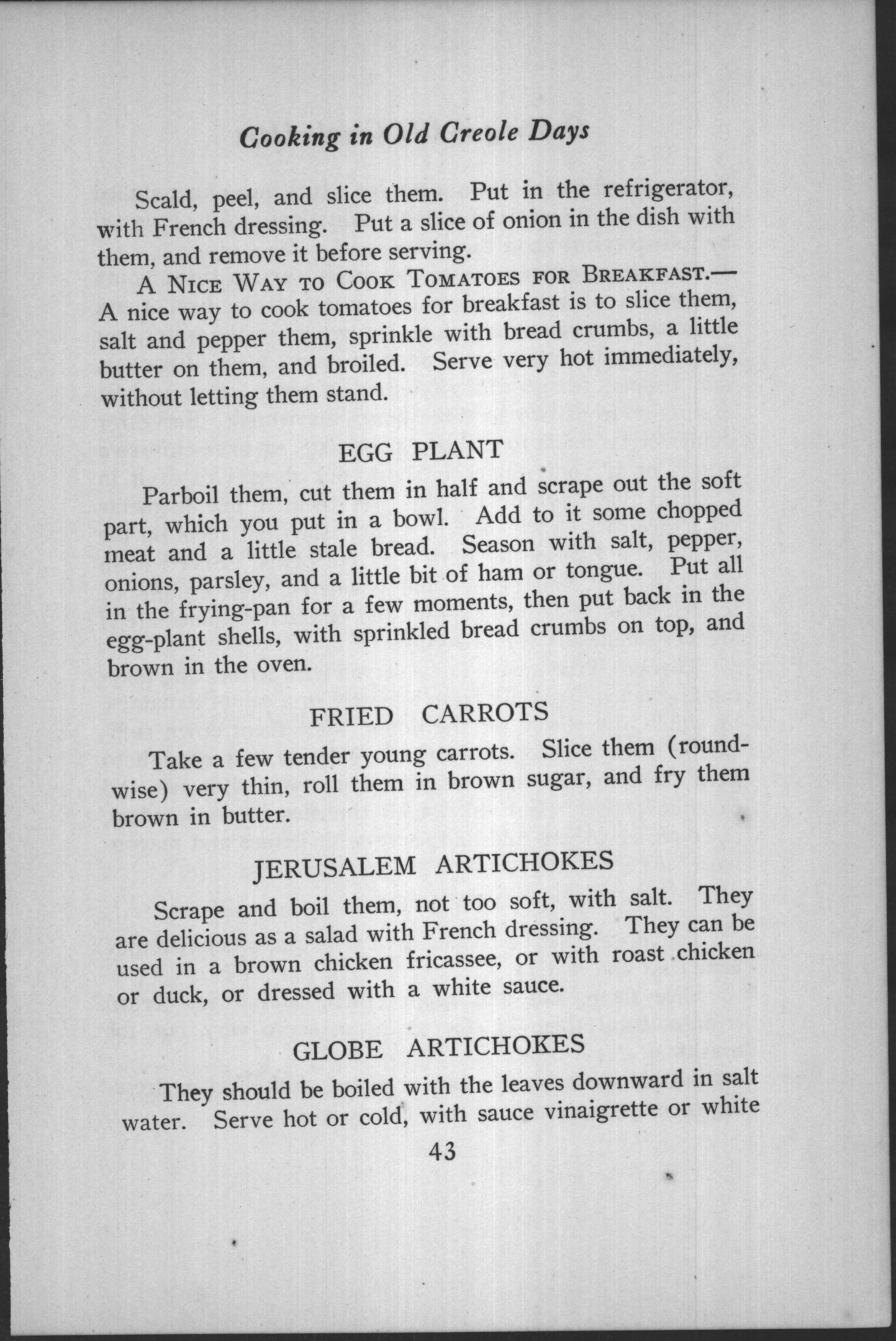
Scrape and boil them, not too soft, with salt. They are delicious as a salad with French dressing. They can be used in a brown chicken fricassee, or with roast chicken or duck, or dressed with a white sauce.
The Jerusalem artichoke — neither from Jerusalem nor an artichoke — served here boiled, in salad, in fricassee, or under a white sauce.
- Not an artichoke at allIt’s the knobby tuber of a North American sunflower; the “artichoke” part refers only to a faint resemblance in taste.
- Scrape means peelPeel the thin skin, then boil in salted water — and heed the recipe’s “not too soft,” since overcooked sunchokes go mushy fast.
- Great as a saladBoiled just tender and dressed with French dressing (an oil-and-vinegar vinaigrette), they make a fine cold salad, as the recipe suggests.
- A note on digestionThe tubers store their starch as inulin, which can cause gas for some people; smaller portions and thorough cooking help.
- Keep the cut flesh palePeeled sunchokes brown quickly — drop them into acidulated water (a little lemon or vinegar) until you cook them.
The name is a wonderful accident. The plant is a sunflower native to North America, Helianthus tuberosus, with no connection whatever to the Holy Land. The usual explanation is that when it reached Italy its bright bloom earned it the name girasole — “turns to the sun” — which English ears, hearing something familiar, are said to have mangled into “Jerusalem.” The “artichoke” was likely tacked on because early tasters thought the boiled tuber tasted a little like an artichoke heart. So a humble American sunflower root ended up wearing the name of a distant city and an unrelated vegetable.
From page 43 of the 1904 edition.
Original page from the book