Herb Gumbo
Josephine Nicaud
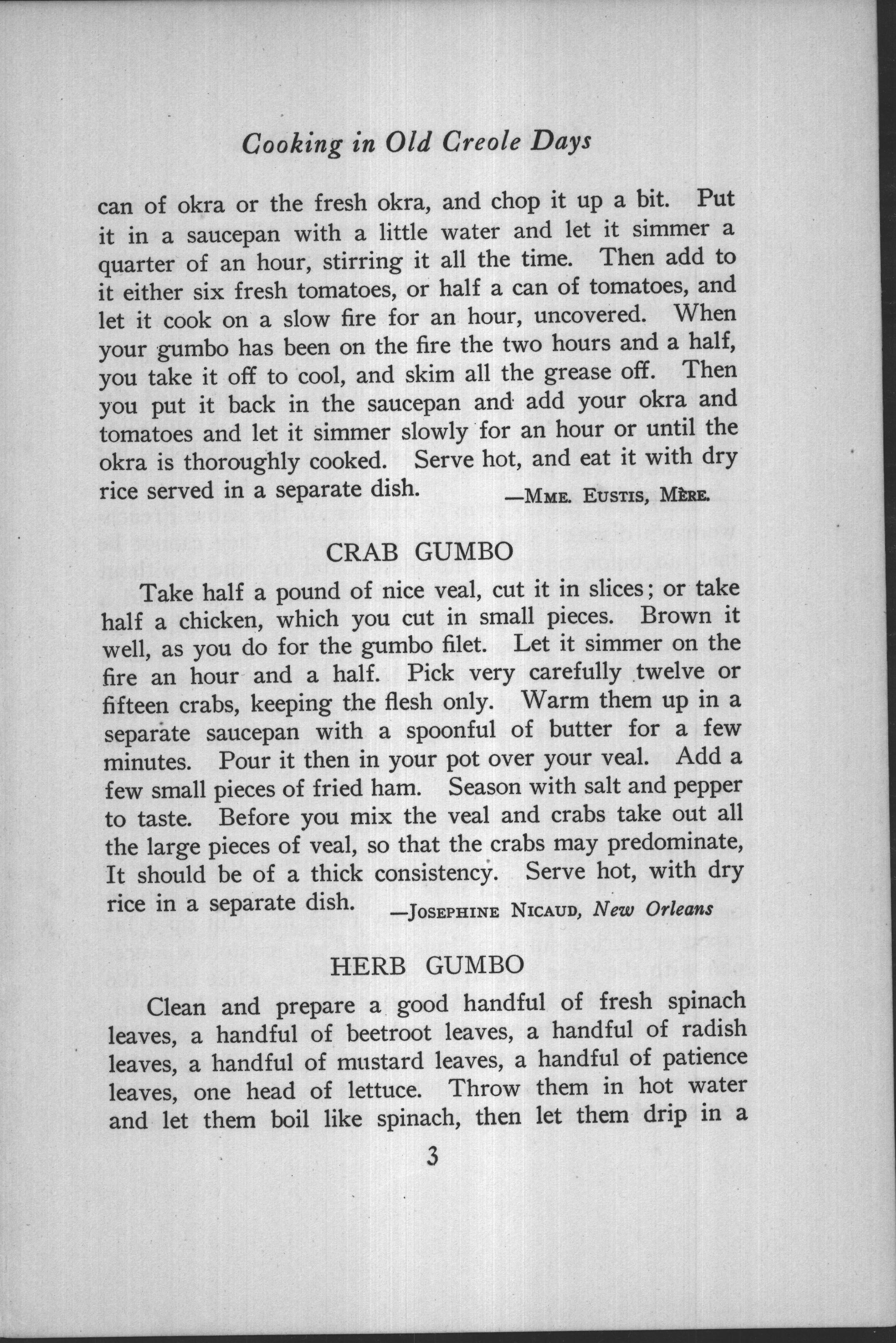
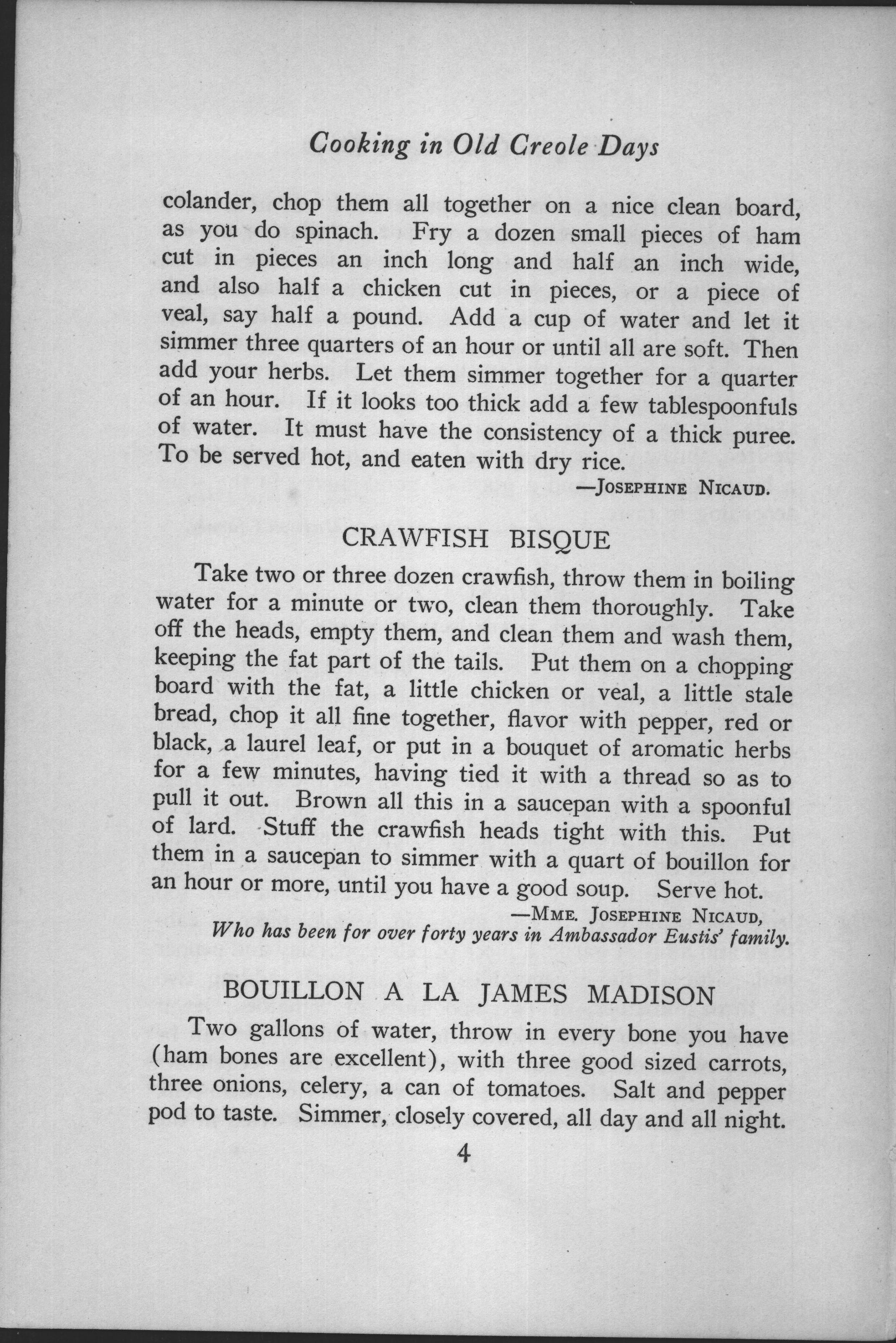
Clean and prepare a good handful of fresh spinach leaves, a handful of beetroot leaves, a handful of radish leaves, a handful of mustard leaves, a handful of patience leaves, one head of lettuce. Throw them in hot water and let them boil like spinach, then let them drip in a colander, chop them all together on a nice clean board, as you do spinach. Fry a dozen small pieces of ham cut in pieces an inch long and half an inch wide, and also half a chicken cut in pieces, or a piece of veal, say half a pound. Add a cup of water and let it simmer three quarters of an hour or until all are soft. Then add your herbs. Let them simmer together for a quarter of an hour. If it looks too thick add a few tablespoonfuls of water. It must have the consistency of a thick puree. To be served hot, and eaten with dry rice.
This is gumbo z’herbes — “green gumbo” — a gumbo made almost entirely of greens. The one word to translate is “patience.”
- “Patience leaves”Patience is an old kitchen-garden name for a leafy sorrel-like dock (Rumex patientia, “patience dock” or “monk’s rhubarb”). Substitute sorrel, or just add another handful of the other greens.
- Use whatever greens you haveSpinach, beet tops, radish tops, mustard, and lettuce are called for — but the dish is forgiving. Collards, turnip tops, chard, watercress, and parsley all belong.
- MethodBlanch the greens, drain, and chop finely together; build a base of browned ham (and a roux, in the gumbo way), then add the greens and their cooking liquid.
- Traditionally meatless-ishMany cooks made it for Lent with little or no meat — the greens and their “pot likker” carry it.
Gumbo z’herbes is the traditional gumbo of Holy Thursday and Lent in Créole New Orleans, when meat was set aside. Folklore turned its greens into a charm: cooks aimed for an odd number of different greens — seven, nine, or more — and it was said you would make one new friend for every green in the pot. The dish braids together French potage, African vegetable stews, and Catholic fast-day custom into something entirely of Louisiana. Louis Armstrong signed his letters “red beans and ricely yours”; a Créole cook might just as well have said gumbo z’herbes.
From page 3 of the 1904 edition.
Original pages from the book