Crab Gumbo
Josephine Nicaud, New Orleans
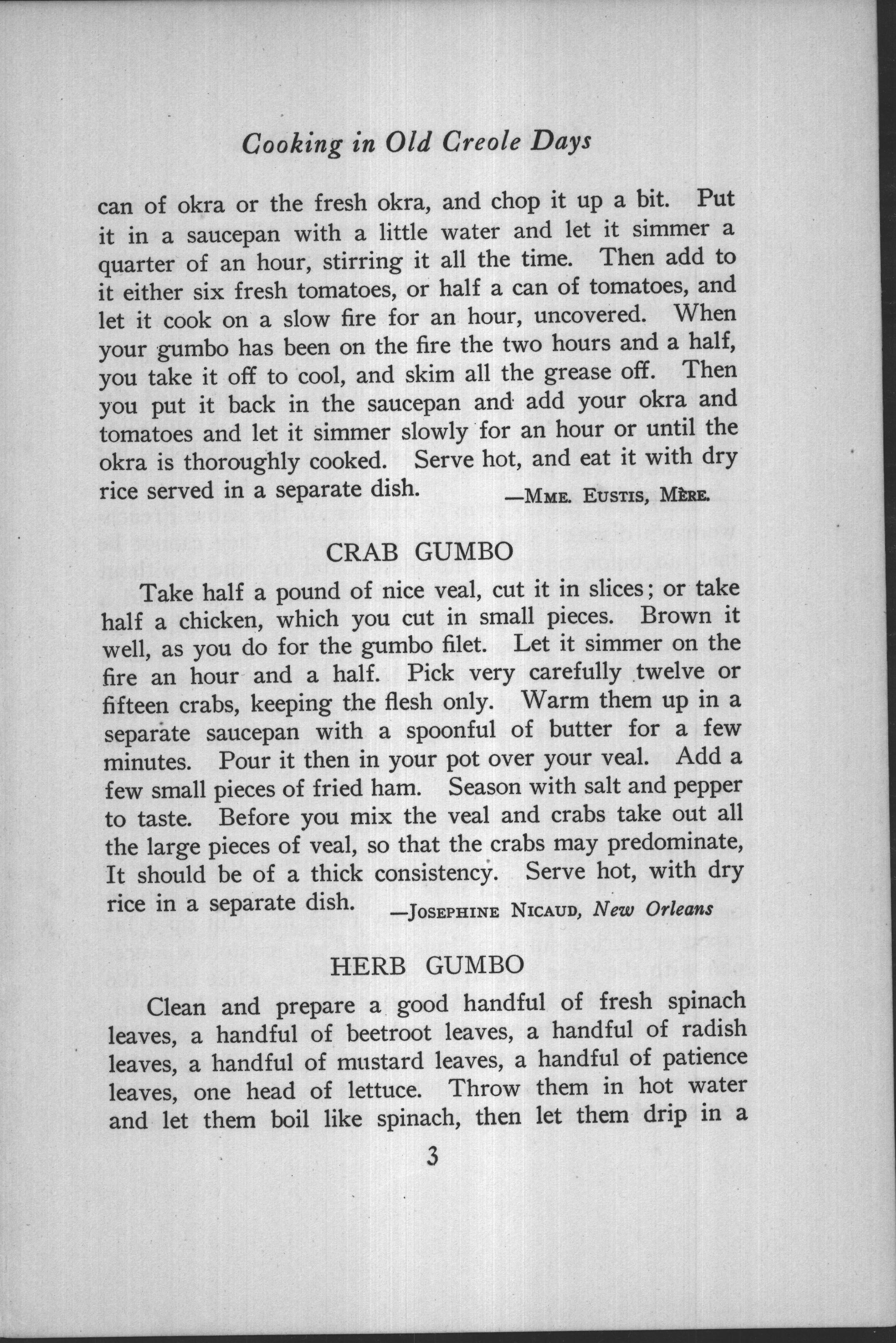
Take half a pound of nice veal, cut it in slices; or take half a chicken, which you cut in small pieces. Brown it well, as you do for the gumbo filet. Let it simmer on the fire an hour and a half. Pick very carefully twelve or fifteen crabs, keeping the flesh only. Warm them up in a separate saucepan with a spoonful of butter for a few minutes. Pour it then in your pot over your veal. Add a few small pieces of fried ham. Season with salt and pepper to taste. Before you mix the veal and crabs take out all the large pieces of veal, so that the crabs may predominate. It should be of a thick consistency. Serve hot, with dry rice in a separate dish.
A lighter gumbo built on a quick veal or chicken base, with crab folded in at the end so it stays sweet and whole.
- “Pick twelve or fifteen crabs”That yields roughly 1–1¼ lb of picked crabmeat. Fresh blue crab is traditional; good-quality lump crab is the shortcut.
- Brown the base “as for gumbo filé”Start with the same roux-and-aromatics foundation, then simmer the veal or chicken about 1½ hours for flavor.
- Add crab lastWarm the picked crab in butter for just a few minutes and fold it in near the end — overcooking turns it to string and dulls its sweetness.
- Thicken to tasteThis can be finished with a little okra or filé (off the heat) in the gumbo tradition, or left brothy.
This recipe carries one of the book’s most telling credits: Josephine Nicaud, described elsewhere as having been “over forty years in Ambassador Eustis’ family.” She is one of several Black cooks whom Célestine Eustis names by name — a small but real act of authorship-crediting in an era that usually erased such women. The Créole cuisine we prize was, to a great degree, their creation, kept and refined in the households where they worked; a crab gumbo like this is her hand on the page.
From page 3 of the 1904 edition.
Original page from the book