Crawfish Bisque
Mme. Josephine Nicaud, who has been for over forty years in Ambassador Eustis' family
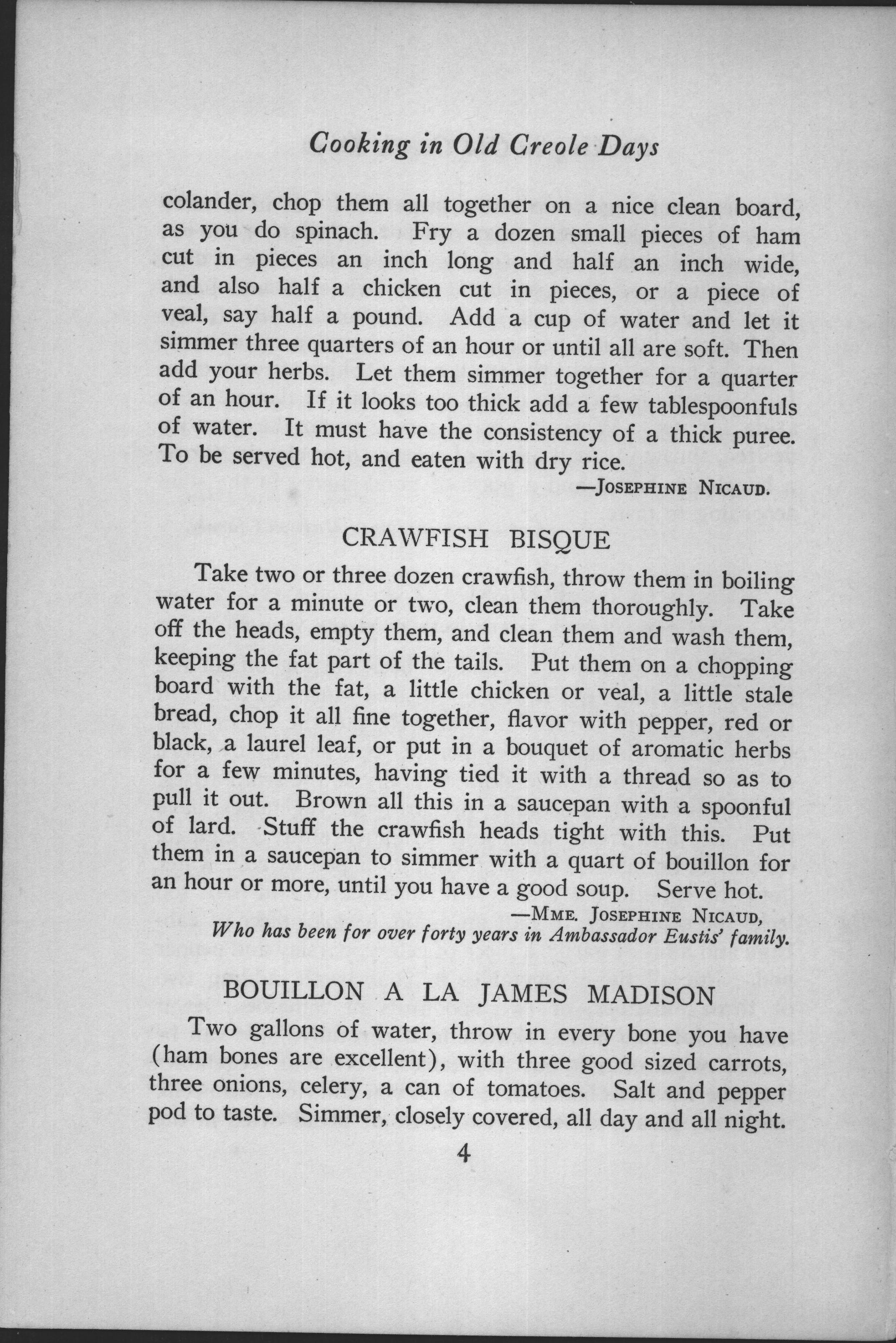
Take two or three dozen crawfish, throw them in boiling water for a minute or two, clean them thoroughly. Take off the heads, empty them, and clean them and wash them, keeping the fat part of the tails. Put them on a chopping board with the fat, a little chicken or veal, a little stale bread, chop it all fine together, flavor with pepper, red or black, a laurel leaf, or put in a bouquet of aromatic herbs for a few minutes, having tied it with a thread so as to pull it out. Brown all this in a saucepan with a spoonful of lard. Stuff the crawfish heads tight with this. Put them in a saucepan to simmer with a quart of bouillon for an hour or more, until you have a good soup. Serve hot.
One of the great labors of love in the Créole kitchen: a crawfish bisque whose shells are cleaned and then stuffed to float in the soup. Worth knowing what you’re signing up for.
- Crawfish = crayfishThe small freshwater crustaceans (crawdads, mudbugs). Live or frozen; you want both the tail meat and the head shells for the classic stuffed bisque.
- The stuffingTail meat and head fat are chopped with a little chicken or veal, stale bread, and seasoning, then packed back into the cleaned heads — a signature step that makes this a project, not a weeknight soup.
- A modern shortcutFor a weeknight version, skip the stuffed heads: simmer a stock from the shells, then finish the bisque with the chopped tail meat and cream. You keep the flavor and lose the hours.
- HeatCayenne, black pepper, and a bouquet of herbs season it; adjust the pepper to taste.
Créole crawfish bisque is famous as one of the most time-consuming dishes in American cookery — the ritual of peeling, cleaning, and hand-stuffing dozens of tiny crawfish heads could occupy a kitchen for the better part of a day, and it was often a communal effort. This recipe again bears the name of Josephine Nicaud, forty years in the Eustis household; the labor it represents is a measure both of the dish’s prestige and of the skilled cooks who made such things possible.
From page 4 of the 1904 edition.
Original page from the book