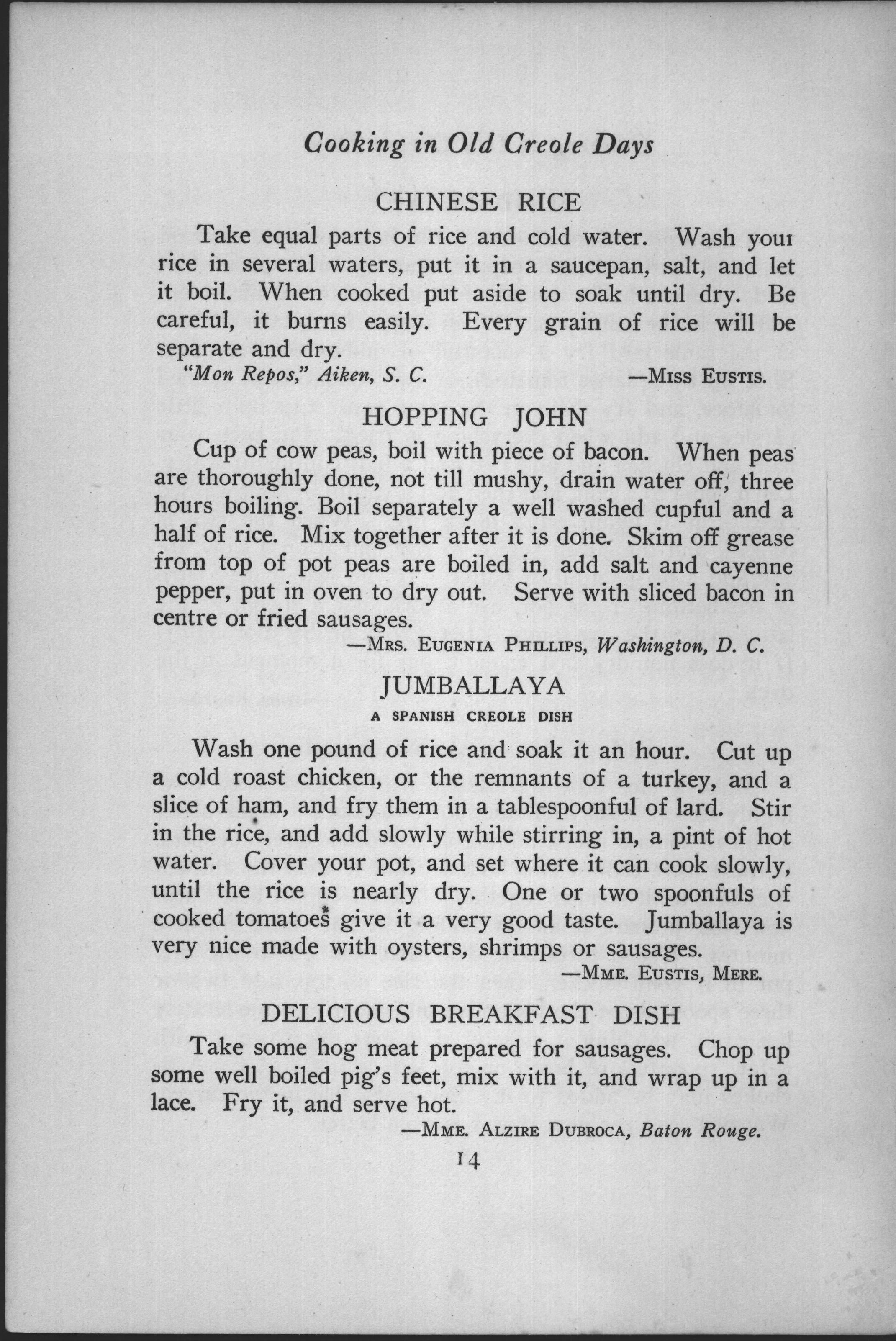
Jumballaya (A Spanish Creole Dish)
Mme. Eustis, Mère
Wash one pound of rice and soak it an hour. Cut up a cold roast chicken, or the remnants of a turkey, and a slice of ham, and fry them in a tablespoonful of lard. Stir in the rice, and add slowly while stirring in, a pint of hot water. Cover your pot, and set where it can cook slowly, until the rice is nearly dry. One or two spoonfuls of cooked tomatoes give it a very good taste. Jumballaya is very nice made with oysters, shrimps or sausages.
A thrifty “planned leftovers” jambalaya — yesterday’s roast chicken or turkey and a little ham, stretched with rice into a whole new meal.
- 1 pound riceThat’s about 2¼ cups raw long-grain rice — enough for a crowd. Soaking it an hour, as directed, shortens the cooking.
- “A pint of hot water”2 cups. It reads low for a pound of rice, but the hour-long soak means the grains need less; add a little more hot water if the pot dries before the rice is tender.
- Lard1 tablespoon; swap in oil, butter, or bacon fat. Fry the meats in it first to build flavor.
- Cold roast chicken or turkeyThis is a leftovers dish by design — use already-cooked poultry and ham, so everything just warms through as the rice cooks.
- Cook it slow and coveredLow heat, lid on, until the rice is nearly dry; a spoonful or two of cooked tomato is the Creole finishing touch.
Labeled here “a Spanish Creole dish,” this jambalaya wears its ancestry openly. Spain governed Louisiana from 1763 until 1803, and Spanish cooks brought with them the tradition of arroz — rice simmered with meat, in the great family that includes paella. Many food historians see jambalaya as a New World descendant of those saffron-scented Spanish rice dishes, adapted to local ingredients when saffron was scarce or costly. Whether the resemblance is direct inheritance or parallel invention is debated, but the Creole kitchen of New Orleans drew freely on Spanish, French, African, and Caribbean cooking, and a one-pot rice dish sat squarely at that crossroads.
From page 14 of the 1904 edition.
Original page from the book