Leek and Potato Soup
Mrs. Eugenia Phillips
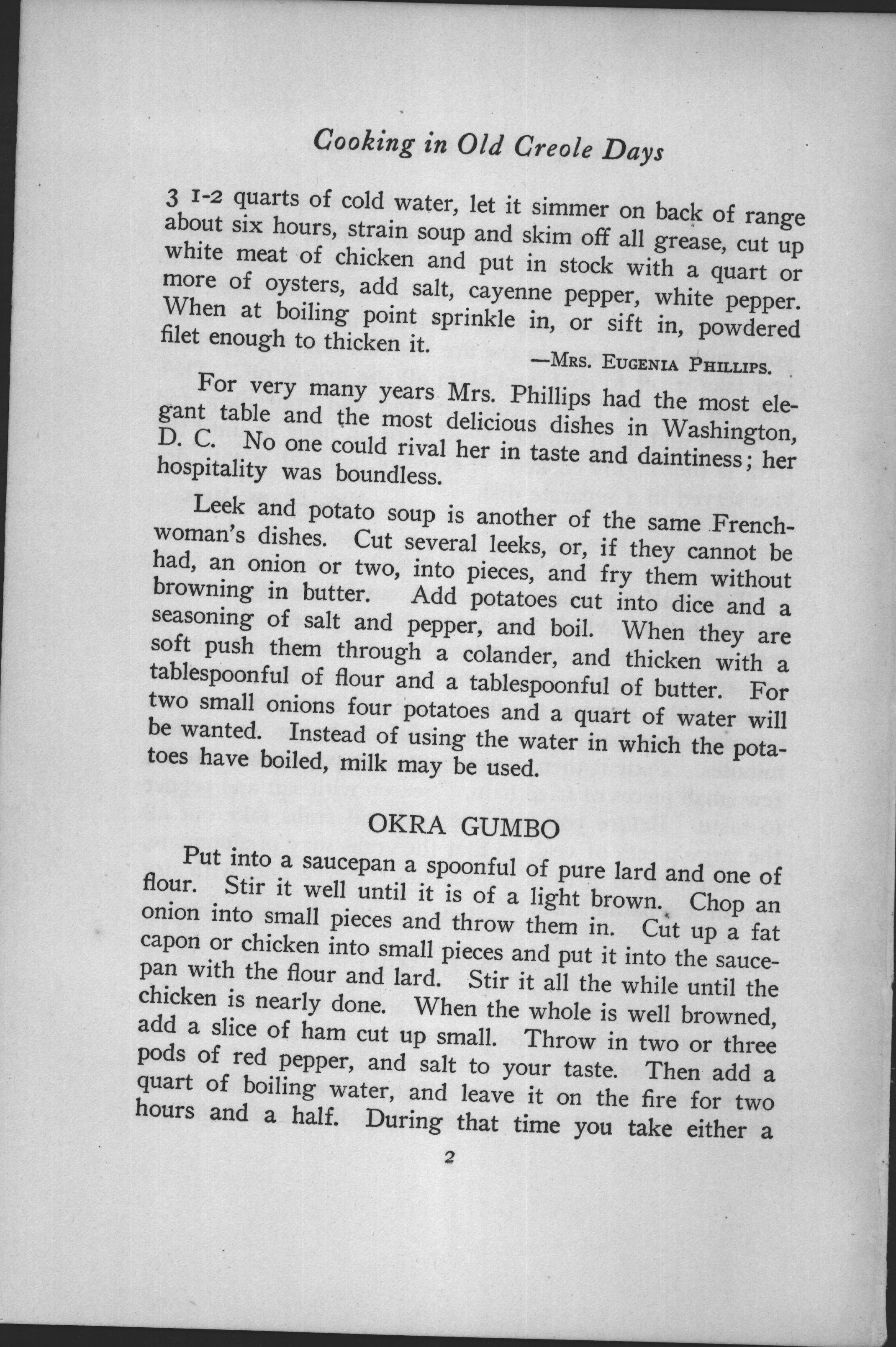
Leek and potato soup is another of the same Frenchwoman's dishes. Cut several leeks, or, if they cannot be had, an onion or two, into pieces, and fry them without browning in butter. Add potatoes cut into dice and a seasoning of salt and pepper, and boil. When they are soft push them through a colander, and thicken with a tablespoonful of flour and a tablespoonful of butter. For two small onions four potatoes and a quart of water will be wanted. Instead of using the water in which the potatoes have boiled, milk may be used.
One of the most useful soups ever devised, and barely changed in a century. If you’ve had vichyssoise, you’ve had its chilled descendant.
- Leeks — or onionsThe recipe already offers the substitution: no leeks, use an onion or two. Sweat them in butter without browning to keep the soup pale and sweet.
- ProportionsThe original gives them: about 4 potatoes and 2 small onions to roughly a quart of water/stock. Simmer until soft, then push through a colander (or blend).
- The thickening1 Tbsp flour worked with 1 Tbsp butter is a beurre manié — whisk it in at the end to thicken. With enough potato, you can skip it entirely.
- Serve it cold, tooChilled and enriched with cream, this is vichyssoise. A swirl of cream and chives dresses it up.
This is potage Parmentier, the French classic named for Antoine-Augustin Parmentier, the 18th-century pharmacist who famously campaigned to convince a suspicious France that the potato was fit to eat. Its most glamorous offspring was born in New York: around 1917 Louis Diat, chef at the Ritz-Carlton, chilled his childhood leek-and-potato soup, enriched it with cream, and named it vichyssoise for the spa town near his home. The humble pot Mrs. Phillips fried “without browning” is the same soup that became a byword for elegance.
From page 2 of the 1904 edition.
Original page from the book