Lucchetti — Fried (Italian Vegetable)
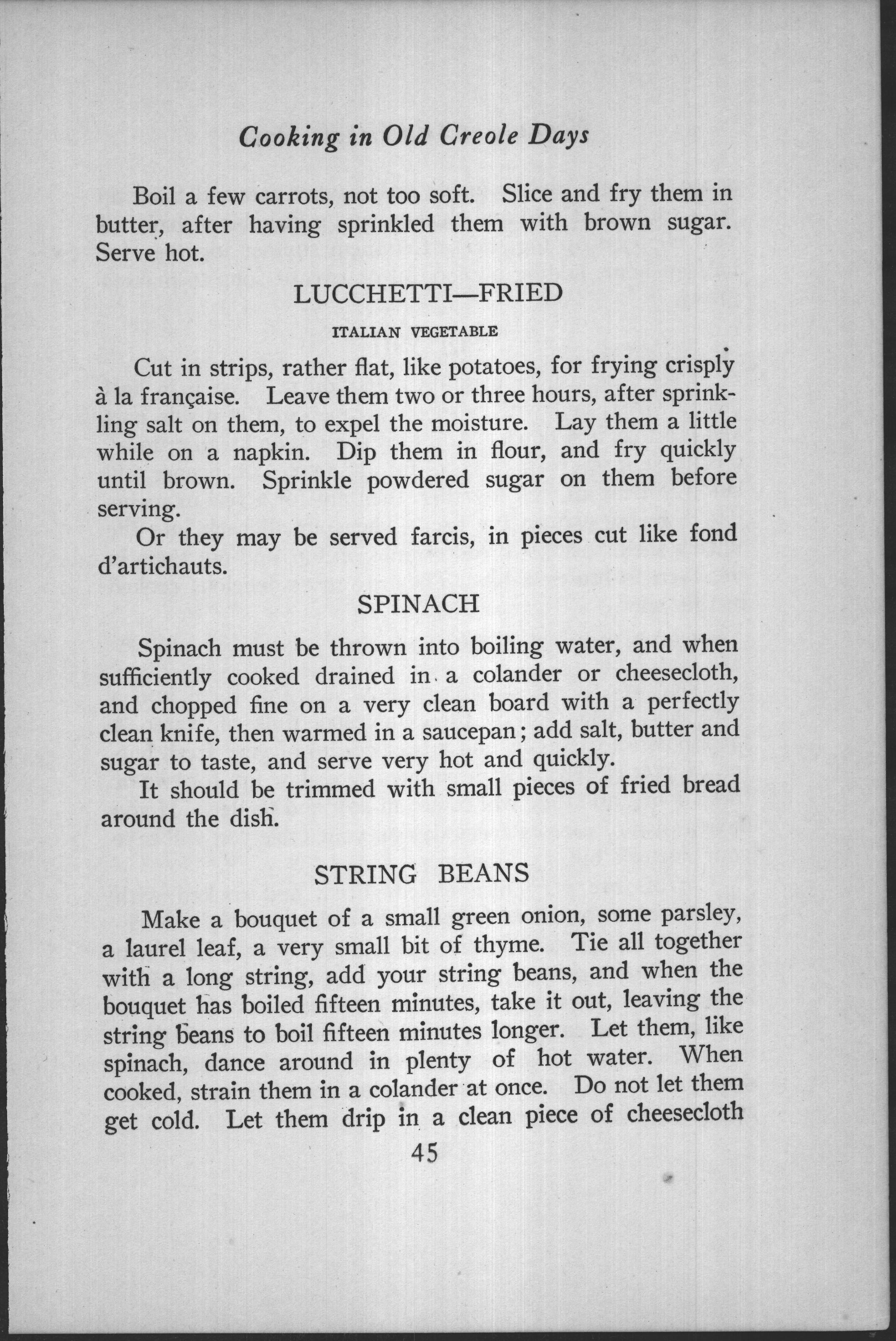
Cut in strips, rather flat, like potatoes, for frying crisply à la française. Leave them two or three hours, after sprinkling salt on them, to expel the moisture. Lay them a little while on a napkin. Dip them in flour, and fry quickly until brown. Sprinkle powdered sugar on them before serving.
Or they may be served farcis, in pieces cut like fond d'artichauts.
An Italian fried-vegetable dish — cut into flat strips, salted to draw out moisture, floured, fried crisp, and dusted, surprisingly, with powdered sugar.
- An obscure name“Lucchetti” is not a standard vegetable name today; the method — salting for hours to expel water before frying — is the classic treatment for watery vegetables like eggplant, zucchini, or cardoon, which is likely what is meant.
- Salt to ‘dégorger’Sprinkling with salt and resting 2–3 hours pulls out excess (and sometimes bitter) moisture so the pieces fry crisp rather than steam — the French call it dégorger. Pat thoroughly dry first.
- “À la française” = like friesCut them flat and fry quickly in hot oil, about 375°F (190°C), so they brown fast without soaking up grease.
- The sugar finishDusting fried vegetables with powdered sugar was common in older cookery; it is optional to modern palates, but the sweet-savory contrast is authentic to the dish.
- “Farcis” and “fond d’artichauts”The alternative serves them farcis (stuffed), cut into rounds shaped like fond d’artichauts — artichoke bottoms.
New Orleans has long been an Italian city as much as a French one. From the 1880s, tens of thousands of Sicilians settled in the French Quarter — so many that the neighborhood was nicknamed “Little Palermo” — bringing with them the vegetables and techniques of the southern Italian kitchen: cardoons, cucuzza squash, artichokes, and the habit of salting produce before frying. An unfamiliar name like lucchetti in a Creole cookbook is a small monument to that mingling, when a French-Creole table quietly absorbed the produce of the Sicilian greengrocer.
From page 45 of the 1904 edition.
Original page from the book