Spinach
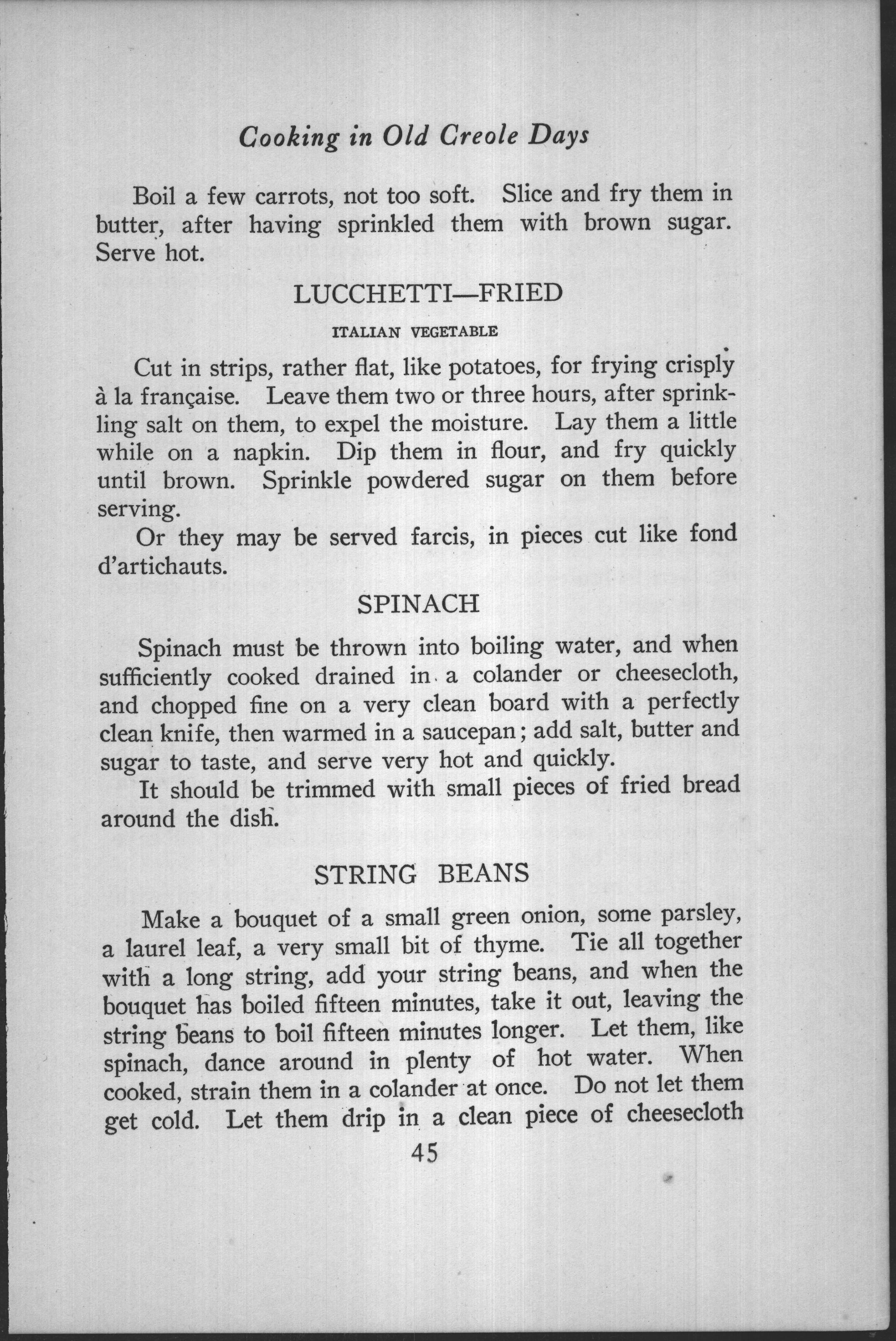
Spinach must be thrown into boiling water, and when sufficiently cooked drained in a colander or cheesecloth, and chopped fine on a very clean board with a perfectly clean knife, then warmed in a saucepan; add salt, butter and sugar to taste, and serve very hot and quickly.
It should be trimmed with small pieces of fried bread around the dish.
The French method for spinach — blanched, squeezed dry, finely chopped, and warmed in butter with a whisper of sugar, ringed with croutons.
- It cooks down to nothingSpinach collapses dramatically — a pound of raw leaves yields barely a cupful cooked — so start with far more than seems reasonable.
- Squeeze it dryAfter draining, wring the spinach in the cheesecloth until no more water runs; wet spinach makes a watery, dull dish.
- Why the sugarA pinch of sugar rounds off spinach’s faintly metallic, mineral edge — a classic French touch, not a dessert-like sweetness.
- “Fried bread” = croutonsThe garnish is simply small pieces of bread fried in butter, arranged around the rim of the dish.
- Serve at onceSpinach fades from bright green to olive and begins to weep if it waits, so dress and serve it quickly.
Spinach traveled a long way to the Creole table. It was first cultivated in ancient Persia — its name traces back through Persian roots — and reached Europe not by way of Rome but through the medieval Muslim world, entering Spain with the Moors, who prized it. From there it spread north and became a Lenten favorite for its dark, iron-rich leaves. In classic French cookery its presence is so characteristic that a dish served “à la florentine” simply means it is set on a bed of spinach.
From page 45 of the 1904 edition.
Original page from the book