Carrots
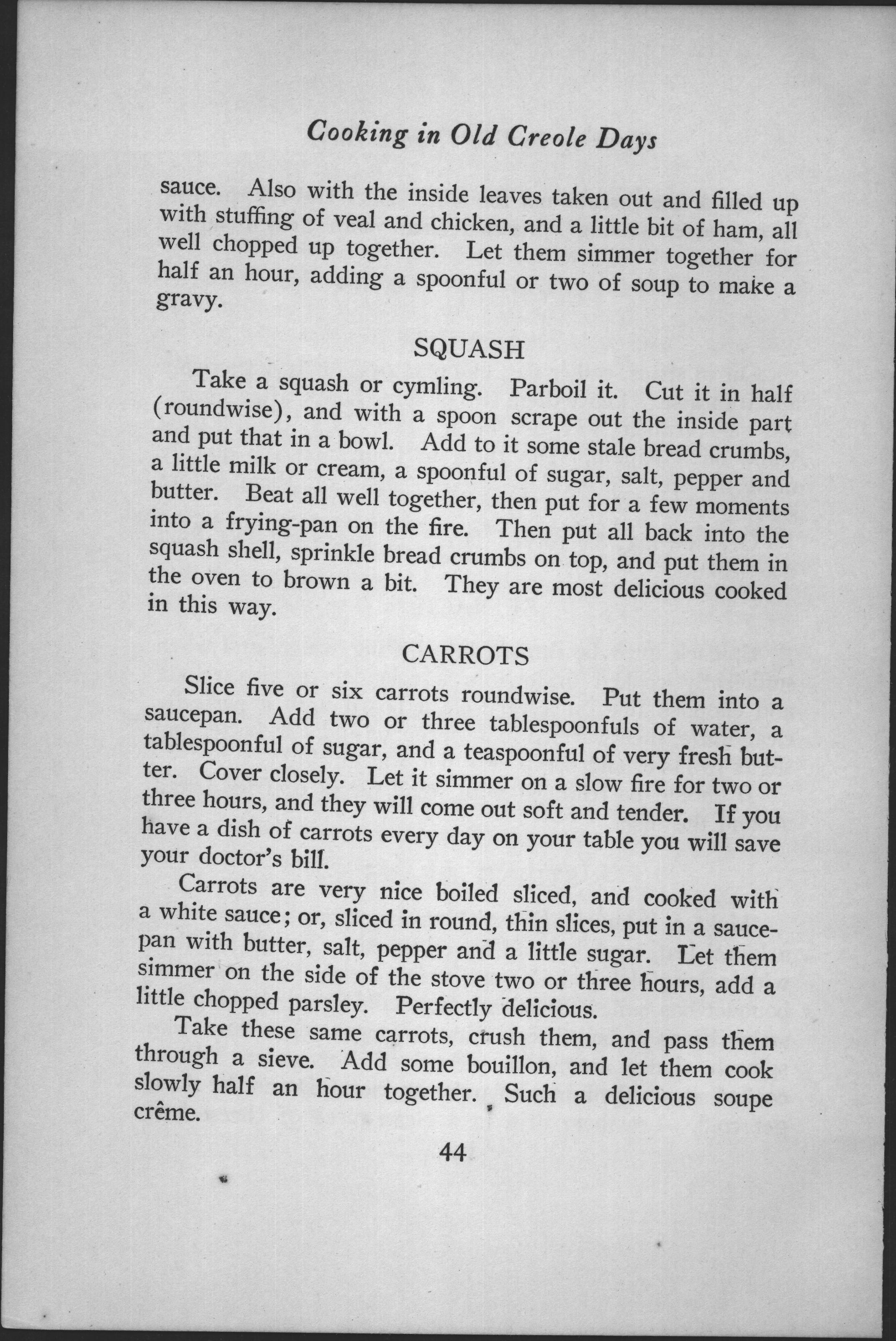
Slice five or six carrots roundwise. Put them into a saucepan. Add two or three tablespoonfuls of water, a tablespoonful of sugar, and a teaspoonful of very fresh butter. Cover closely. Let it simmer on a slow fire for two or three hours, and they will come out soft and tender. If you have a dish of carrots every day on your table you will save your doctor's bill.
Carrots are very nice boiled sliced, and cooked with a white sauce; or, sliced in round, thin slices, put in a saucepan with butter, salt, pepper and a little sugar. Let them simmer on the side of the stove two or three hours, add a little chopped parsley. Perfectly delicious.
Take these same carrots, crush them, and pass them through a sieve. Add some bouillon, and let them cook slowly half an hour together. Such a delicious soupe crême.
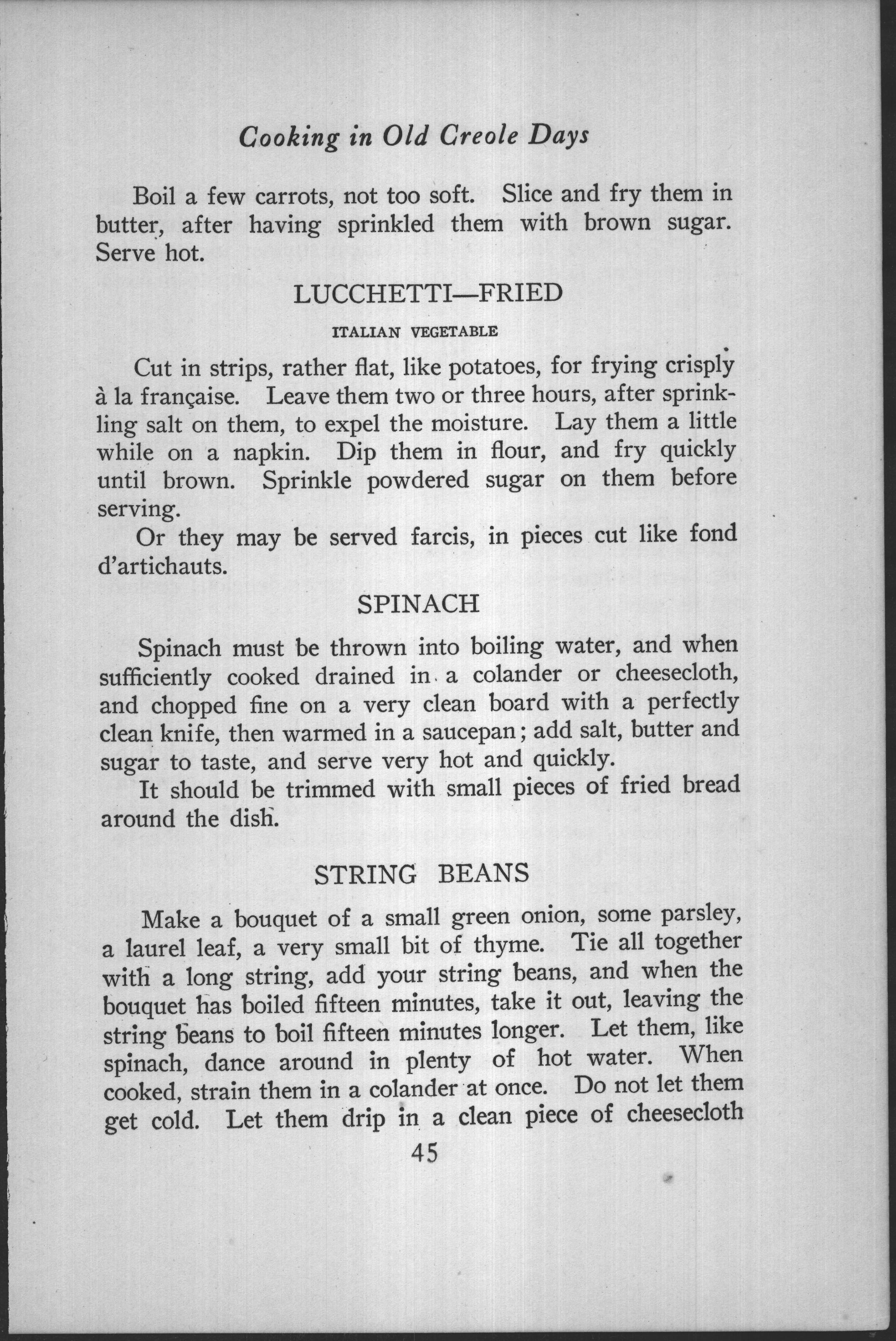
Boil a few carrots, not too soft. Slice and fry them in butter, after having sprinkled them with brown sugar. Serve hot.
Four carrot preparations in one entry — a long slow braise, a creamed version, a purée soup, and sugar-fried rounds — all built on gentle cooking and a little sweetness.
- That two-to-three-hour simmerThis is essentially glazed carrots (carottes Vichy): carrots stewed with butter, sugar, and a splash of water until tender. Modern sliced carrots need only 20–30 minutes, not hours.
- Very little liquidThe 2–3 tablespoons of water is meant to steam, not boil — keep it covered so the carrots cook in their own moisture and the butter and sugar form a glaze.
- “Bouillon” = brothFor the soupe crème, purée the cooked carrots, thin with stock, simmer, and finish with cream for a smooth carrot velouté.
- “White sauce” = béchamelThe creamed carrots are simply tossed in the same butter-flour-and-milk sauce used throughout this book.
- The doctor’s-bill boastThe old faith in carrots as a cure-all rests on real nutrition — they are rich in beta-carotene, which the body converts into vitamin A.
Carrots were not always orange. The earliest cultivated carrots, grown in Persia and Central Asia, were purple, yellow, and white; the sweet orange root we take for granted was refined by Dutch growers in the sixteenth and seventeenth centuries. A charming story credits patriotic Dutchmen with breeding orange carrots to honor the House of Orange — often repeated, though almost certainly embroidered after the fact. What is certain is that Holland gave us the modern carrot, and the Creole cook’s instinct to pair it with butter and a pinch of sugar only flatters its natural sweetness.
From page 44 of the 1904 edition.
Original pages from the book