New England Chowder
Parker House, Boston, Sept. 23, 1873
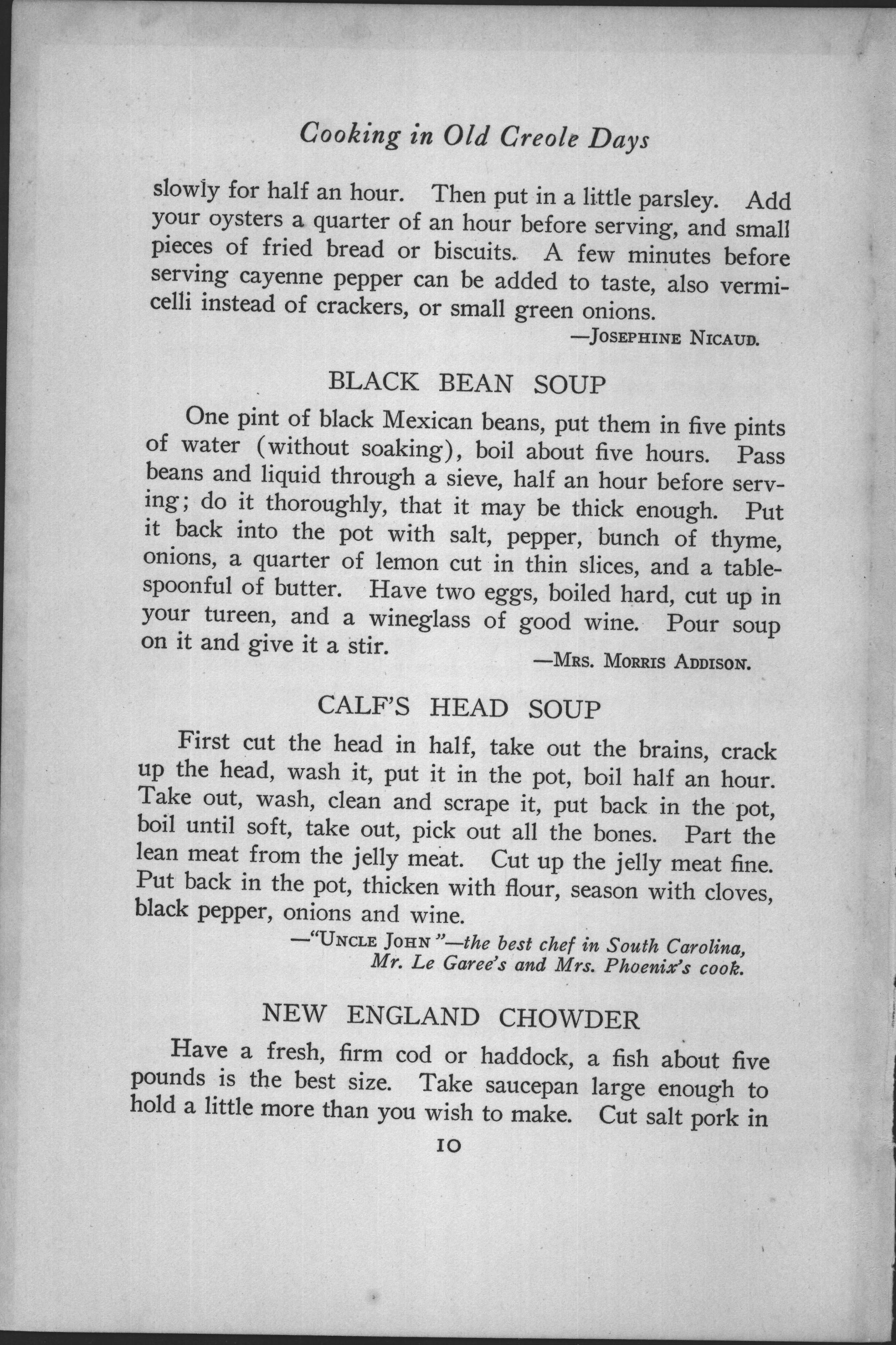
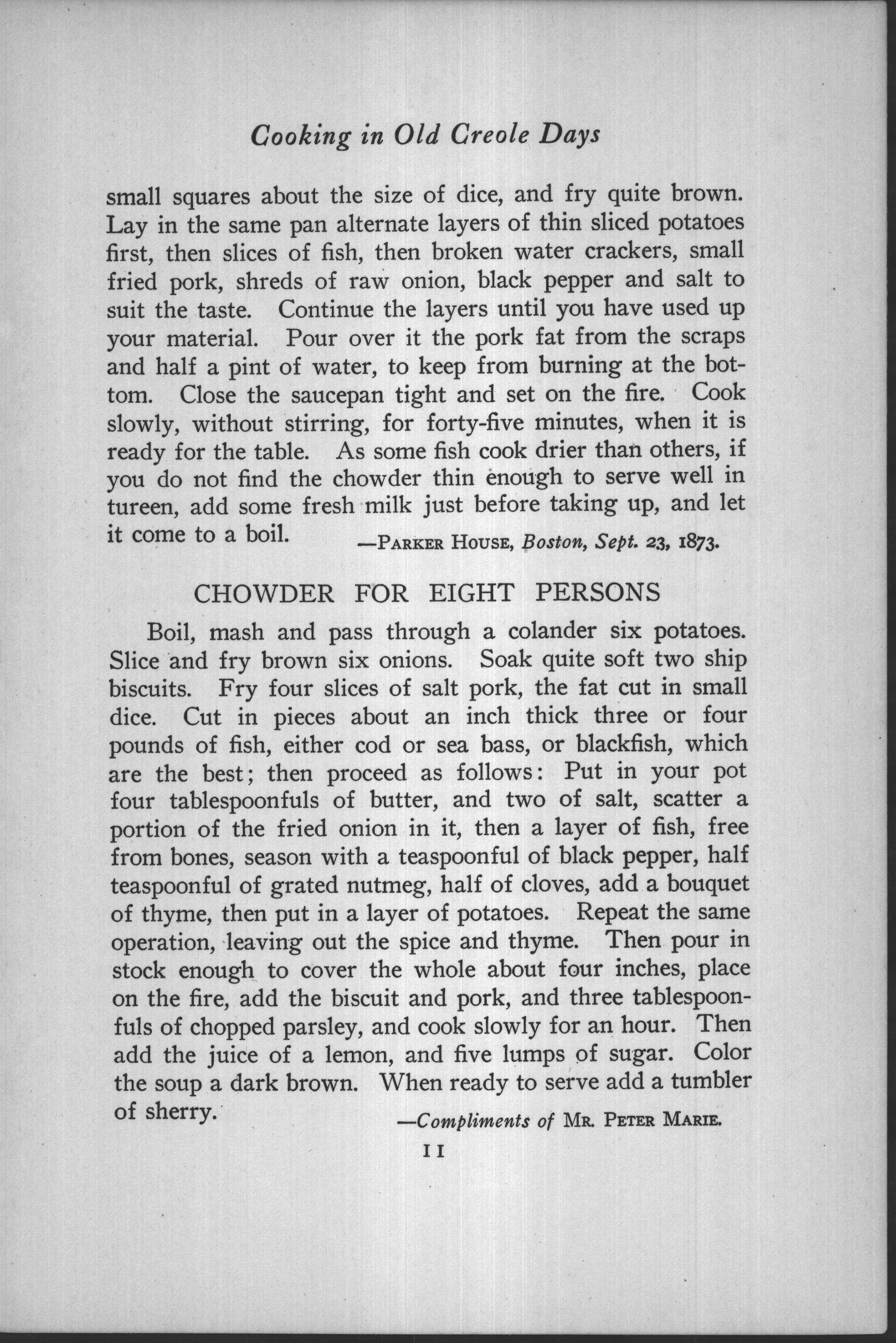
Have a fresh, firm cod or haddock, a fish about five pounds is the best size. Take saucepan large enough to hold a little more than you wish to make. Cut salt pork in small squares about the size of dice, and fry quite brown. Lay in the same pan alternate layers of thin sliced potatoes first, then slices of fish, then broken water crackers, small fried pork, shreds of raw onion, black pepper and salt to suit the taste. Continue the layers until you have used up your material. Pour over it the pork fat from the scraps and half a pint of water, to keep from burning at the bottom. Close the saucepan tight and set on the fire. Cook slowly, without stirring, for forty-five minutes, when it is ready for the table. As some fish cook drier than others, if you do not find the chowder thin enough to serve well in tureen, add some fresh milk just before taking up, and let it come to a boil.
A textbook layered New England fish chowder, transcribed from Boston’s Parker House in 1873 — and pointedly white, with no tomato in sight.
- The fishA firm white fish — cod or haddock, about 5 lb — is ideal. Cut into big chunks so it holds together in the layers.
- “Water crackers”Hard, plain crackers layered in to thicken and enrich the chowder. Use common/pilot crackers, oyster crackers, or saltines.
- Build it in layersSalt pork rendered first, then alternating layers of sliced potato, fish, broken crackers, onion, and seasoning — the classic chowder architecture, simmered gently so nothing breaks up.
- Salt porkRenders the base fat and flavor; thick-cut bacon substitutes and adds a little smoke.
That this recipe is dated and sourced — “Parker House, Boston, Sept. 23, 1873” — is a small treasure. The Parker House was one of America’s most storied hotels, birthplace of the Parker House roll and Boston cream pie. Its chowder is defiantly New England: milk-and-cracker rich, with no tomatoes — the very omission New Englanders guarded so fiercely that a later Maine legislator would jokingly propose outlawing tomatoes in chowder altogether. Finding this Yankee benchmark tucked inside a Créole cookbook shows how freely recipes crossed regional lines.
From page 10 of the 1904 edition.
Original pages from the book