Oyster Soup
Mary Randolph
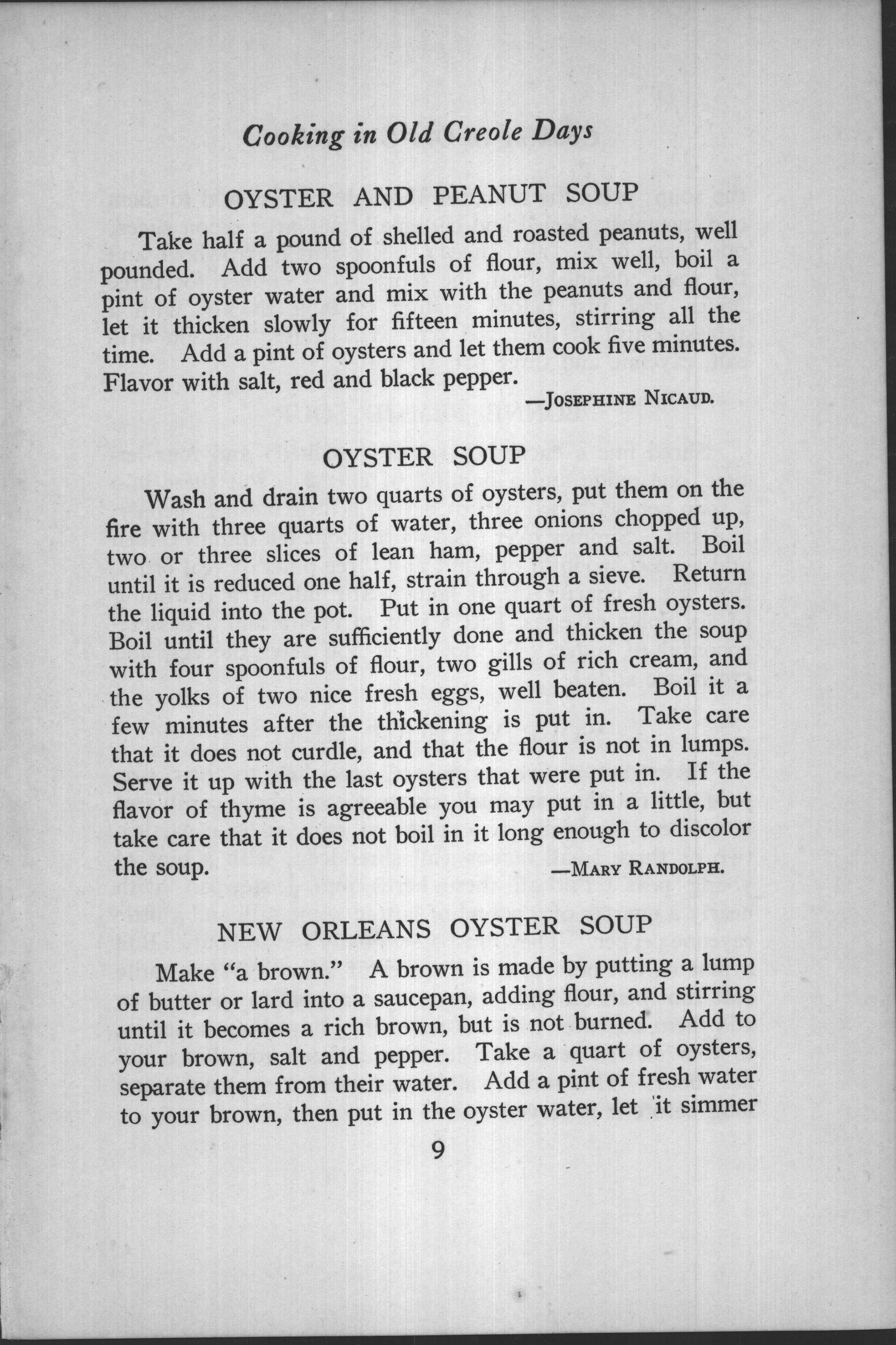
Wash and drain two quarts of oysters, put them on the fire with three quarts of water, three onions chopped up, two or three slices of lean ham, pepper and salt. Boil until it is reduced one half, strain through a sieve. Return the liquid into the pot. Put in one quart of fresh oysters. Boil until they are sufficiently done and thicken the soup with four spoonfuls of flour, two gills of rich cream, and the yolks of two nice fresh eggs, well beaten. Boil it a few minutes after the thickening is put in. Take care that it does not curdle, and that the flour is not in lumps. Serve it up with the last oysters that were put in. If the flavor of thyme is agreeable you may put in a little, but take care that it does not boil in it long enough to discolor the soup.
A two-stage oyster soup — a first batch builds a deep oyster stock, then fresh oysters go in to finish. The result is intensely of the sea.
- Two rounds of oystersThe first two quarts are simmered and strained out to flavor the broth; a final quart of fresh oysters is added at the end, cooked just until done. Don’t skip the second round — it’s the point.
- The measures“Two gills of cream” = ½ cup; “four spoonfuls of flour” thickens; the yolks enrich. Temper the yolks and cream in off the heat and don’t boil.
- Strain the basePass the first stock through a sieve for a clean, smooth soup before the final oysters go in.
- FreshnessOysters and their liquor are the whole show — use the freshest you can, and their strained liquor as part of the broth.
This recipe is credited to Mary Randolph, whose The Virginia House-wife (1824) is widely regarded as the first truly American regional cookbook — a foundational text of Southern cooking. Its appearance here, eighty years on, shows how recipes traveled and were handed down through generations of Southern kitchens. It’s also a reminder of just how central the oyster once was to American eating: in the 19th century they were cheap, ubiquitous, and devoured by the barrel, coast to coast.
From page 9 of the 1904 edition.
Original page from the book