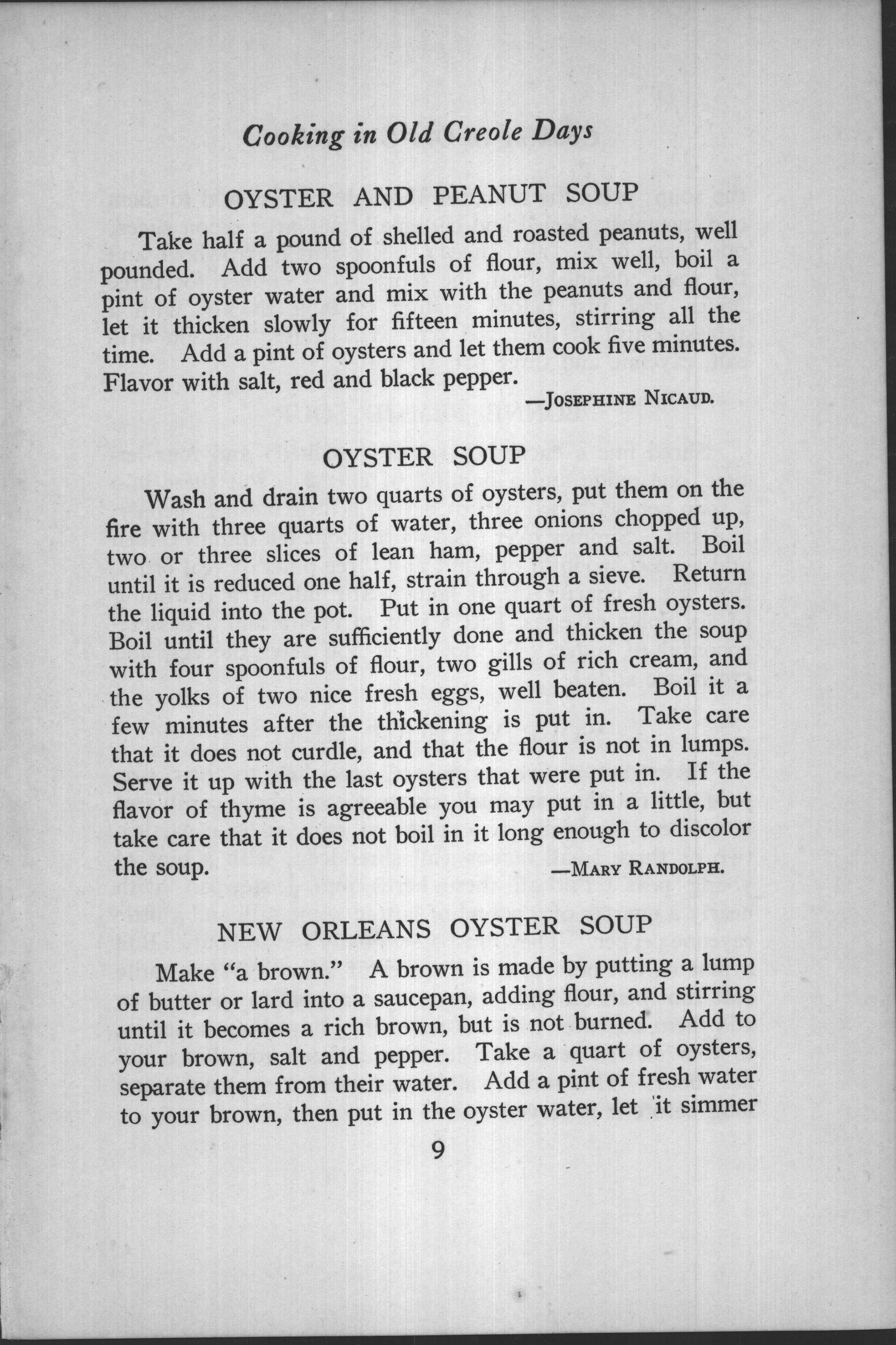
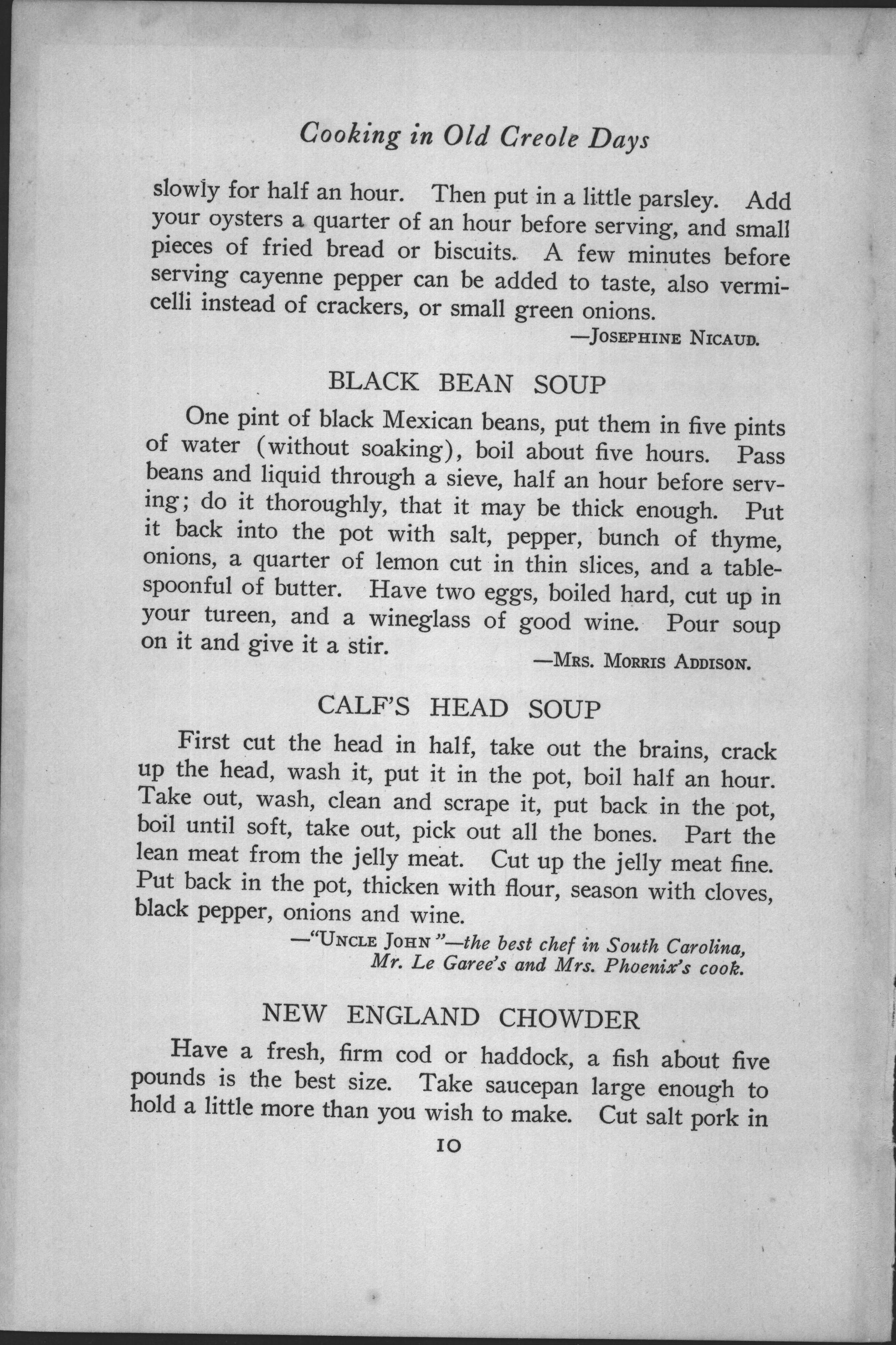
New Orleans Oyster Soup
Josephine Nicaud
Make "a brown." A brown is made by putting a lump of butter or lard into a saucepan, adding flour, and stirring until it becomes a rich brown, but is not burned. Add to your brown, salt and pepper. Take a quart of oysters, separate them from their water. Add a pint of fresh water to your brown, then put in the oyster water, let it simmer slowly for half an hour. Then put in a little parsley. Add your oysters a quarter of an hour before serving, and small pieces of fried bread or biscuits. A few minutes before serving cayenne pepper can be added to taste, also vermicelli instead of crackers, or small green onions.
Short, punchy, and pure New Orleans: it starts by teaching you to “make a brown” — a roux — and builds an oyster soup on it.
- “Make a brown” = make a rouxButter or lard + flour, stirred until richly brown “but not burned.” This is the foundation of nearly all Créole cooking, explained here in a single sentence.
- Use the oyster liquorSeparate the oysters from their liquid and build the soup on both the liquor and a little fresh water — that briny liquor is free flavor.
- Oysters go in lastAdd them “a quarter hour” before serving, just until plump and their edges curl. Overcooking toughens them.
- Keep it simpleSalt, pepper, and parsley are all it needs — the roux and oysters carry it.
“First, make a roux” is the traditional opening line of Louisiana cookery, and here it’s spelled out for the beginner as “make a brown.” That patient browning of flour and fat — French in origin, perfected in Louisiana — is the flavor base beneath gumbos, stews, and soups across the region. Built on it, oysters were the natural partner: pulled by the wagonload from the Gulf, they were among the cheapest and most abundant foods in 19th-century New Orleans. The recipe again bears the name of the Eustis cook Josephine Nicaud.
From page 9 of the 1904 edition.
Original pages from the book