Sorrel Soup
Leonie Penin
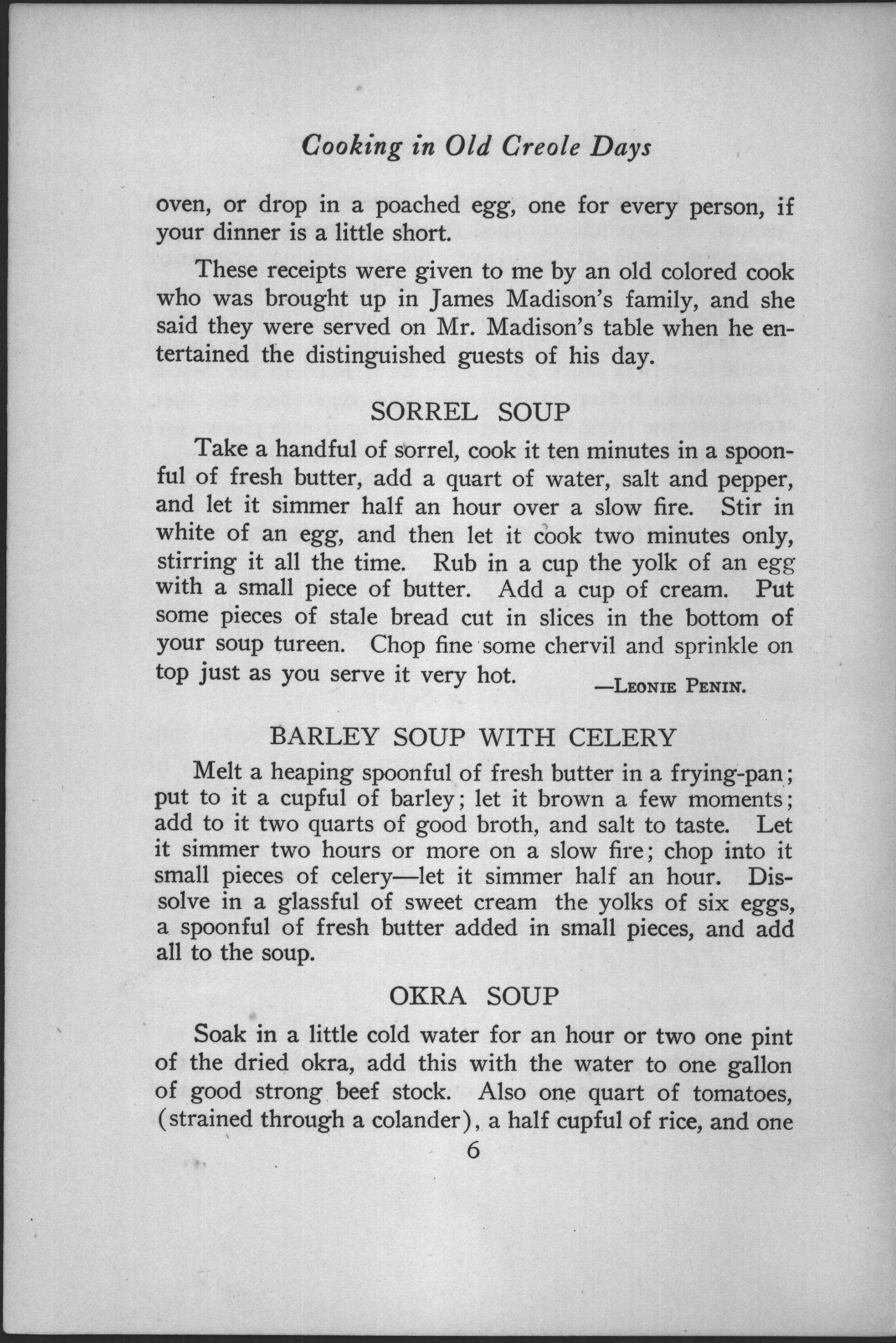
Take a handful of sorrel, cook it ten minutes in a spoonful of fresh butter, add a quart of water, salt and pepper, and let it simmer half an hour over a slow fire. Stir in white of an egg, and then let it cook two minutes only, stirring it all the time. Rub in a cup the yolk of an egg with a small piece of butter. Add a cup of cream. Put some pieces of stale bread cut in slices in the bottom of your soup tureen. Chop fine some chervil and sprinkle on top just as you serve it very hot.
A bright, tart spring soup finished with an egg-and-cream liaison. The trick, as with all such soups, is not to let the eggs boil.
- Sorrel’s flavor — and a substituteSorrel is intensely lemony (from oxalic acid). If you can’t find it, use spinach with a good squeeze of lemon to mimic the tang.
- It will “melt” and dull in colorCooked sorrel collapses to a khaki purée — that’s normal, not a mistake. The flavor is the reward.
- The liaisonYolk + butter + cream stirred in at the end enriches and thickens. Add it off the heat and warm gently; do not boil, or the yolk curdles.
- The egg whiteStirring in the white first, cooked just two minutes, adds delicate shreds — a period touch you can keep or skip.
Sorrel — oseille in French — was a garden staple for centuries precisely for the sharp, lemony edge it brought before lemons were cheap and common. Its tartness comes from oxalic acid, the same compound that gives rhubarb its bite. Potages of sorrel and other “pot herbs” were everyday fare in French kitchens, and the technique here — greens softened in butter, bound with egg and cream — is the template for a whole family of classic French soups.
From page 6 of the 1904 edition.
Original page from the book