Pot au Feu
The pot au feu is served daily in French families
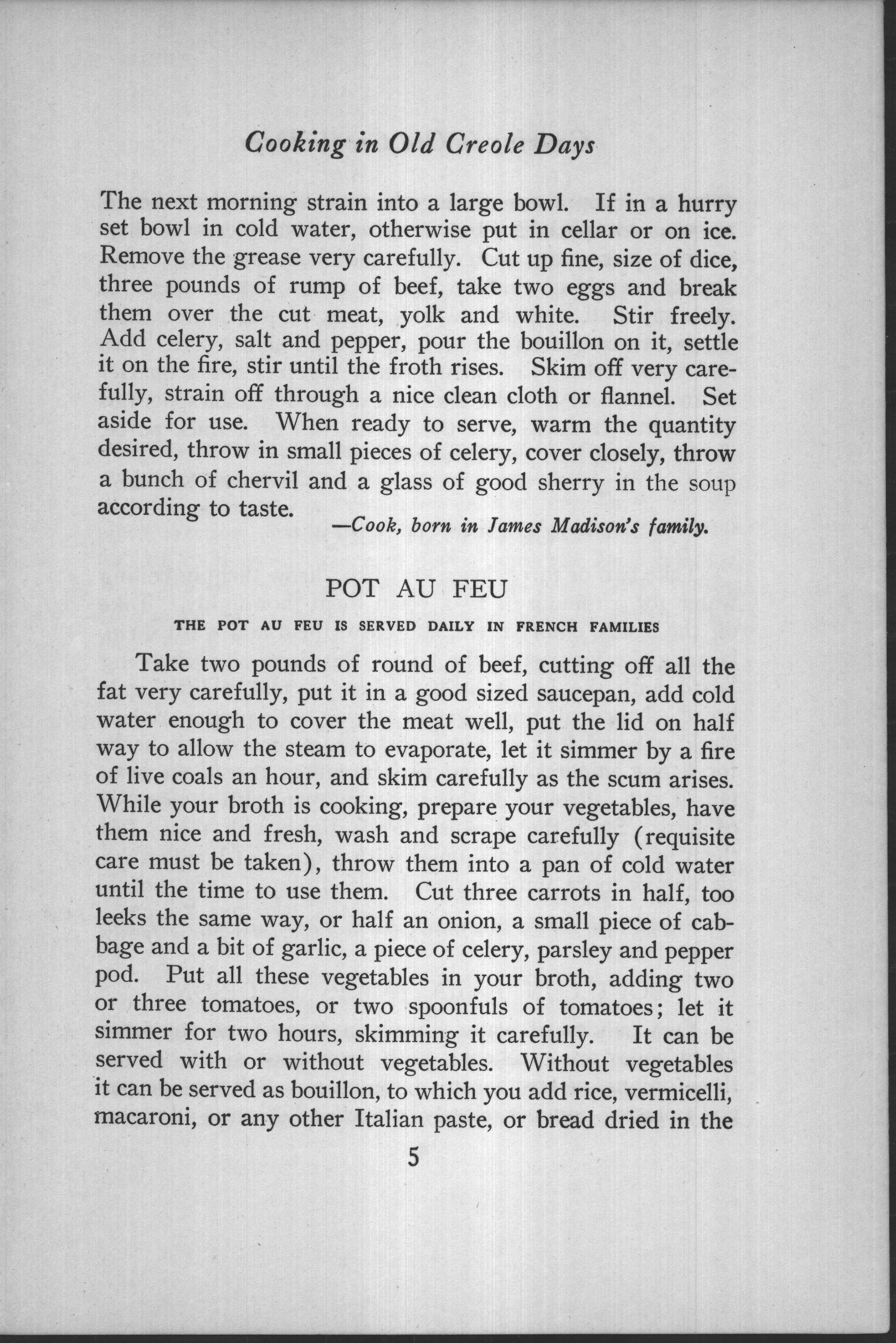
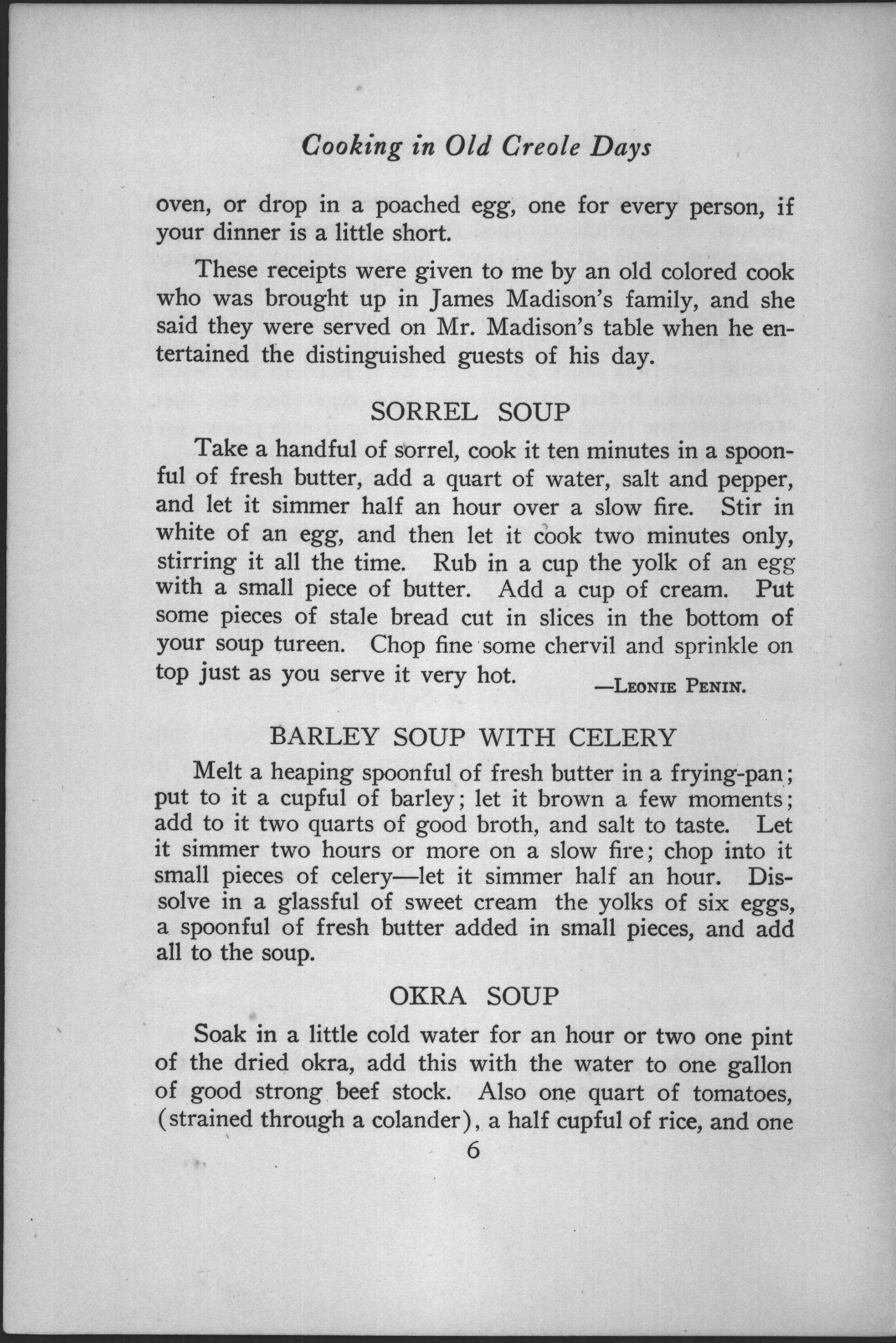
Take two pounds of round of beef, cutting off all the fat very carefully, put it in a good sized saucepan, add cold water enough to cover the meat well, put the lid on half way to allow the steam to evaporate, let it simmer by a fire of live coals an hour, and skim carefully as the scum arises. While your broth is cooking, prepare your vegetables, have them nice and fresh, wash and scrape carefully (requisite care must be taken), throw them into a pan of cold water until the time to use them. Cut three carrots in half, too leeks the same way, or half an onion, a small piece of cabbage and a bit of garlic, a piece of celery, parsley and pepper pod. Put all these vegetables in your broth, adding two or three tomatoes, or two spoonfuls of tomatoes; let it simmer for two hours, skimming it carefully. It can be served with or without vegetables. Without vegetables it can be served as bouillon, to which you add rice, vermicelli, macaroni, or any other Italian paste, or bread dried in the oven, or drop in a poached egg, one for every person, if your dinner is a little short.
The French family dinner in one pot: a gentle simmer of beef and vegetables that yields both a clear broth and a plate of boiled meat. Patience is the only real technique.
- The cut“Round of beef” works, but a tougher, collagen-rich cut (chuck, brisket, short rib, or shank) rewards the long simmer with more flavor and tenderness.
- Skim, and keep it barely simmeringThe recipe’s care to “skim as the scum arises” and cook at a bare simmer is what keeps the broth clear. A hard boil turns it cloudy and greasy.
- Two courses from one potServe the strained broth first (over bread or with noodles), then the sliced beef and vegetables with mustard, pickles, and coarse salt — the traditional way.
- TimeGive it 3–4 hours. Add quick-cooking vegetables partway through so they don’t turn to mush.
Pot-au-feu — literally “pot on the fire” — is often called the national dish of France, the everyday meal that once sat simmering at the edge of nearly every hearth. Its genius is economy: one cheap cut and a few vegetables become soup, meat course, and next-day leftovers. The great chef Georges-Auguste Escoffier held it up as the very emblem of French family cooking, “the symbol of family life.” Its presence in a Créole book is a reminder of how deeply French the foundations of New Orleans cooking run.
From page 5 of the 1904 edition.
Original pages from the book