Souffle Biscuits
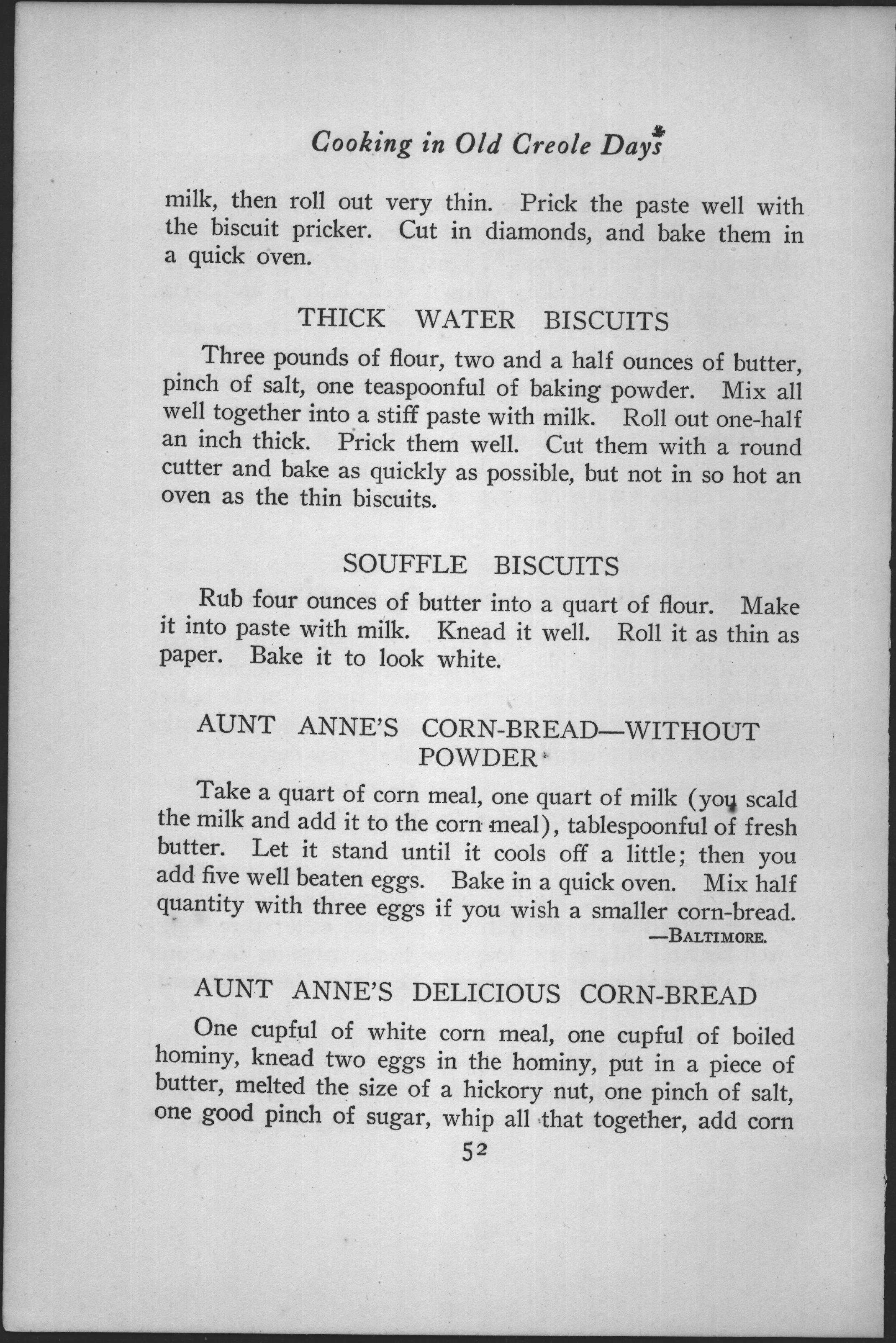
Rub four ounces of butter into a quart of flour. Make it into paste with milk. Knead it well. Roll it as thin as paper. Bake it to look white.
Don’t picture an egg soufflé — here “soufflé” means simply puffed and light: a rich, buttery cracker rolled thin and baked pale.
- “Four ounces of butter”That’s 8 Tbsp (one stick), rubbed into a quart of flour, about 4 cups — a generously short, tender dough.
- “Make into paste with milk”Add milk gradually to reach a firm but workable paste, then knead until smooth and springy.
- “Thin as paper”The thinner the sheet, the more delicate and “puffed” the finished bite; roll it firmly and as evenly as you can.
- “Bake it to look white”The aim is a pale, crisp cracker, so use a slow oven, around 300–325°F, and pull them the moment before they begin to color.
- Prick if they balloonWith no docking mentioned, they may bubble; a quick prick with a fork keeps them flat if you’d rather they lie even.
In old cookbooks soufflé meant simply “puffed up,” from the French souffler, to blow — long before the word settled onto the airy egg dish we picture today. A soufflé biscuit is a rich, thin cracker meant to blister and lift in the oven into something shatteringly light. Baking it “to look white” was itself a mark of refinement: a pale, delicate biscuit signaled a genteel table and a careful hand, the sort of dainty accompaniment set out with tea, cheese, or a sweet at the finer end of the nineteenth-century table.
From page 52 of the 1904 edition.
Original page from the book