String Beans
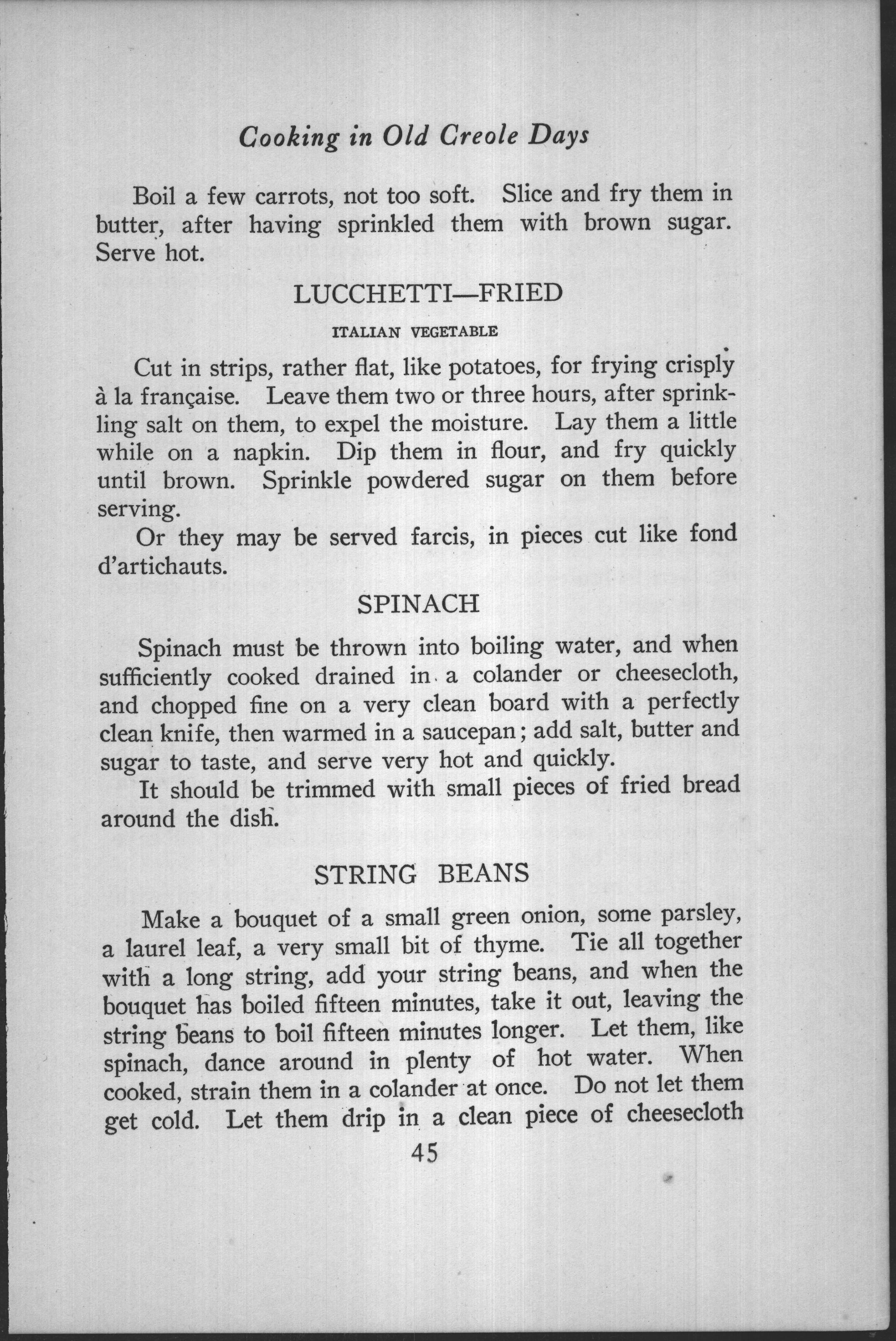
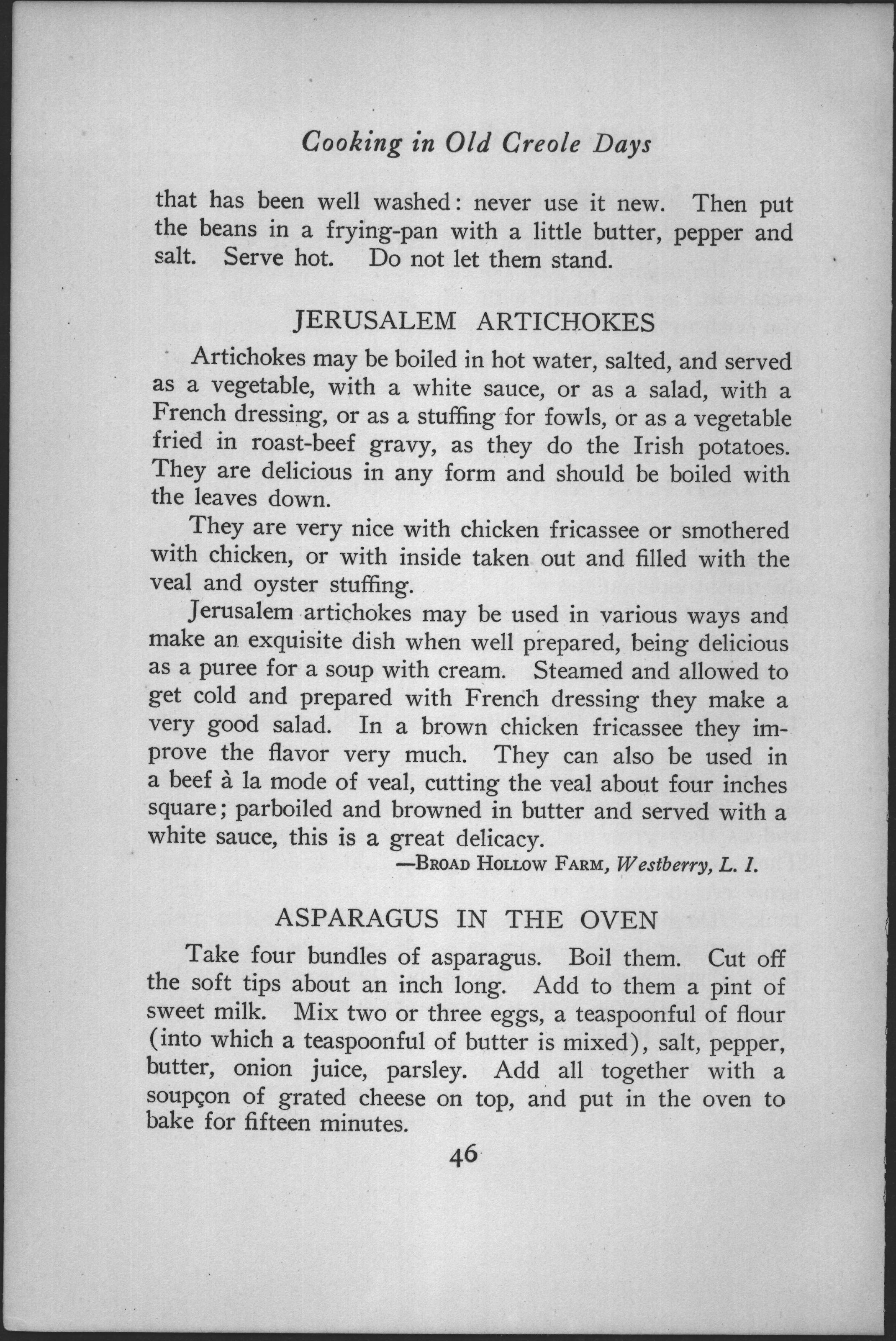
Make a bouquet of a small green onion, some parsley, a laurel leaf, a very small bit of thyme. Tie all together with a long string, add your string beans, and when the bouquet has boiled fifteen minutes, take it out, leaving the string beans to boil fifteen minutes longer. Let them, like spinach, dance around in plenty of hot water. When cooked, strain them in a colander at once. Do not let them get cold. Let them drip in a clean piece of cheesecloth that has been well washed: never use it new. Then put the beans in a frying-pan with a little butter, pepper and salt. Serve hot. Do not let them stand.
Green beans boiled with a little herb bouquet, then finished in butter — the trick is fast, open-pot boiling to keep them green, and serving them the moment they are done.
- “Bouquet” = bouquet garniThe tied bundle of green onion, parsley, thyme, and bay is a bouquet garni — it flavors the water, then lifts out cleanly by its string.
- “Laurel leaf” = bay leafLaurel is simply bay; one leaf is plenty.
- Boil hard and uncoveredLetting them “dance” in plenty of hot water, lid off, sets their color; a covered, sluggish pot turns beans drab.
- Shorten the cookingThirty minutes suits old, mature beans; today’s tender ones need only 4–7 minutes to crisp-tender before their turn in the butter.
- “Never use it new”New cheesecloth carries mill sizing and starch; the cook rightly insists on well-washed cloth so nothing off-flavored touches the beans.
The string bean is a thoroughly American plant. Phaseolus vulgaris was domesticated in the Americas — in Mexico and the Andes — thousands of years ago, another of the “Three Sisters” grown alongside corn and squash, and it crossed to Europe only after 1492. Its old name comes from the fibrous “string” that once ran along each pod’s seam and had to be zipped off before cooking. That chore largely vanished in the 1890s, thanks to a New York plant breeder, Calvin Keeney, who is credited with developing the first practical stringless bean — the ancestor of nearly every green bean sold today.
From page 45 of the 1904 edition.
Original pages from the book