Sweet Potatoes, Four Ways
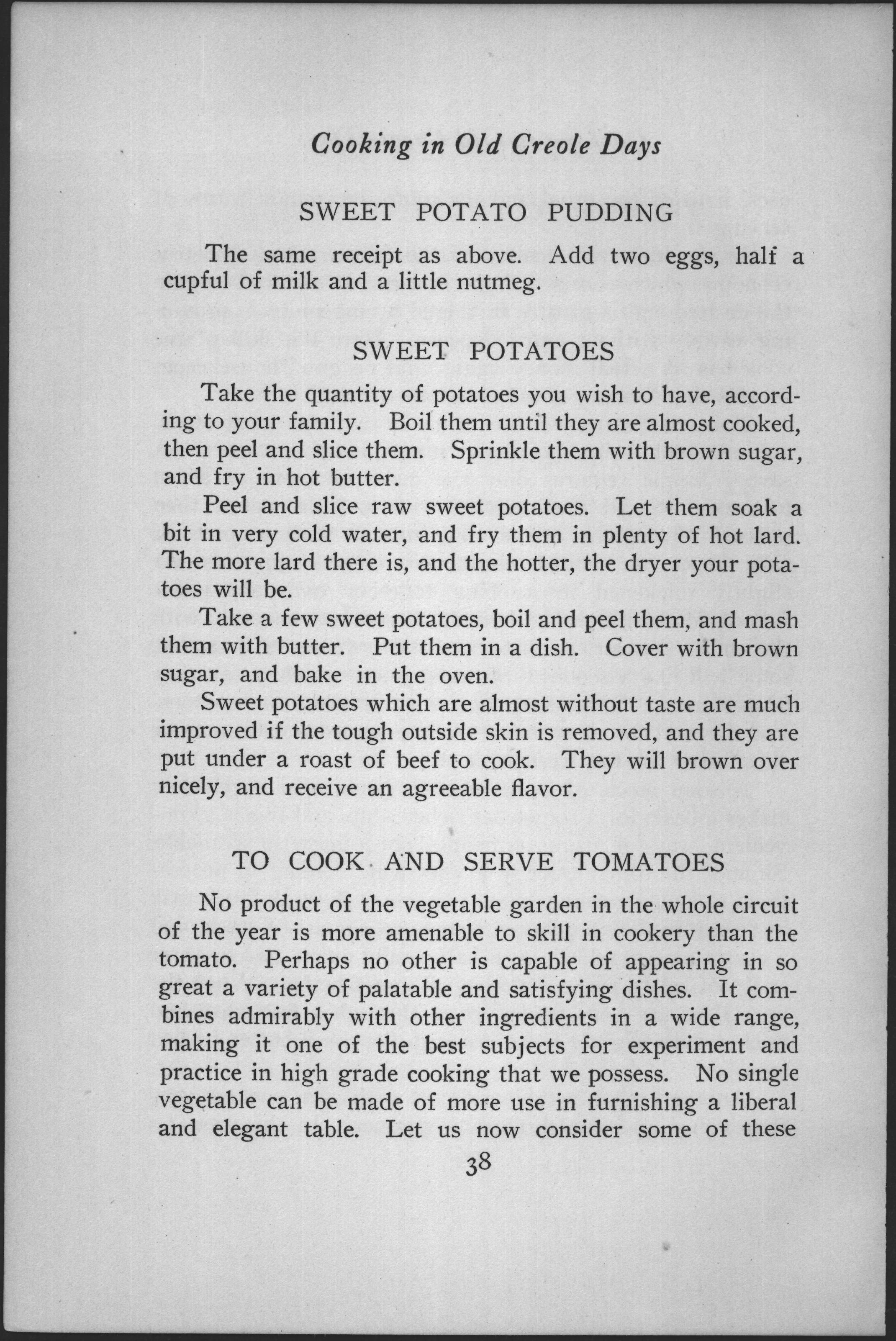
Take the quantity of potatoes you wish to have, according to your family. Boil them until they are almost cooked, then peel and slice them. Sprinkle them with brown sugar, and fry in hot butter.
Peel and slice raw sweet potatoes. Let them soak a bit in very cold water, and fry them in plenty of hot lard. The more lard there is, and the hotter, the dryer your potatoes will be.
Take a few sweet potatoes, boil and peel them, and mash them with butter. Put them in a dish. Cover with brown sugar, and bake in the oven.
Sweet potatoes which are almost without taste are much improved if the tough outside skin is removed, and they are put under a roast of beef to cook. They will brown over nicely, and receive an agreeable flavor.
Four different treatments in one entry — boiled-then-fried, raw-fried like chips, mashed and candied, and roasted under the joint — a whole small repertoire for the humble sweet potato.
- Method one: candied slicesBoil until almost done, slice, dust with brown sugar and fry in butter — the sugar caramelizes into a glaze.
- Method two: sweet-potato chipsRaw thin slices soaked in cold water, then fried in plenty of very hot fat; the soak and the heat give crisp, dry chips. Swap a neutral oil for the lard, at about 350–375°F.
- Method three: mashed and bakedBoil, peel, mash with butter, cover with brown sugar and bake — essentially candied sweet potatoes.
- Method four: under the roastTuck peeled sweet potatoes under a beef roast so they brown in the drippings; a modern cook can roast them in the same pan as the meat.
- Why fat and sugarThe generous lard and brown sugar aren’t excess — fat crisps and sugar caramelizes, which is how a bland late-season potato was made appealing.
By the late 19th century the sweet potato was so central to Southern eating that a cook was expected to know many ways with it, exactly as this fourfold entry assumes. Frying and candying were the favorites: hot fat and brown sugar transformed a starchy, sometimes flavorless root into something rich enough for a holiday table. The candied version here — boiled, mashed, sugared and baked — is a close cousin of the marshmallow-topped casserole that later became an American Thanksgiving fixture, though that sticky finale was a 20th-century marketing flourish.
From page 38 of the 1904 edition.
Original page from the book