Cocoa-nut Biscuits
INGREDIENTS.-10 oz. of sifted sugar, 3 eggs, 6 oz. of grated cocoa-nut. AVERAGE COST, 9d.
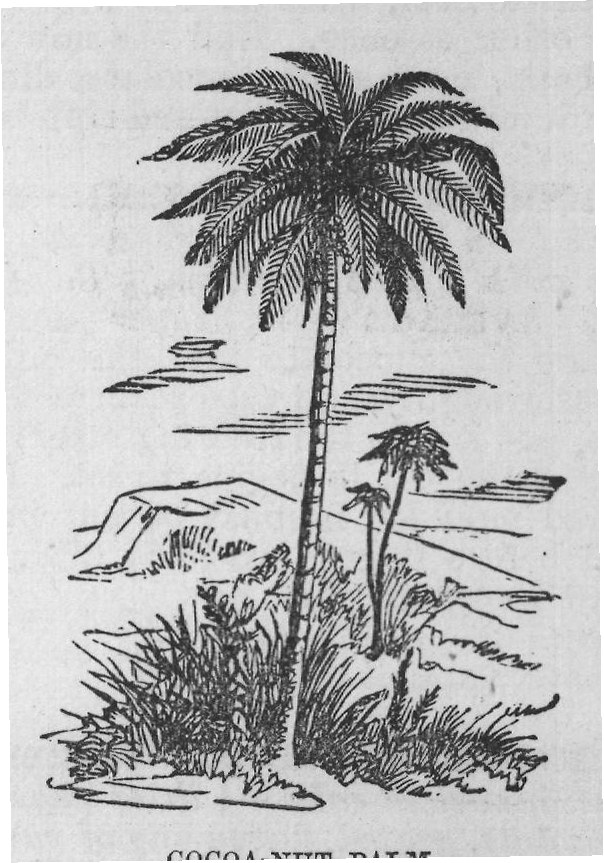
Whisk the eggs until they are very light, then add the sugar gradually, afterwards at a time of the paste in the form of a the grated cocoa-nut. Roll a tablespoonful pyramid, place them on paper and the COCOA-NUT PALM. paper on tins and bake the biscuits in rather a cool oven till they are just coloured a light brown.
TIME. To bake, about 15 minutes.
SEASONABLE at any time.
A three-ingredient coconut macaroon, garbled slightly by the scanner but entirely workable. The interleaved words "COCOA-NUT PALM" are captions from an engraving on the same page, not part of the method.
- The hinge: whisk the eggs properlyThe eggs are the only leavening and the only structure here. Whisk whole eggs until pale, thick and well increased in volume, then rain the sugar in gradually so the foam is not knocked down; the coconut is folded in last.
- "Rather a cool oven"The book gives no temperatures; period usage puts a cool oven somewhere in the region of 275-300F, and you will need to judge by eye. These should dry out and set rather than brown; the recipe wants them only "just coloured a light brown". Fifteen minutes is the recipe's own time, and larger pyramids will want longer.
- Cocoa-nut means fresh coconutBeeton's cook grated the meat of a whole nut, which is moist and comparatively coarse. Modern desiccated coconut is dry and will absorb the egg differently, giving a stiffer paste; unsweetened frozen grated coconut, thawed and blotted, is the closer match. If using desiccated, expect to need slightly less than 6 oz.
- Weights, not cups10 oz sifted sugar is about 1 1/3 cups caster or superfine; 6 oz grated coconut is roughly 2 cups loosely packed. The sugar-to-coconut ratio is high by modern taste, and reducing the sugar will make a paste that slumps rather than holds a pyramid.
- Paper on tinsThe paper was there to stop a near-pure sugar mixture welding itself to a bare baking tin. Parchment does the same job; greased foil is more likely to let them spread.
- ShapingA tablespoonful pressed into a cone by hand, or pushed into a small dariole mould and turned out. Damp fingers stop the mixture sticking.
- Yield and keepingYield depends on the size of the pyramids; a tablespoonful each from this quantity of paste gives a couple of dozen or more. They soften in a humid kitchen, so keep them airtight and eat them soon after baking.
- Cost noteThe "average cost, 9d." is Beeton-era pricing; the figure alone will not tell you much more than that the dish was cheap to make.
Coconut reached British kitchens in quantity in the second half of the nineteenth century, as steam shipping and the copra trade made the nuts cheap enough for an ordinary confectioner's counter. The mixture here is meringue-based rather than a dough, and the biscuits are shaped as pyramids. An engraving of a coconut palm has crept into the scanned text.