Home › Ice Creams, Etc › Bean Soup (One teacupful of beans soaked)
Bean Soup (One teacupful of beans soaked)
One teacupful of beans soaked over night is to be used with each quart of water and half a pound of meat. Simmer for four hours. Take out the beans, mash, and strain through a colander with the soup, leaving out the bits of meat and bone; return to the soup-pot and simmer a little longer, with stirring. Season to the taste. Pea soup may be made by using peas instead of beans.
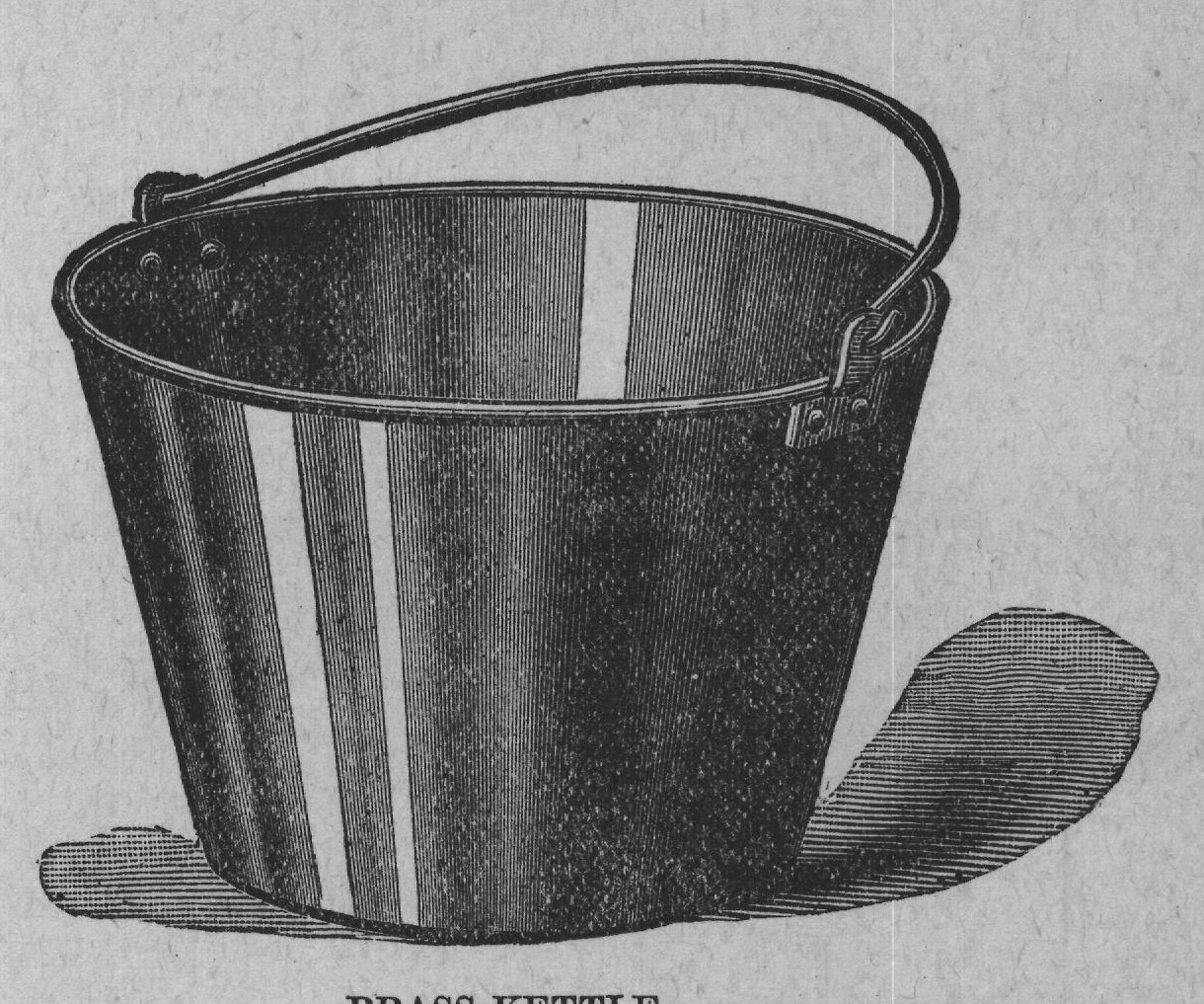
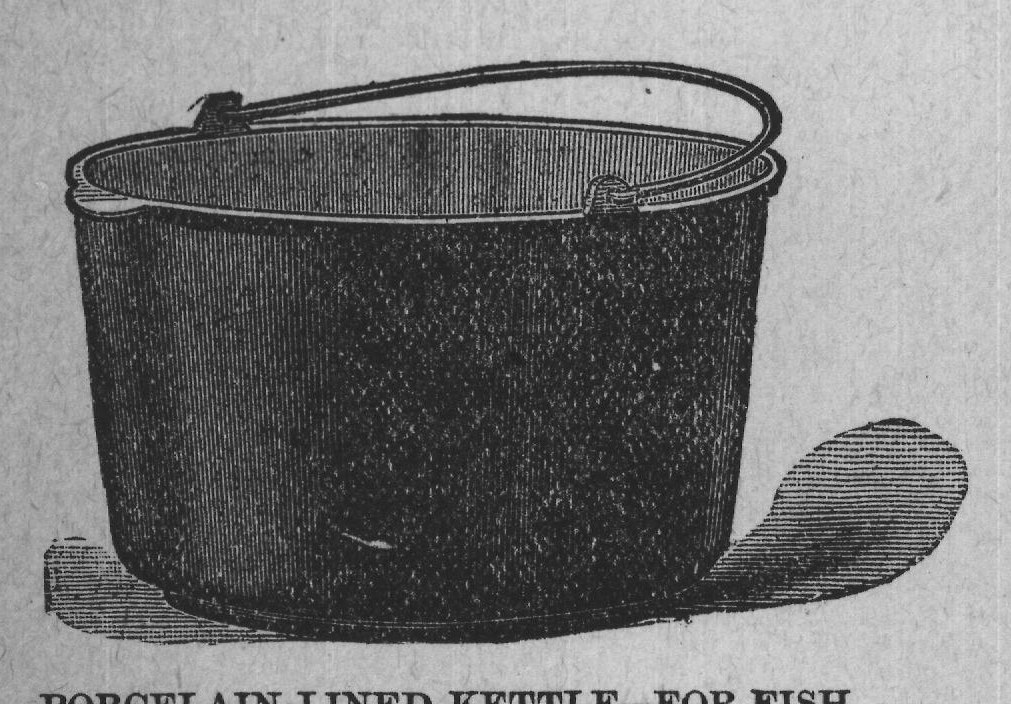
A ratio recipe rather than a fixed one: one teacup of soaked beans, one quart of water and half a pound of meat, multiplied as needed. The stray capitals are captions from kitchen-equipment illustrations that ran alongside the text, not part of the method.
- The teacupfulPeriod teacups were not standardised, running roughly 4 to 6 fl oz, so figure somewhere between half a cup and three-quarters of a cup of dried beans per quart of water. Either way it is a thick soup; a quart of liquid will have reduced considerably over four hours.
- The kettle mattersThe "brass kettle" caption is a relic of an era when unlined brass and copper were still in kitchens. Bare brass reacts with salt and acid and can leave a metallic taint, one of the arguments made for porcelain-lined ware at the time. Use any nonreactive heavy pot.
- Four hours is generousBeans sold today are usually fresher and cook faster. Soaked navy or great northern beans are tender in 1 to 2 hours of gentle simmering; older stock takes longer. Cook to softness rather than by the clock, and top up with water as it evaporates.
- The meatThe recipe says only "meat," and the mention of bits of meat and bone suggests a bone-in cut; a ham bone, hock or piece of salt pork would be the usual choice. If you use a cured cut, taste before adding any salt at the end, since a hock can carry the whole dish.
- StrainingPressing the beans through a colander gives a soup with texture and no skins. A food mill does the same job faster. A blender or stick blender gives a smoother, more uniform result, which is a different soup but not a worse one.
- Stirring at the endOnce puréed the soup is thick and scorches easily. Keep the heat low and stir through the final simmer, or finish it in a heavy pot over a diffuser.
- The pea variantSplit peas need no overnight soak and break down on their own in about an hour, which makes the straining step largely unnecessary. Whole dried peas do need soaking and behave much like the beans.
- YieldAs written, one teacup of beans and a quart of water gives roughly two generous servings after reduction. Scale the whole ratio up rather than stretching one batch with extra water.
Dried-bean soup thickened with a piece of cured pork is one of the oldest and cheapest dishes in the American domestic repertoire, and compilations like this one print it almost as a formula rather than a recipe: a ratio of beans to water to meat that any cook could scale to the household. The navy bean's common name is usually traced to its long service as a US Navy ration, though the derivation is traditional rather than documented, and the ham-bone-and-bean pot was standard economy in kitchens where nothing from a cured joint was wasted. The intruding capitals, PORCELAIN-LINED KETTLE and BRASS KETTLE, are captions that belonged to equipment cuts on the same page; they point to a real transition of the period, as enamel- and porcelain-lined ware displaced bare brass and copper in ordinary kitchens, partly on grounds of safety and partly because manufacturers were advertising hard.