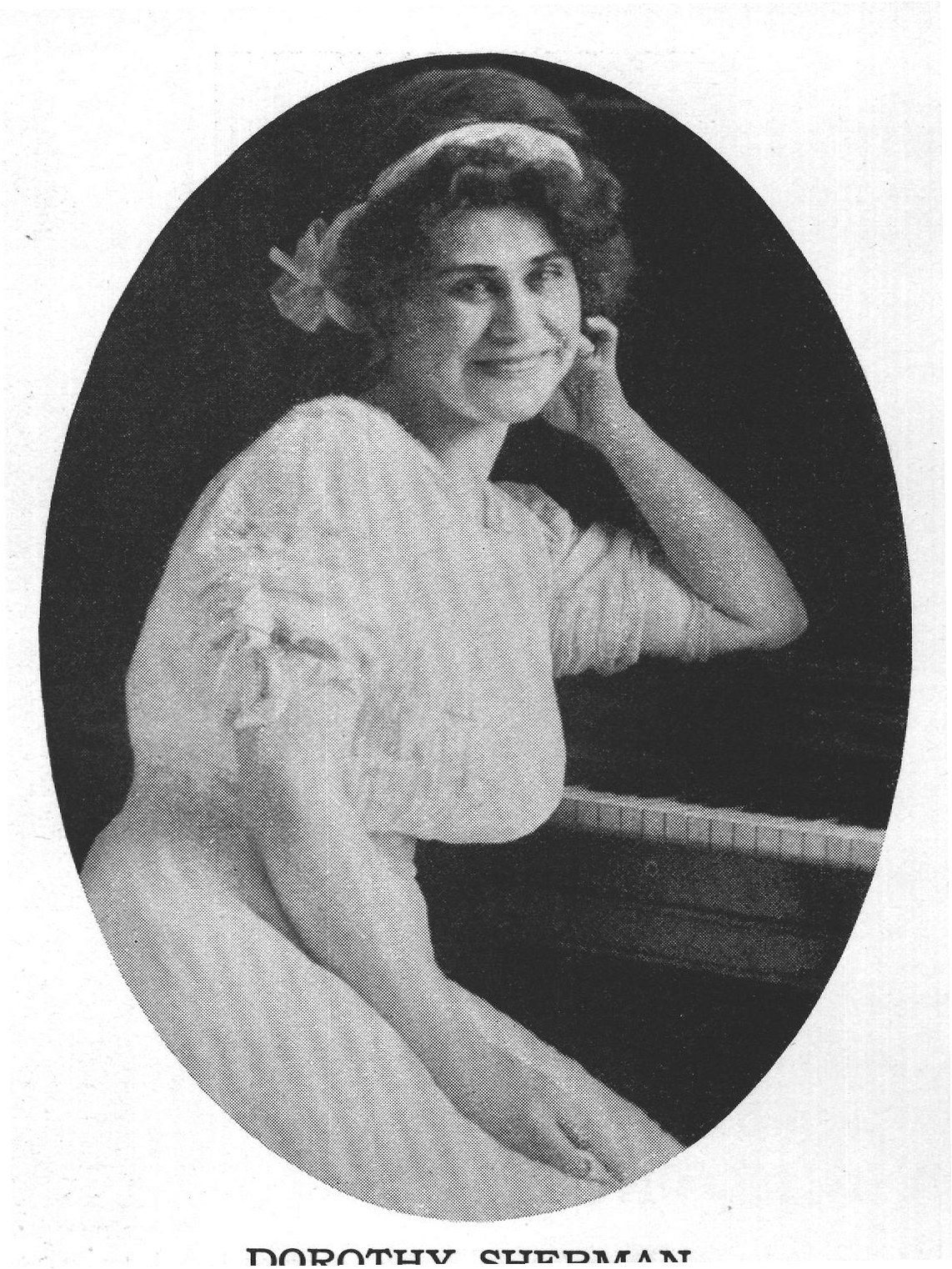
Dorothy Sherman

DOROTHY SHERMAN'S BROWN BREAD
2 cups white flour ½ cake compressed yeast 2 cups water (lukewarm) 1/2 cup sugar Pinch of salt 2 cups Graham flour Dissolve yeast in water and mix with the white flour and set aside to rise over night. Stir in sugar and salt and Graham flour.
Pour into well-greased bread or loaf pans and set aside for two hours or until it rises to top of pan. Bake in moderate oven three-quarters of an hour.
This is a delicious dark bread that is "different." 191 Dooly Horman
STUFFED PINEAPPLE
A large pineapple should be scooped out, leaving only the empty shell. Cut the top off square so that it can be placed on again.
Shred or chop the inside part and add to it a chopped apple, banana and grapefruit. Add sufficient soft sugar to suit and a glass of sherry.
Mix all well and place back in the pineapple shell with top on. Chill in ice box and serve with macaroons on the side.
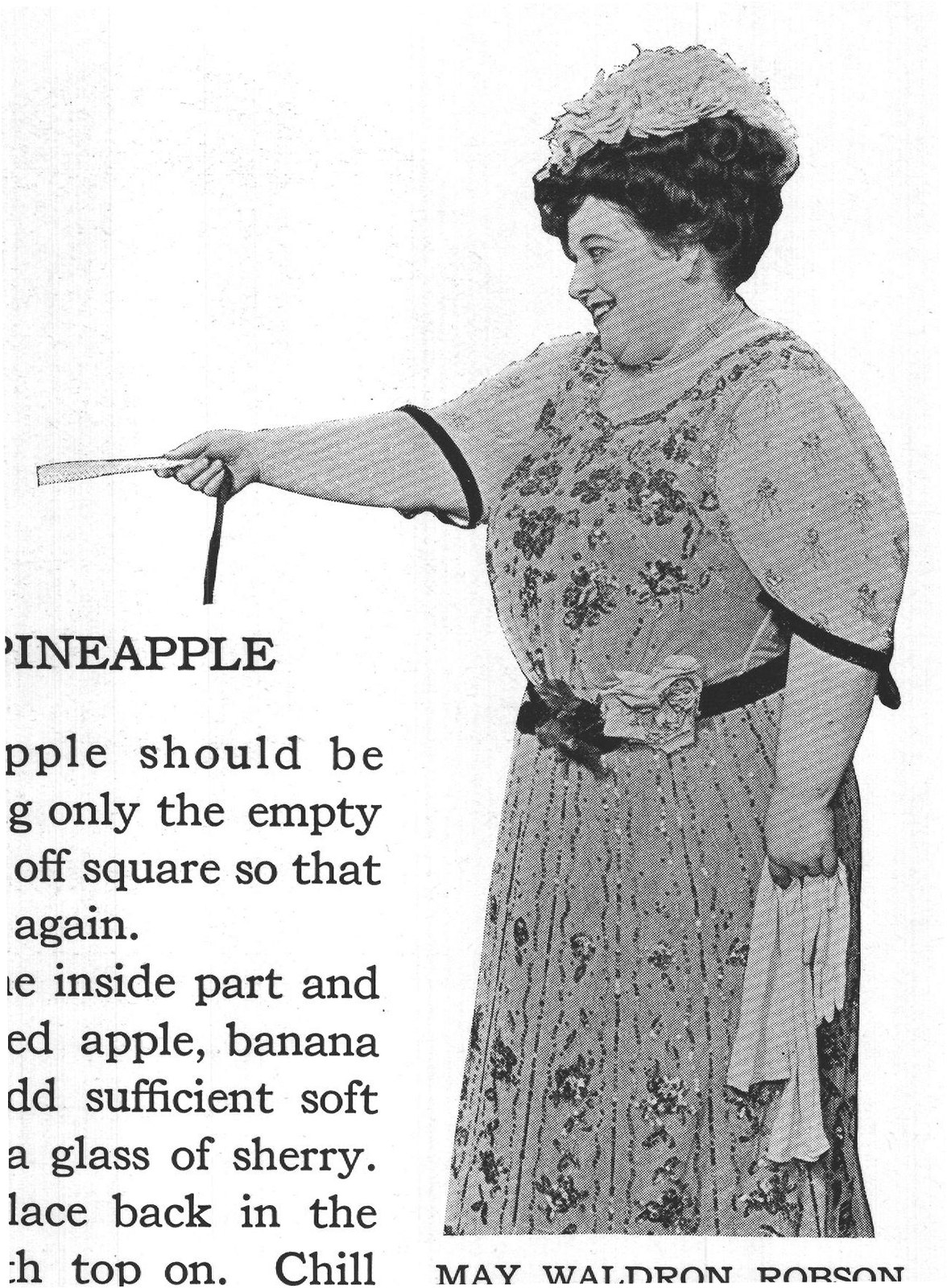
MAY WALDRON ROBSON
(MRS. STUART ROBSON) This is my favorite summer dish and is one of my few culinary attainments. Mus Stuart Robson
OYSTERS WITH GREEN PEPPERS
Put a tablespoonful of butter into a frying pan and fry in it a green pepper and a small onion, both chopped fine. Add a pint of oysters with their liquid, season with salt and paprika, and cook for five minutes. Serve on hot buttered toast.
Sincerely,
Three separate contributions share this page: a no-knead batter bread, a fruit salad served in its own shell, and a quick oyster pan dish. Each needs a little translation.
- Compressed yeastA cake of compressed yeast was about 0.6 oz, roughly equivalent to 2¼ tsp active dry or instant yeast. For 1½ cakes use about 1 tablespoon of modern dry yeast, though a scant 2 teaspoons is plenty for a slow overnight rise in a warm kitchen.
- Graham flourWhole wheat flour, coarsely milled with the bran and germ left in. Standard stone-ground whole wheat is the closest match; ordinary fine whole wheat works but gives a smoother crumb.
- This is a batter, not a doughFour cups of flour to two cups of water plus the sponge gives a wet, spoonable mixture. There is no kneading step and none is wanted: stir in the sugar, salt and Graham flour, scrape it straight into the pans, and let it climb. Expect one 9x5 loaf or two smaller pans.
- Moderate ovenGenerally taken as around 350F, with period usage running as high as 375F. Three-quarters of an hour is about right for a single large loaf; the center should read 200-205F. A wet batter bread stays gummy if pulled early.
- Overnight spongeThe first rise is left at room temperature all night. In a warm modern kitchen it may collapse by morning, which does no harm to the flavor; if your room runs above 75F, start it in the evening and use the lower yeast quantity.
- Glass of sherry, soft sugarA wine glass of the period is roughly 2 to 4 fl oz; start at 2 oz and taste. "Soft sugar" means a moist, fine-grained sugar, so superfine white or light brown both suit. A large pineapple with an apple, banana and grapefruit serves four to six.
- Oysters need less time than five minutesSweat the pepper and onion until soft first, then add the oysters and their liquor and cook only until the edges ruffle, two to three minutes. Held longer they tighten and turn rubbery. A pint of shucked oysters serves three or four on toast.
- Chilling the pineapple"Ice box" means a few hours in the refrigerator, not a freezer. The banana will darken, so add it last if the salad is to sit for long.
Celebrity cookbooks assembled from stage performers were a staple charity fundraiser in the early twentieth century, and the contributions tend to be exactly what these are: one thing the contributor genuinely made, offered with a note of apology or pride. Mrs. Stuart Robson's admission that stuffed pineapple is "one of my few culinary attainments" is the honest voice of the genre. The brown bread is the more revealing entry, since Graham flour carries the name of Sylvester Graham, the antebellum reformer who preached unsifted whole wheat as a moral as well as dietary matter; by the time this book appeared, Graham flour had long since shed the preaching and become an ordinary grocery item used, as here, simply because it made a dark loaf that was "different" from the white bread on every other table. The oyster dish belongs to an era when fresh oysters were a routine urban ingredient, sold by the pint in their liquor and cooked in minutes on the stove top.