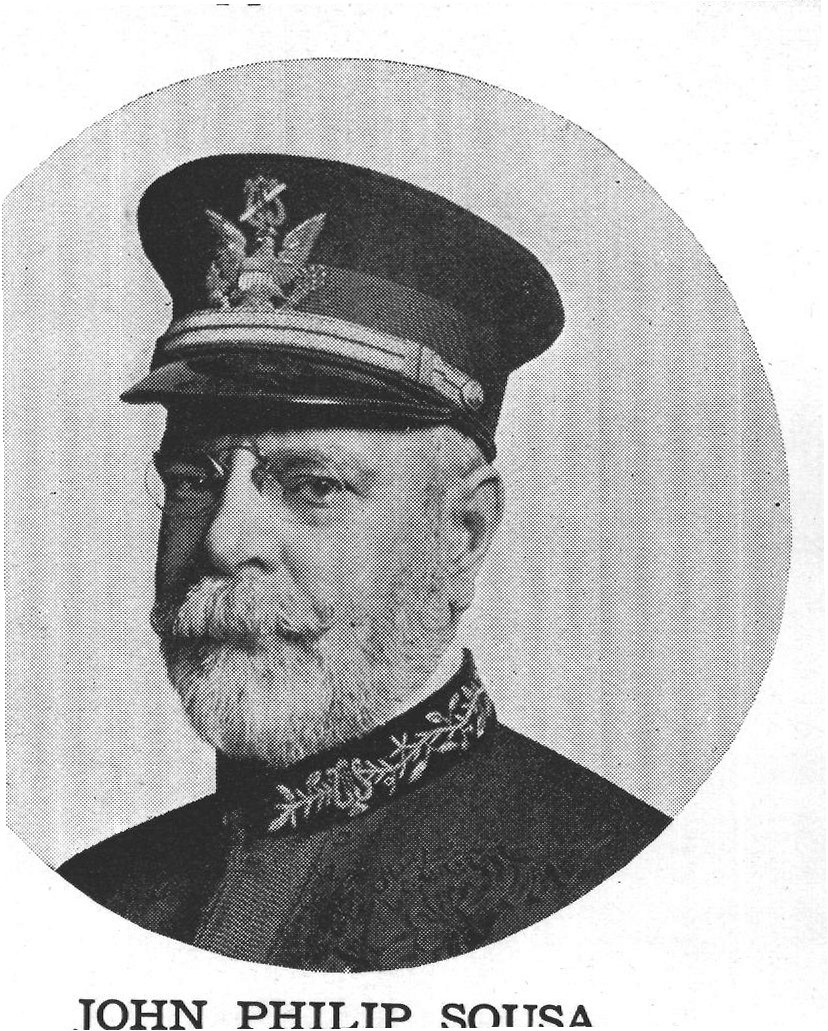
John Philip Sousa

plum. Put into sauce and boil one and one-half hours slowly. This makes fully three hours' slow boiling for the sauce.
SPAGHETTI
Use a package or a pound of spaghetti; not macaroni. Have a large pot of boiling water with about one tablespoonful of salt. Slide the spaghetti into the water. Do not break it. Boil exactly twenty minutes. Must be tender, not tough, nor doughy.
To sauce, add three bay leaves one hour before taking off the stove.
Serve spaghetti on large platter, pouring tomato sauce over it. Serve pelotas on smaller platter, allowing a small quantity of sauce to remain.
Serve grated Parmesan cheese on side. Use the piece of cheese to grate, not bottled cheese.
This serves from six to eight people and is my favorite dish. Johd thily Sousa ½ cup butter
GERMAN WAFFLES
1 cup powdered sugar 2 cups flour 2 teaspoons Royal baking 8 egg yolks powder 7/8 cup milk ½ teaspoon salt Gratings of lemon peel the sugar, beating to a Cream the butter, add cream; beat thoroughly. Sift the flour, salt and baking powder and add with the milk alternately; add the lemon peel.
Cook in waffle irons.
Олон
SWEET MILK GRIDDLE-CAKES
3 cups flour 1/4 cup sugar 1/2 tablespoons Royal baking 2 cups milk powder 1 teaspoon salt 1 egg 2 tablespoons melted butter Mix and sift dry ingredients; beat egg, add milk, and pour slowly on first mixture. Beat thoroughly and add butter. Begin cooking at once. Drop by spoonfuls on a hot griddle (greased); cook on one side. When puffed full of bubbles, and cooked on edges, turn, and cook on other side. Serve with butter and maple syrup.
Sincerely yours,
The spaghetti is the complete recipe here; the sauce and the pelotas that go with it survive only as a tail end, and the waffle and griddle-cake formulas belong to other contributors. Cook the pasta by feel rather than by Sousa's stopwatch.
- The twenty minutesTwenty minutes suggests a thicker, coarser dried spaghetti than we now buy; modern extruded dried spaghetti is usually done in 8 to 11 minutes, so start tasting at eight. Sousa's own test is the safer guide: treat "tender, not tough, nor doughy" as the rule and the clock as a suggestion.
- Do not break itThis matters more than it sounds. Slide one end of the bundle into the water, hold for ten seconds until it softens, then press the rest down with a spoon so the strands fan out rather than knot.
- Salt the waterOne tablespoon in a large pot is on the light side by current practice; a heaped tablespoon to four quarts gives pasta that tastes seasoned rather than merely wet.
- PelotasSpanish for "balls," i.e. meatballs, shaped and then simmered in the sauce for an hour and a half as the fragment describes. Here they are served on their own platter rather than heaped on the pasta.
- Three hours of sauceThe long slow boil is a tomato gravy in the old style, reduced until sweet and dark. Keep it at a bare tremble in a heavy pot and stir the bottom often; three hours of unattended boiling will scorch in thin modern cookware.
- Bay leaves at the endThe three leaves go in only for the final hour rather than at the start; an hour in the pot is enough to draw out the aroma.
- The cheese"Not bottled cheese" was a real distinction in the 1920s, when pre-grated cheese was sold in glass jars and often heavily dried. Buy a wedge of Parmigiano-Reggiano or grana and grate it at the table.
- YieldA pound of spaghetti with sauce and pelotas serves six to eight as the original claims, which suits it to a family dinner rather than a small one.
Sousa (1854-1932) was the son of a trombonist in the Marine Band who was born in Spain of Portuguese parentage, and of a Bavarian mother. The recipe as printed is Italian-American in character -- a tomato sauce given hours of slow boiling -- with the meatballs called pelotas. The book belongs to a genre of celebrity contribution collections; the repeated specification of a named brand of baking powder in the surrounding pages suggests such collections were often assembled and distributed by manufacturers as advertising.