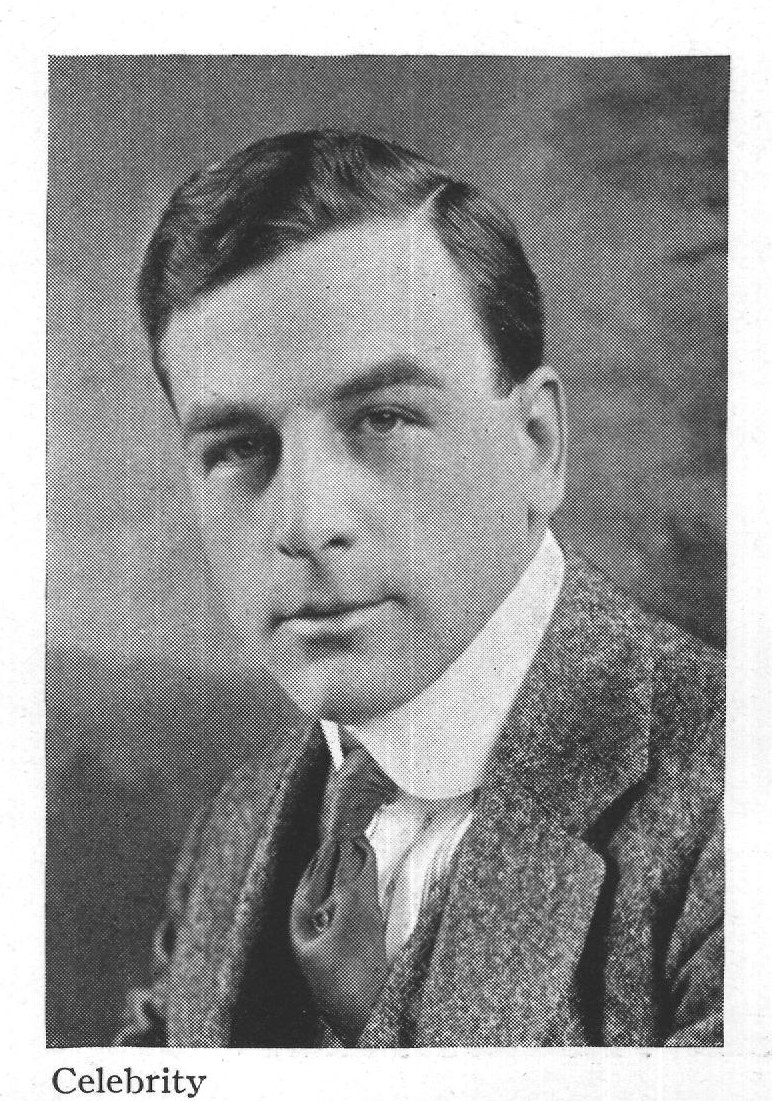
Milton Sills

6 large potatoes 1 onion
POTATO PANCAKES
Enough flour to make a batter Salt and pepper 1 egg Yeast powder in proportion to flour used-1 teaspoon to one cup Grate the potatoes into a large, yellow bowl and add onion (grated) and pepper and salt to taste.
Break the egg in and beat all up together while stirring, add flour and yeast powder until it drops rapidly from spoon, like pancake mixture.
Fry in plenty of lard or vegetable fat and serve very hot with apple sauce on the side.
These are a splendid meat substitute.
Sincerely yours,
A latke batter with almost no measurements — the flour is judged by how the mixture drops from the spoon. A few notes make it repeatable.
- "Yeast powder" is baking powderThe term was common into the 1920s for chemical leaveners sold in tins. Use one teaspoon per cup of flour, as the recipe says; it lightens the pancake rather than raising it.
- Drain the grated potatoSix large potatoes will shed a great deal of liquid. Squeeze the gratings in a towel and let the starch settle out of the drained liquid, then stir that starch back in — otherwise the batter thins as it sits and you compensate with too much flour.
- Work fast against browningGrated raw potato greys within minutes. Grate the onion in with it (its acidity slows discoloration slightly) and get the batter into the fat promptly.
- How much flourThe quantity varies with how wet the potato is; the recipe's own ratio (a teaspoon of yeast powder to one cup) implies flour measured in cups rather than fractions. Go by the described consistency: it should drop rapidly from the spoon, not pour and not hold a peak.
- Grate size mattersThe large holes of a box grater give a shaggy, crisp-edged pancake; the fine side gives a denser, more custardy one. The recipe does not specify which.
- Frying fatThe recipe allows lard or vegetable fat; lard gives the fuller flavour, and any neutral fat with a high smoke point works. "Plenty" means shallow-frying at about a quarter inch deep, around 350–365F — the pancakes should sizzle steadily and take three to four minutes a side.
- Yield and servingAbout sixteen to twenty pancakes of three inches, serving four to six. Hold finished ones in a single layer on a rack in a 200F oven rather than stacking them, which steams the crust.
- "A splendid meat substitute"A phrase with real weight in the 1920s, when meatless days were still a household economy. Applesauce on the side is standard; sour cream is the other traditional partner.
Potato pancakes reached American cookbooks along several routes at once — German, Jewish, Polish and Irish households all had a version — and by the time this book was compiled the grated-potato cake with onion and egg was thoroughly naturalized. The applesauce pairing is generally traced to Central European practice, where fruit compotes routinely accompanied fried starches. What dates this particular text is the vocabulary: "yeast powder" for baking powder, lard specified before vegetable fat as the default frying medium, and the note that the dish is a meat substitute, a selling point in an era of wartime and post-war thrift campaigns. Sills himself was an anomaly among screen idols — he had taught philosophy and psychology at the University of Chicago before turning to the stage — and the celebrity cookbook genre of the 1920s traded precisely on this kind of contrast between the glamorous public figure and the homely dish submitted over a signature.