Bouillon à la James Madison
Cook, born in James Madison's family
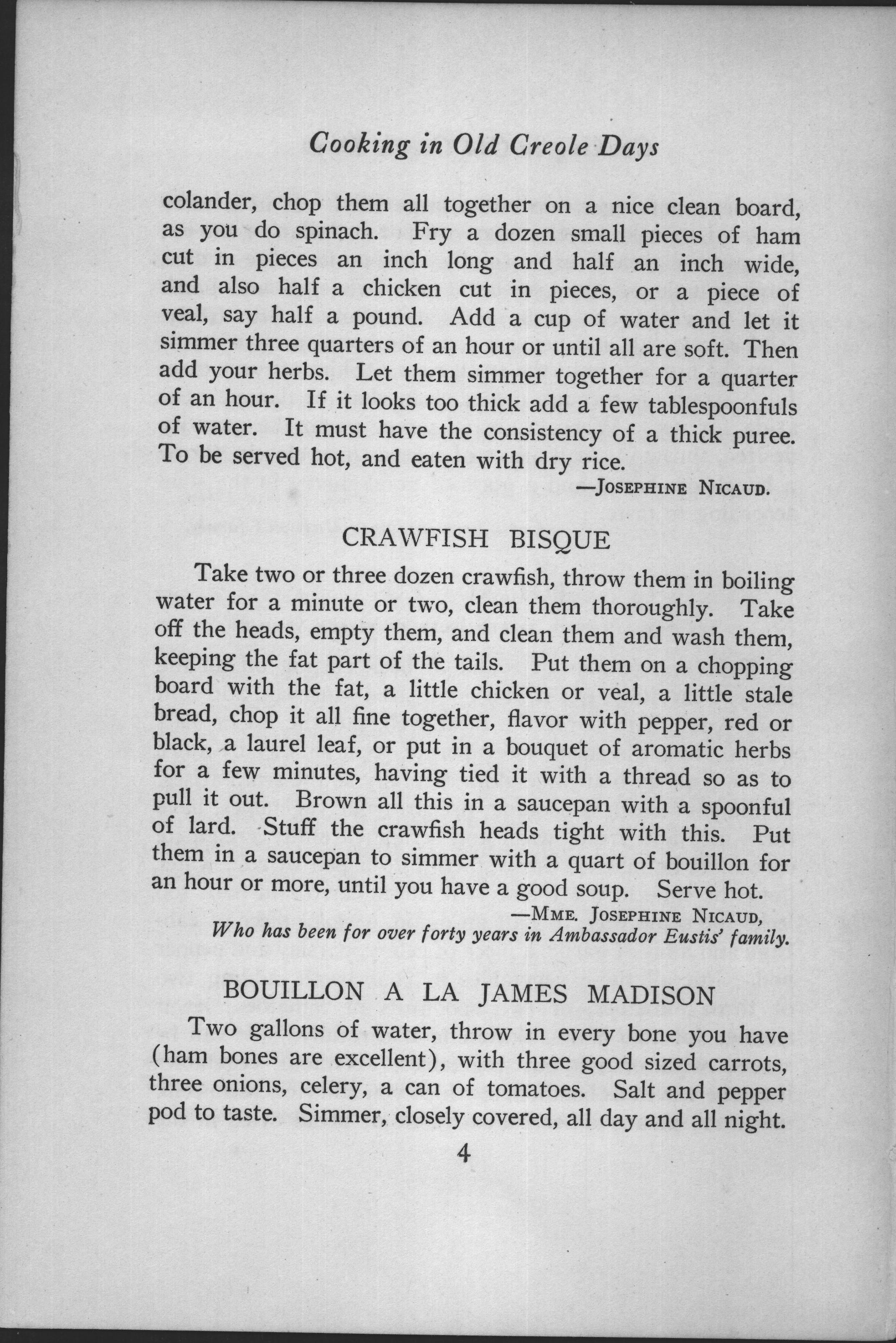
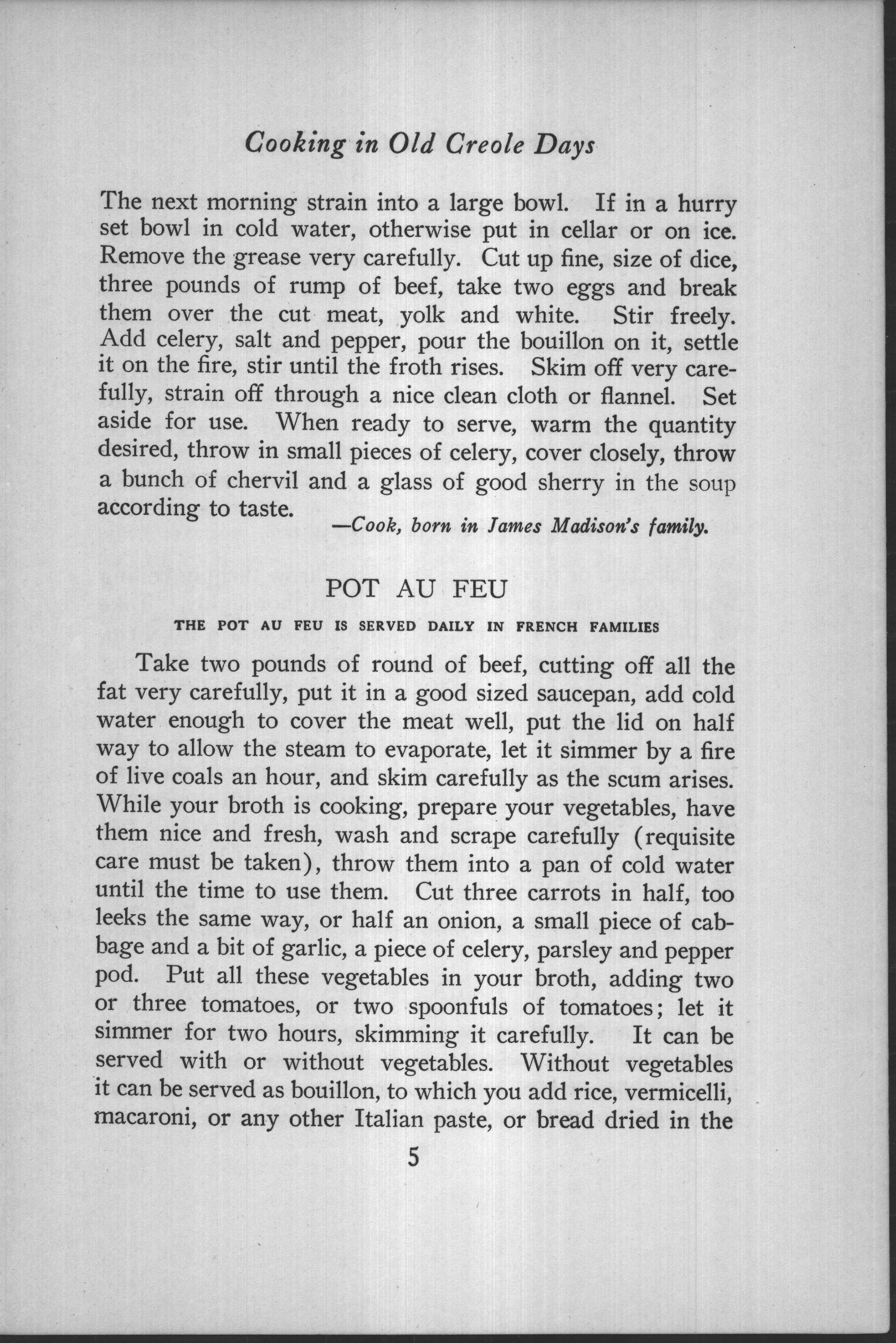
Two gallons of water, throw in every bone you have (ham bones are excellent), with three good sized carrots, three onions, celery, a can of tomatoes. Salt and pepper pod to taste. Simmer, closely covered, all day and all night. The next morning strain into a large bowl. If in a hurry set bowl in cold water, otherwise put in cellar or on ice. Remove the grease very carefully. Cut up fine, size of dice, three pounds of rump of beef, take two eggs and break them over the cut meat, yolk and white. Stir freely. Add celery, salt and pepper, pour the bouillon on it, settle it on the fire, stir until the froth rises. Skim off very carefully, strain off through a nice clean cloth or flannel. Set aside for use. When ready to serve, warm the quantity desired, throw in small pieces of celery, cover closely, throw a bunch of chervil and a glass of good sherry in the soup according to taste.
These receipts were given to me by an old colored cook who was brought up in James Madison's family, and she said they were served on Mr. Madison's table when he entertained the distinguished guests of his day.
A deeply savory, day-long bouillon — essentially a homemade consommé base — built from bones, vegetables, and time.
- It’s a stock, then a soupTwo gallons of water, “every bone you have” (ham bones especially), carrots, onions, celery, and tomatoes, simmered all day and night, then strained and degreased. That’s a classic long stock.
- Chill to degreaseThe instruction to cool it and lift off the fat is exactly right — refrigerate overnight and the fat sets on top for easy removal.
- “Salt and pepper pod to taste”A “pepper pod” is a whole dried chili; add one for gentle warmth, or season with cayenne at the end.
- Modern timingYou needn’t simmer “all day and all night” — 4–6 hours gives a rich bouillon. A pressure cooker does it in about 90 minutes.
The recipe is credited to a cook “born in James Madison’s family” — that is, born into the household of the fourth President. Behind that genteel phrasing is a hard historical truth: the kitchens of Madison and his fellow Virginia planters were run by enslaved cooks, whose skill shaped what we think of as early American cuisine even as their names went largely unrecorded. A bouillon carried out of the Madison kitchen and set down here, generations later, is a thread connecting a New Orleans cookbook back to the founding-era table — and to the uncredited people who cooked at it.
From page 4 of the 1904 edition.
Original pages from the book