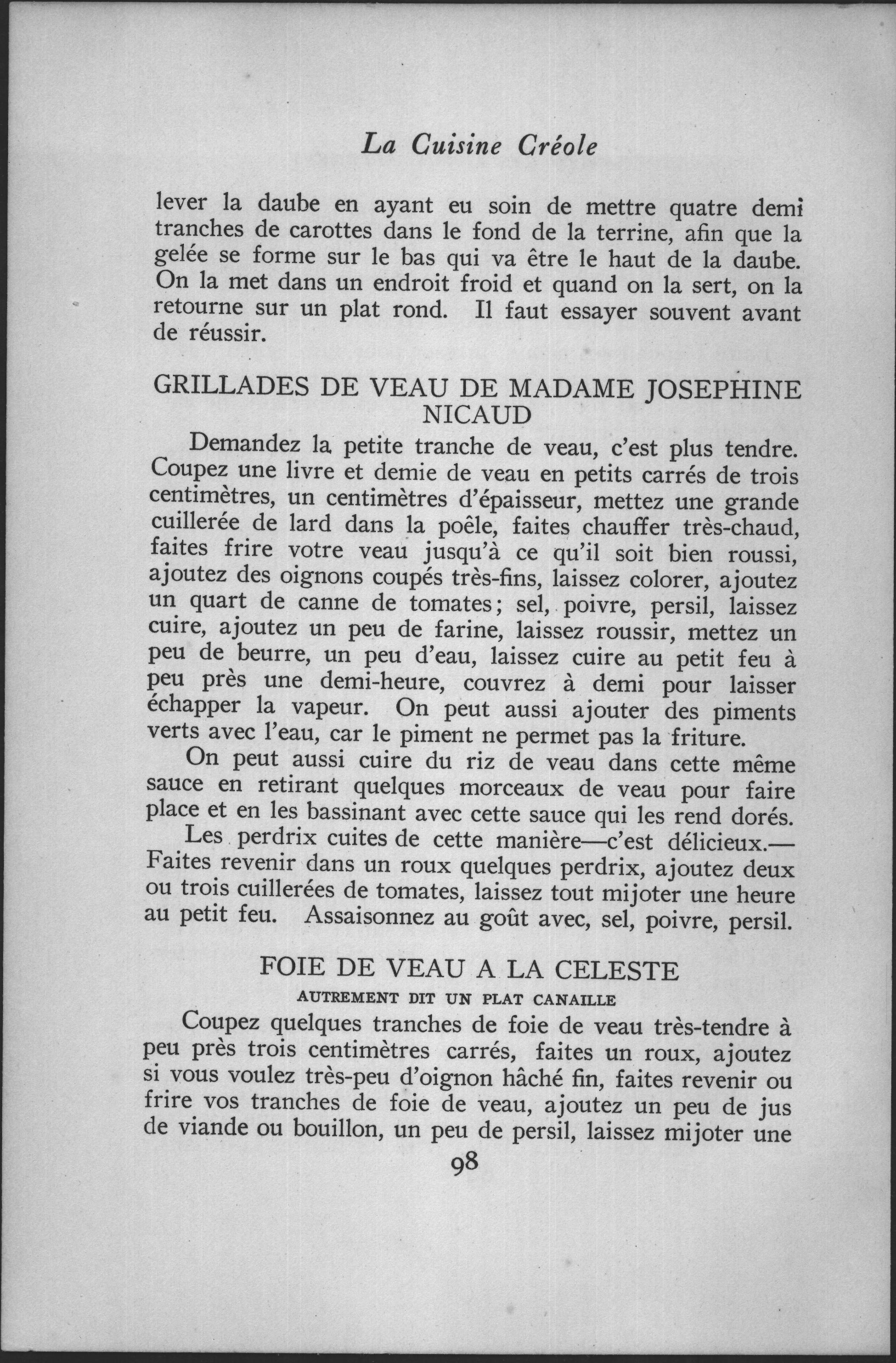
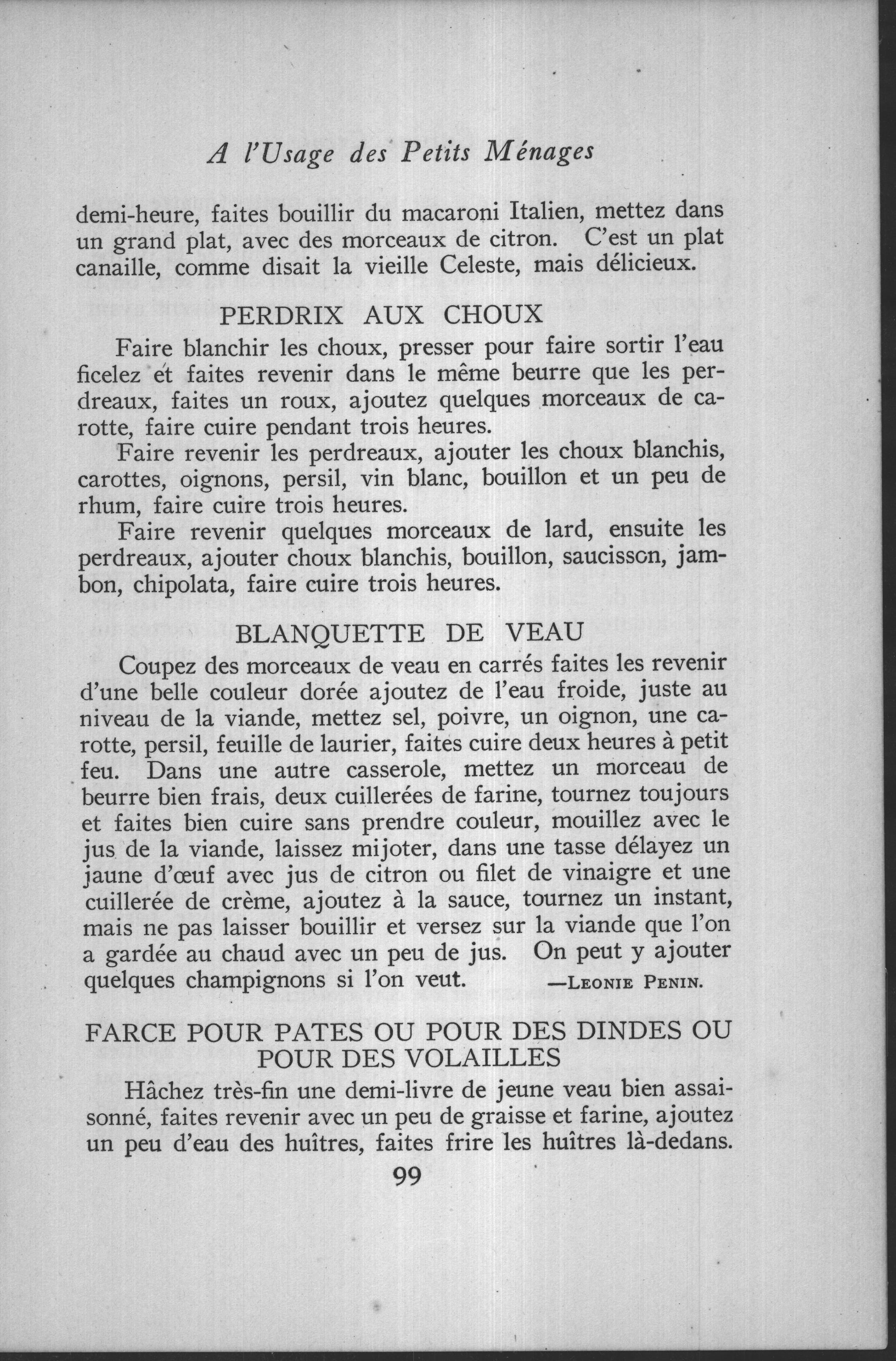
Foie de Veau à la Celeste
Autrement dit un plat canaille
Coupez quelques tranches de foie de veau très-tendre à peu près trois centimètres carrés, faites un roux, ajoutez si vous voulez très-peu d'oignon hâché fin, faites revenir ou frire vos tranches de foie de veau, ajoutez un peu de jus de viande ou bouillon, un peu de persil, laissez mijoter une demi-heure, faites bouillir du macaroni Italien, mettez dans un grand plat, avec des morceaux de citron. C'est un plat canaille, comme disait la vieille Celeste, mais délicieux.
Old Celeste’s calf’s liver — tender slices browned in a quick roux and served over macaroni, a homely dish she cheerfully called canaille, “low” but delicious.
- Choose tender liverUse very fresh, tender calf’s (veal) liver, sliced into pieces about 1 inch square (trois centimètres carrés).
- Don’t overcook itLiver turns grainy and hard when overdone; a quick sear and a gentle half-hour braise in a little broth keep it silky.
- A modest rouxA small roux with, if you like, a little finely chopped onion carries the sauce; loosen it with meat juices or bouillon.
- Macaroni ItalienBoil Italian macaroni separately and bed the liver on it in a large dish.
- Finish with lemonWedges of lemon around the plate brighten the richness of the liver.
- Plat canailleThe phrase means a “rascally” or lowbrow dish — humble food, offered here without apology because it tastes so good.
Canaille is an old term for the common crowd, the “rabble,” and to call a dish canaille was to wink at its humble, unfashionable character — organ meats and pasta rather than roasts and sauces. Calf’s liver was exactly that: cheap, nourishing, and cooked quickly, the food of thrifty kitchens rather than grand tables. The pasta points to the growing Italian presence in New Orleans, whose Sicilian community would make macaroni a familiar sight in the city’s markets. That a named family cook, “old Celeste,” is remembered by the dish is the whole charm of these recipes.
From page 98 of the 1904 edition.
Original pages from the book