Perdrix aux Choux
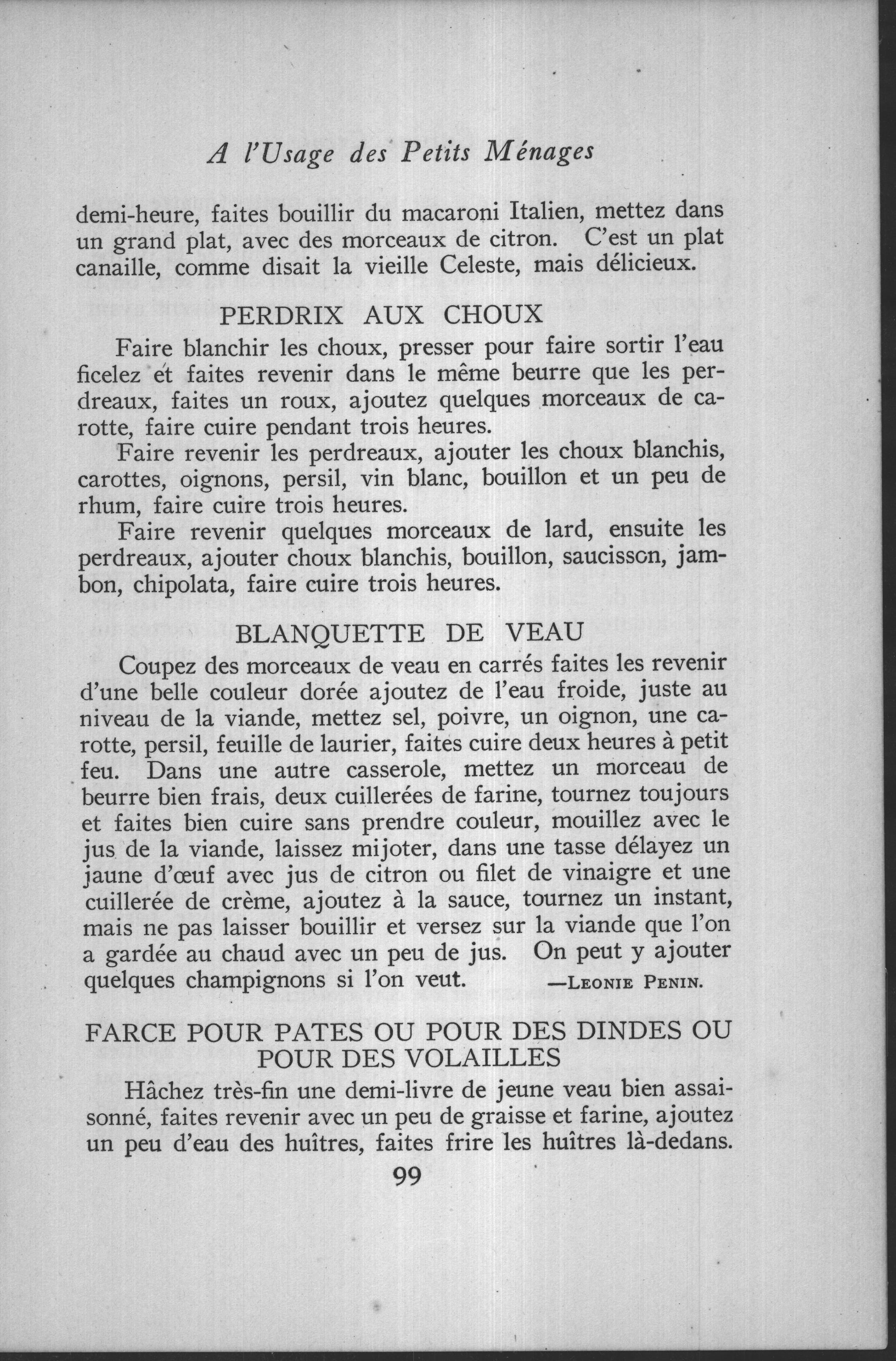
Faire blanchir les choux, presser pour faire sortir l'eau ficelez et faites revenir dans le même beurre que les perdreaux, faites un roux, ajoutez quelques morceaux de carotte, faire cuire pendant trois heures.
Faire revenir les perdreaux, ajouter les choux blanchis, carottes, oignons, persil, vin blanc, bouillon et un peu de rhum, faire cuire trois heures.
Faire revenir quelques morceaux de lard, ensuite les perdreaux, ajouter choux blanchis, bouillon, saucisson, jambon, chipolata, faire cuire trois heures.
The French country classic perdrix aux choux — partridges braised for hours with cabbage — given here in three richness levels, from plain to a full spread of sausages and ham.
- Blanch the cabbage firstParboil the cabbage, squeeze it dry, and tie it up before browning — this tames its bitterness and keeps the wedges intact through the long cook.
- Sourcing the birdsPerdreaux are young partridges, a wild game bird now hard to buy; farmed quail, squab, or Cornish hens braise beautifully the same way.
- Low and slowAll three versions cook about 3 hours at a bare simmer — game birds are lean and need long, moist heat to grow tender.
- Layer in the flavorThe richer versions add carrots, onion, parsley, white wine, broth, and a splash of rum, or go further with saucisson, ham, and chipolata (small fresh sausages).
- A splash of rumThe rum is a distinctly Creole touch on a French dish — use a small amount so it deepens rather than dominates.
Perdrix aux choux is a cornerstone of French provincial cooking, the classic way to redeem an old, tough partridge past its prime for roasting: braise it slowly on a bed of cabbage until both are meltingly tender and each has flavored the other. The dish is so canonical that it appears in cookbook after cookbook from the seventeenth century onward. Its presence in a New Orleans collection — now perfumed with rum — shows how thoroughly Creole cooks kept, and quietly reinvented, the French repertoire they had carried with them.
From page 99 of the 1904 edition.
Original page from the book