Macaroni Pie
Mrs. Phillips (Dr. Arnold's Receipt)
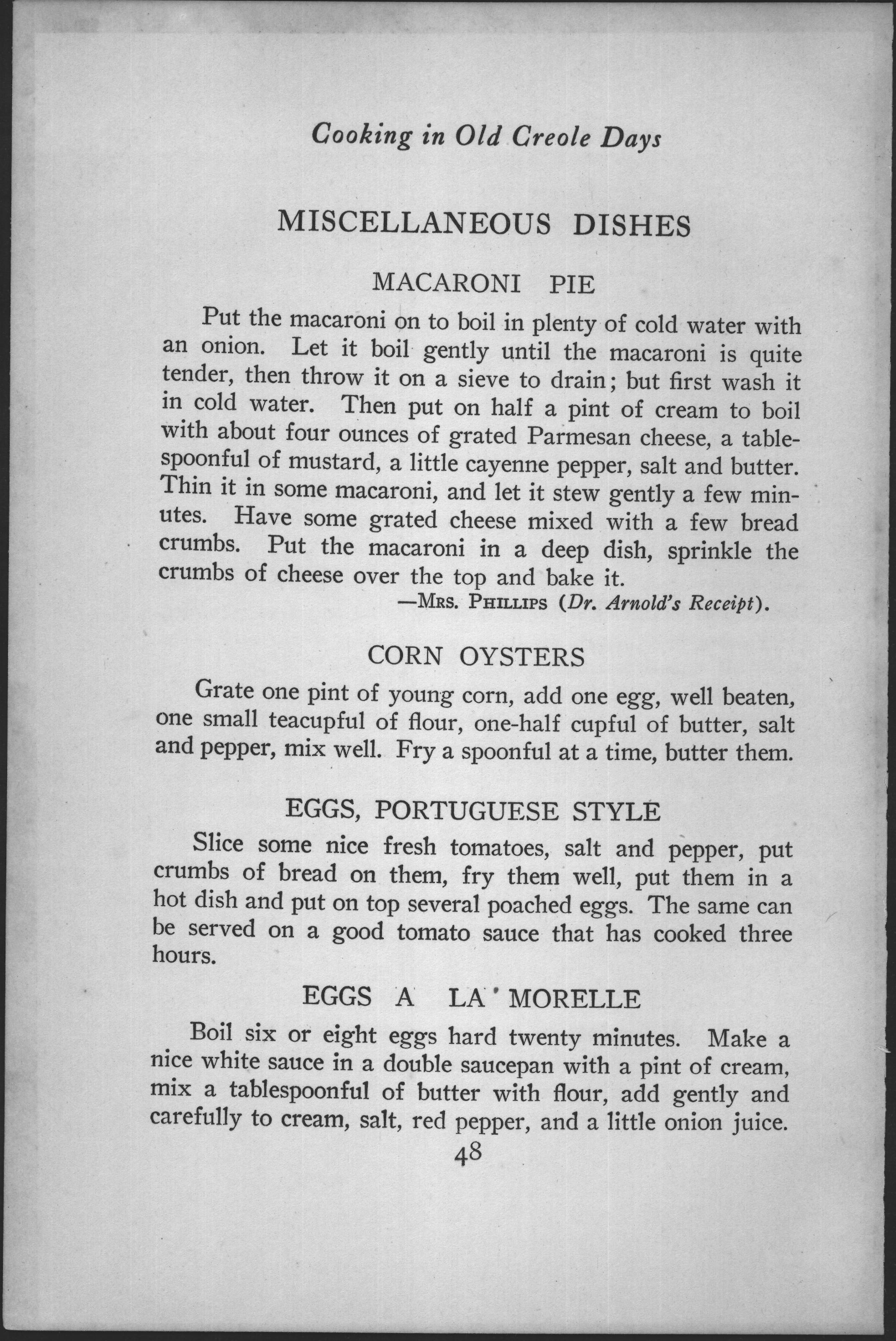
Put the macaroni on to boil in plenty of cold water with an onion. Let it boil gently until the macaroni is quite tender, then throw it on a sieve to drain; but first wash it in cold water. Then put on half a pint of cream to boil with about four ounces of grated Parmesan cheese, a tablespoonful of mustard, a little cayenne pepper, salt and butter. Thin it in some macaroni, and let it stew gently a few minutes. Have some grated cheese mixed with a few bread crumbs. Put the macaroni in a deep dish, sprinkle the crumbs of cheese over the top and bake it.
A baked macaroni and cheese in the old English-Italian style — boiled pasta bound in a cream-and-Parmesan sauce sharpened with mustard and cayenne, crumbed, and baked.
- “Receipt” = recipeThe old word for a recipe; Dr. Arnold’s ‘receipt’ is simply his formula.
- The measuresHalf a pint of cream is 1 cup; four ounces of Parmesan is about a cup grated. The cheese is salty, so taste before adding more salt.
- Mustard is the secretThat tablespoon of mustard is a classic macaroni-cheese trick — it lifts the richness. If using dry English mustard rather than prepared, 1–2 teaspoons is plenty.
- No roux hereThe sauce is just reduced cream and melted cheese, so keep the heat gentle — a hard boil can turn the cheese oily and grainy.
- Bake to bubblingA moderately hot oven, 375–400°F (190–200°C), browns the cheese-and-crumb top in 20–25 minutes.
Baked macaroni and cheese is far older than its American reputation suggests. Dishes of pasta layered with cheese go back to medieval Italy, and one of the first printed English recipes appears in Elizabeth Raffald’s The Experienced English Housekeeper of 1769 — macaroni in a cream sauce with Parmesan, crumbed and baked, almost exactly as here. The dish crossed the Atlantic with English cooks and is often linked to Thomas Jefferson, who served macaroni at the President’s table. The Parmesan in this Creole version quietly points back to the dish’s true Italian ancestry.
From page 48 of the 1904 edition.
Original page from the book