Home › Ice Creams, Etc › Eggs. Xxii. Steamed Dishes
Eggs. Xxii. Steamed Dishes
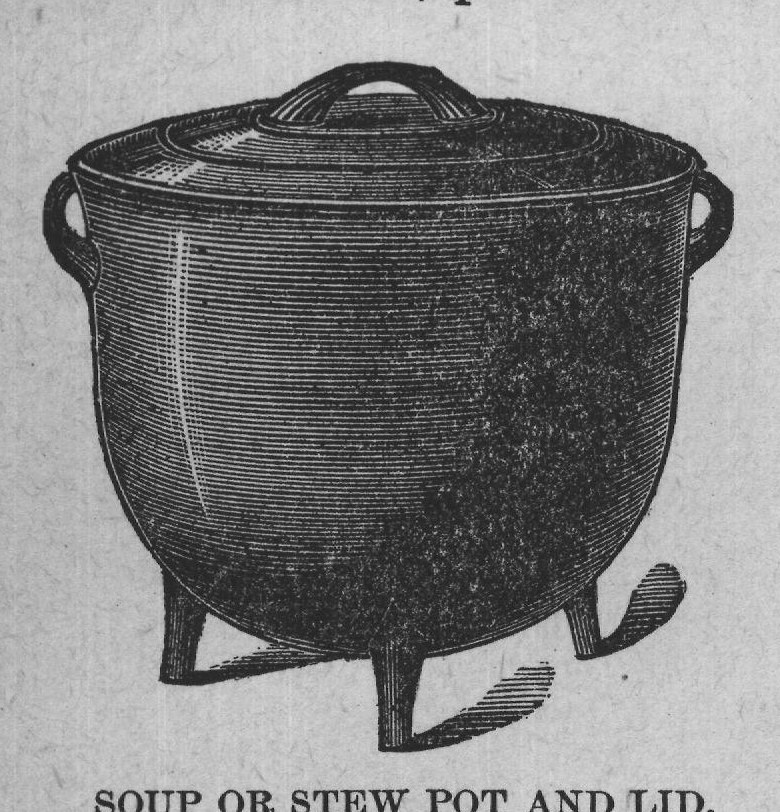
I. Vegetable Soup.
THIS is the soup most commonly made in the United States; it is excellent with the family dinner. Take a beef shank, crush the bone and put into cold water. Bring it to a boil and skim. Cook four hours, so that when done there shall be about two quarts of soup to each three or four pounds of meat. If turnips and carrots are used, put them in sliced as soon as the liquid is first skimmed. When
A plain beef-shank broth of the kind that once sat on the back of the range all afternoon. The text breaks off mid-instruction, so the vegetable stage has to be reasoned out from the ratio of meat to liquid it gives.
- The hinge: cold water, slow startPutting the cracked shank into cold water and bringing it up gradually is the traditional way to draw flavour and gelatin into the liquid. The recipe brings it to a boil to raise the scum for skimming; after that, a hard boil will cloud the broth, so hold it at a bare shiver.
- Crushing the boneThe marrow and collagen are the point. Ask the butcher to saw the shank crosswise into two or three pieces rather than attacking it at home with a cleaver.
- ProportionsTwo quarts of finished soup per three to four pounds of meat and bone. The recipe does not say how much water to start with; allow enough to cover the meat generously and expect it to reduce over the four hours. Top up only if it threatens to fall below the meat.
- SkimmingThe grey foam that rises in the first fifteen minutes is coagulated protein, not fat, and should come off with a shallow spoon. Fat is better removed after chilling, when it lifts off in a sheet.
- The vegetablesRoot vegetables go in early, as directed, because a four-hour simmer was assumed. Modern practice adds turnip and carrot in the last 40 minutes so they hold shape; anything green or quick-cooking belongs in the final ten.
- SeasoningNo salt appears in the surviving text, though the recipe breaks off mid-instruction and it may have followed. Salt lightly at the start and correct at the end, after reduction has concentrated everything.
- YieldTwo quarts serves six as a first course, four as a main with the shank meat pulled off the bone and returned to the pot.
Vegetable soup built on a beef shank was the household economy dish of the nineteenth-century American kitchen: the shank is one of the cheapest cuts, full of connective tissue that long cooking turns to body, and a single pot yielded broth, boiled meat and vegetables at once. The author calls it "the soup most commonly made in the United States," a claim we are in no position to test, though soup was then a daily rather than an occasional course and stock came from bones on hand rather than from a tin or cube.