Home › Ice Creams, Etc › Skillet and Lid
Skillet and Lid
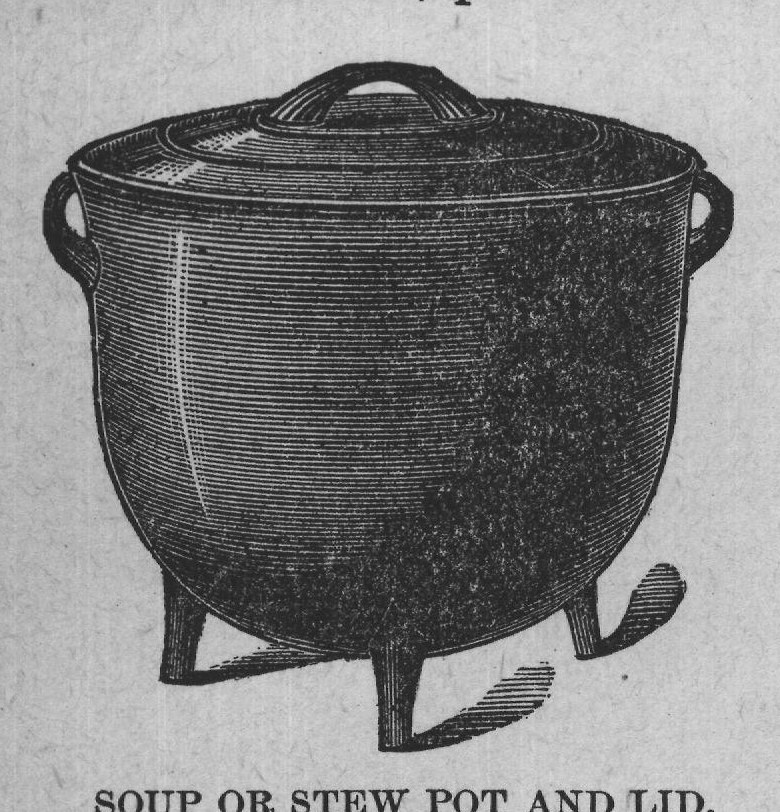
the soup is half done, add a pint of peeled tomatoes for each gallon of soup, and in an hour more half a pint of young okra sliced. Half an hour before it is served, add a quarter of a pound of sliced potatoes, and the same of green corn grated from the cob. The season of the year and the opportunities for getting vegetables will readily suggest substitutes. If okra or tomatoes cannot be had, thicken with a little flour and rice. If onions are liked, flavor with them, but lightly, and also with salt and pepper.
II. Clear Beef Soup.
ONLY the flesh of young animals should be used for soup. The flesh of very old animals will not make really good soup. Take four pounds of lean beef and a knuckle of veal; put into a suitable quantity of water; when it has been skimmed [226]
This is large-batch soup cookery measured by the gallon, with vegetables added in stages so each finishes at the right moment. The proportions scale down cleanly if you work by ratio rather than by the stated weights.
- ScaleA gallon of soup is roughly 16 cups and will serve a dozen or more. For a household pot of about 2 quarts, halve everything: 1 cup peeled tomatoes, 1/2 cup sliced okra, 2 oz potato, 2 oz grated corn.
- Green corn grated from the cobThis means fresh sweet corn, not dried. Split the kernels with a knife tip and scrape the pulp and milk out with the back of the blade; the starch it releases thickens the broth slightly, which frozen whole-kernel corn will not do.
- Okra timingThe recipe adds the okra an hour after the tomatoes and well before the potatoes and corn, so it has time to break down and give the soup body. If you want the pods to hold their shape, cut them thicker and add them in the last fifteen minutes instead.
- Thickening with flour and riceFor the okra-free version, use about 1 tablespoon flour slaked in cold water per quart, plus a tablespoon of raw long-grain rice, which will swell and cloud the liquid. Add rice at least 25 minutes before serving.
- Knuckle of vealA veal knuckle is the joint end of the shank, sold as a soup bone. It is there for gelatin, not meat; any gelatin-rich veal bone works, and it should be blanched and rinsed before it goes into the clear soup or the broth will never be bright.
- Skimming for clarityClear soup depends on bringing the pot only to a bare tremble, never a rolling boil, and lifting the grey scum as it rises during the first twenty minutes. Boiling emulsifies the fat and the stock turns permanently cloudy.
- "Flesh of young animals"The advice reflects a period when working oxen and spent dairy cows reached the pot. Ordinary supermarket beef shin, chuck or oxtail is all young enough; choose cuts with connective tissue rather than lean muscle for body.
- Salt lateSeasoning a gallon of soup that will reduce for hours is a trap. Salt lightly at the start and correct at the end, after any thickening has gone in.
Soup by the gallon, built on a stock pot that ran most of the day, was the ordinary economy of a nineteenth-century kitchen: the meat and bones gave the base, and whatever the garden or market offered went in by stages. The instruction to substitute freely according to "the season of the year and the opportunities for getting vegetables" is the honest heart of it, written before reliable year-round produce. The okra, tomatoes and grated green corn together point to the American South, where okra-thickened vegetable soups were a fixture of summer cooking; the same combination underlies the dish many households still call simply okra soup. The companion clear beef soup belongs to the other half of period practice, the genteel consommé: knuckle bone for gelatin, meat for flavor, and endless patient skimming for the transparency that was taken as proof of a good cook.