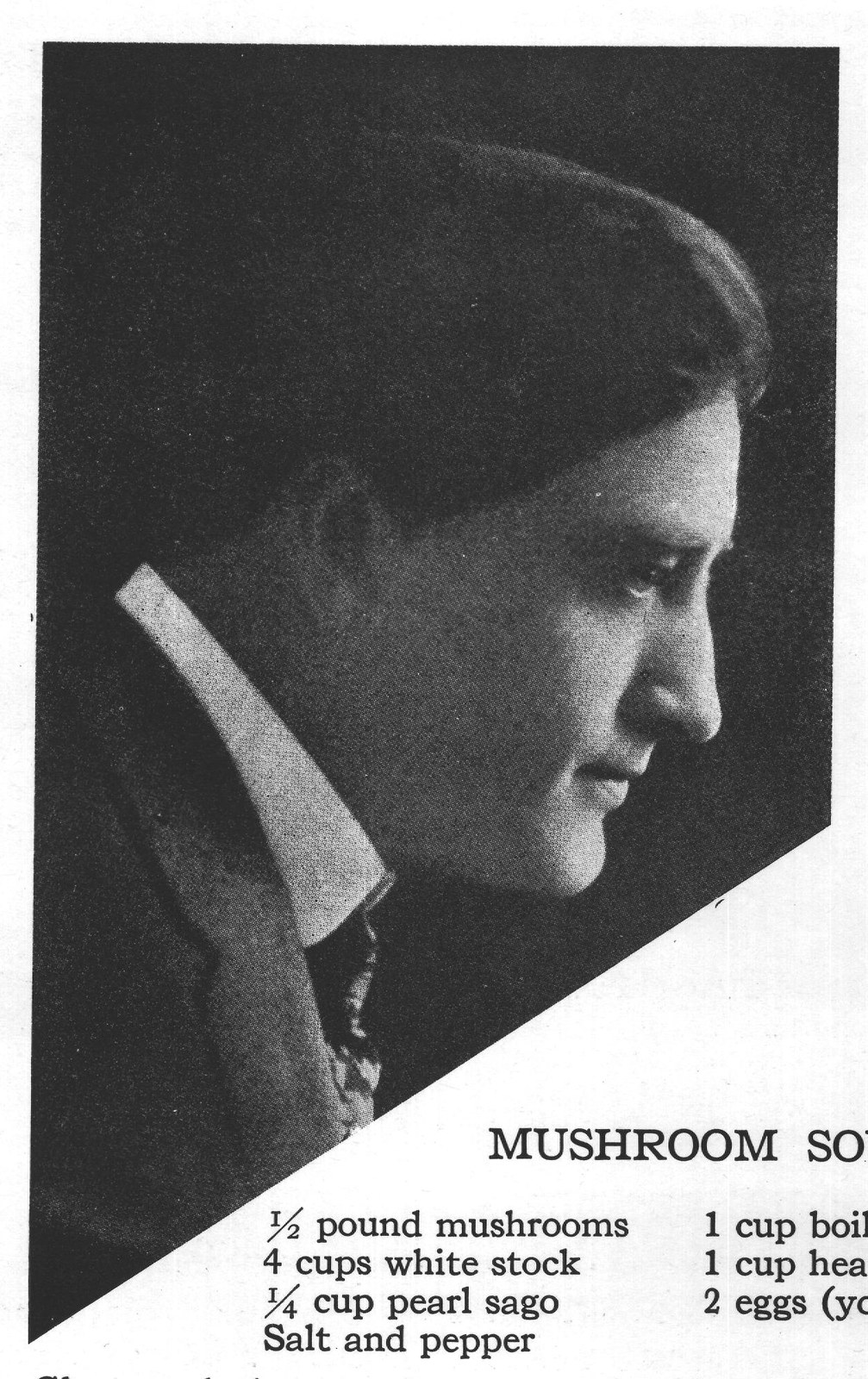
Francis X Bushman

"Wilt stay and sup with us tonight?"
SNAILS A LA MOUQUIN
Wash the snails thoroughly in cold water, set on fire in cold water, let come to a boiling point then remove them from the stove and let stand for one minute, then drain them in cold water. Remove the cover with a small-pointed knife, pull out the snail, take off the small end and put the snails in a dish pan with plenty of salt, about one pound of salt to one hundred snails; let stand for one hour, stirring them once in a while. Then wash in running water, until the water runs absolutely clear. Put the snails in a saucepan with two parts of white broth and one part of dry white wine, garnish with garlic, sprig of thyme and carrot; let them cook for three hours, remove the garnishing, put them in a jar and let get cold. Put the shells in a pot with plenty of washing soda and boil them for half an hour, then rinse in cold water; set them in hot place to dry.
SNAIL BUTTER A LA KEINER
Garlic, shallots, watercress, parsley, spinach, whole pepper, bay leaves; pass through mash chopper, very fine. Mixed with fresh butter, add little Worcestershire sauce and set in ice box. Take one shell, fill it with a little snail butter, add the snail and fill the shell with snail butter and dip in bread crumbs. When required set in oven for four or five minutes until they are boiling and serve immediately.
Sincerely yours
This is escargots à la bourguignonne under a restaurant's name, written for a kitchen that bought snails live and by the hundred. Almost all the labour here is the purge and the shell-cleaning; the eating part is butter, garlic and four minutes of heat.
- Start with tinned snailsHelix pomatia sold in tins or jars, with a bag of cleaned shells, arrive already purged and simmered. That skips everything from "Wash the snails" through the three-hour braise, which is the only reason this recipe looks long.
- Never use snails from the gardenWild snails and slugs can carry the rat lungworm parasite and will also have eaten whatever went down on the lawn. Snails intended for the table are farmed and starved or fed on meal for days beforehand.
- The salt purgeA pound of salt to a hundred snails is roughly a teaspoon each — it is a dehydrating agent to draw out slime, not seasoning. The instruction to wash "until the water runs absolutely clear" is the real test; anything short of that leaves grit and mucus in the finished dish.
- White brothAn unbrowned veal or chicken stock, kept pale and unsalted. Two parts stock to one part dry white wine is the braising liquid, and three hours at a bare tremble is right for a tough gastropod muscle.
- Washing soda for the shellsSodium carbonate, still sold as a laundry booster, degreases and deodorises the shells. Rinse them exhaustively and dry them fully — it is caustic enough to irritate skin, and no residue should meet the butter.
- The snail butterSpinach and watercress are here for colour as much as flavour; the classic Burgundian version is garlic, shallot, parsley, butter, salt and pepper. Whole peppercorns and bay leaves need to go through the grinder with everything else or be removed — bay does not soften. Chill the butter firm before piping it into shells.
- The ovenThe recipe gives no temperature. Four or five minutes to bubbling implies a hot oven — somewhere around 425–450°F would do it, or a few minutes under the broiler. The butter should be bubbling at the mouth of the shell; longer and it separates and the snail toughens.
- Yield and serviceThe purge quantities assume a hundred snails, which is about eight servings at a dozen apiece as a first course. Serve in an escargot dish or on a bed of coarse salt so the shells sit upright, with bread for the butter.
Mouquin's was a French restaurant in New York — the Sixth Avenue house was one of the city's best-known Gallic tables in the 1900s and 1910s, the sort of place a matinee idol would be seen at, and it did not survive long into Prohibition. Attaching a dish to a restaurant's name was the period's way of signalling both provenance and expense, and snails in particular carried that freight: they had to be imported from France in tins or crocks, or bought live at considerable trouble, and they read as unmistakably continental to an American readership. The garlic-parsley-butter treatment is Burgundian in origin and is generally traced to the early nineteenth-century Paris restaurant trade; the second name here, "à la Keiner," is likely a chef rather than a place, though the contributor gives no clue. What the recipe really records is a moment when an actor's celebrity cookbook entry was less about what he ate at home than about which dining room he wanted associated with his name.