Soupe à la Julienne
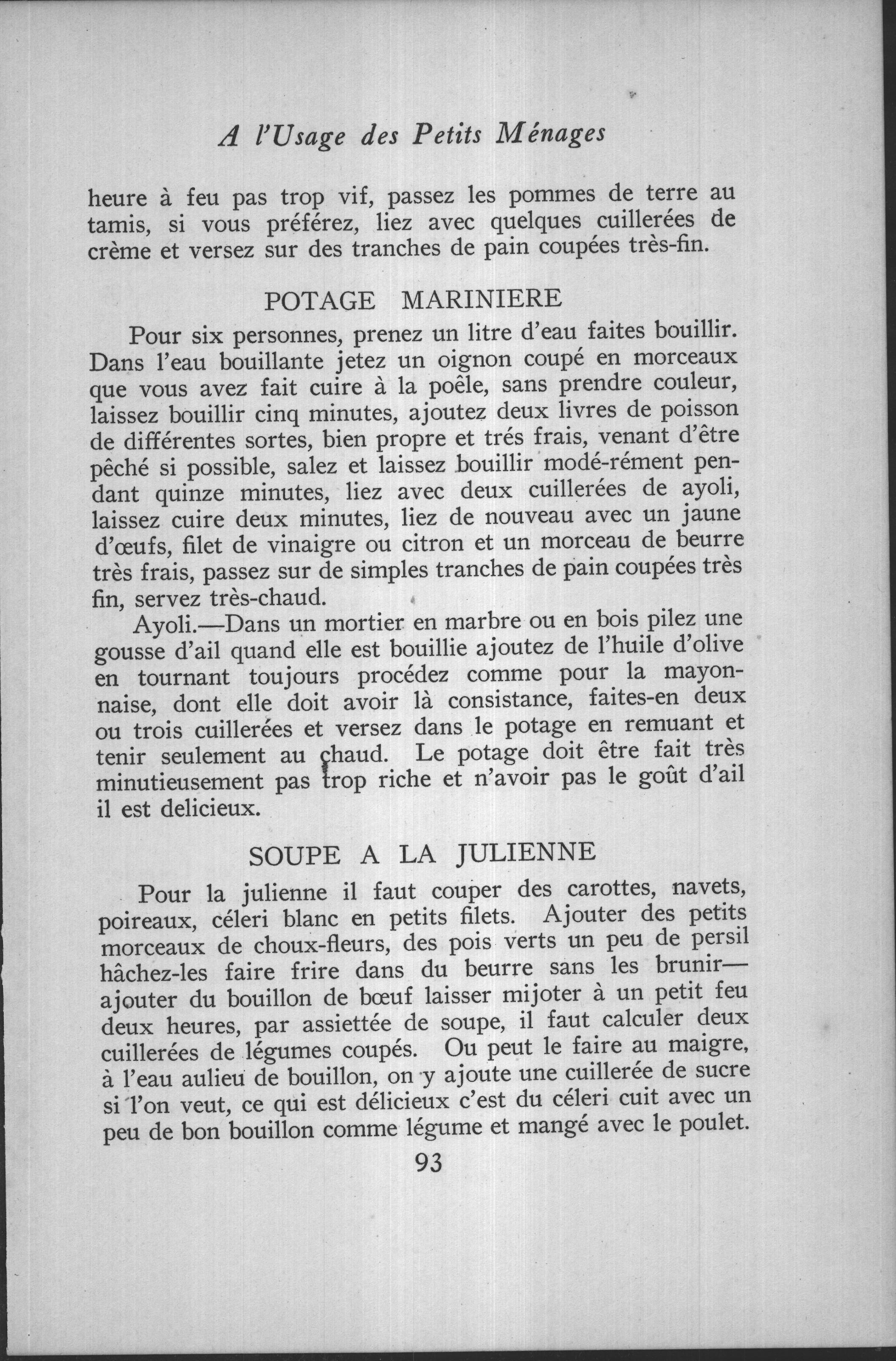
Pour la julienne il faut couper des carottes, navets, poireaux, céleri blanc en petits filets. Ajouter des petits morceaux de choux-fleurs, des pois verts un peu de persil hâchez-les faire frire dans du beurre sans les brunir—ajouter du bouillon de bœuf laisser mijoter à un petit feu deux heures, par assiettée de soupe, il faut calculer deux cuillerées de légumes coupés. Ou peut le faire au maigre, à l'eau aulieu de bouillon, on y ajoute une cuillerée de sucre si l'on veut, ce qui est délicieux c'est du céleri cuit avec un peu de bon bouillon comme légume et mangé avec le poulet.
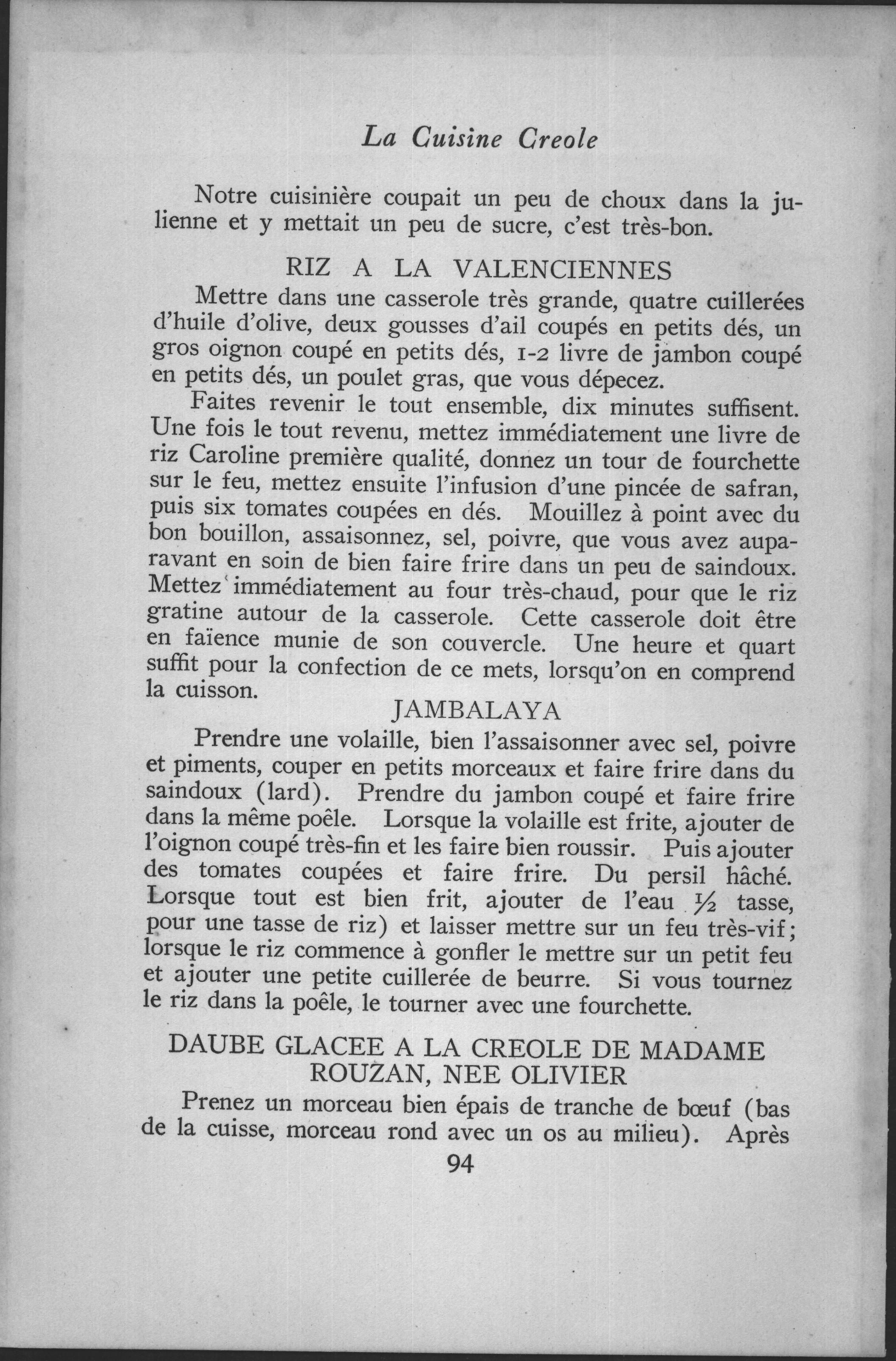
Notre cuisinière coupait un peu de choux dans la julienne et y mettait un peu de sucre, c'est très-bon.
The classic clear vegetable soup that gave a knife cut its name — everything sliced into fine matchsticks so it cooks evenly and looks jewel-like in the bowl.
- What “julienne” meansCarrots, turnips, leeks, and white celery are cut into thin filaments; the fineness of the cut is the dish.
- Sweat, don’t brownSoften the vegetables in butter without letting them color, then add liquid — browning would cloud and coarsen a delicate julienne.
- Stock or waterBeef bouillon makes it rich; for a lean (au maigre) version use water, and a spoonful of sugar rounds it out.
- Portion by the spoonThe old rule of thumb: about 2 tablespoons of cut vegetables per bowl of soup — a garnish soup, not a stew.
- Simmer low and longA gentle 2-hour simmer melds the flavors while keeping the strands intact.
- A cook’s touchThe author’s own cook slipped a little cabbage and a pinch of sugar into the pot — “very good,” she notes.
The word julienne has meant this fine matchstick cut in French kitchens since at least the eighteenth century, though the person or name behind it is lost to certainty — the usual stories linking it to a particular cook are guesses rather than fact. What is clear is that the cut and the clear soup grew up together: a potage à la julienne was defined by its precisely slivered vegetables suspended in a limpid broth. It remains a benchmark of French technique, prized less for its ingredients than for the knife skill it displays.
From page 93 of the 1904 edition.
Original pages from the book